Designers
Hyungseo Nam
Year
2026
Category
New Talent
Country
United Kingdom
School
Loughborough University
Teacher
Gyuchan Thomas Jun
Three questions to the project team
What was the particular challenge of the project from a UX point of view?
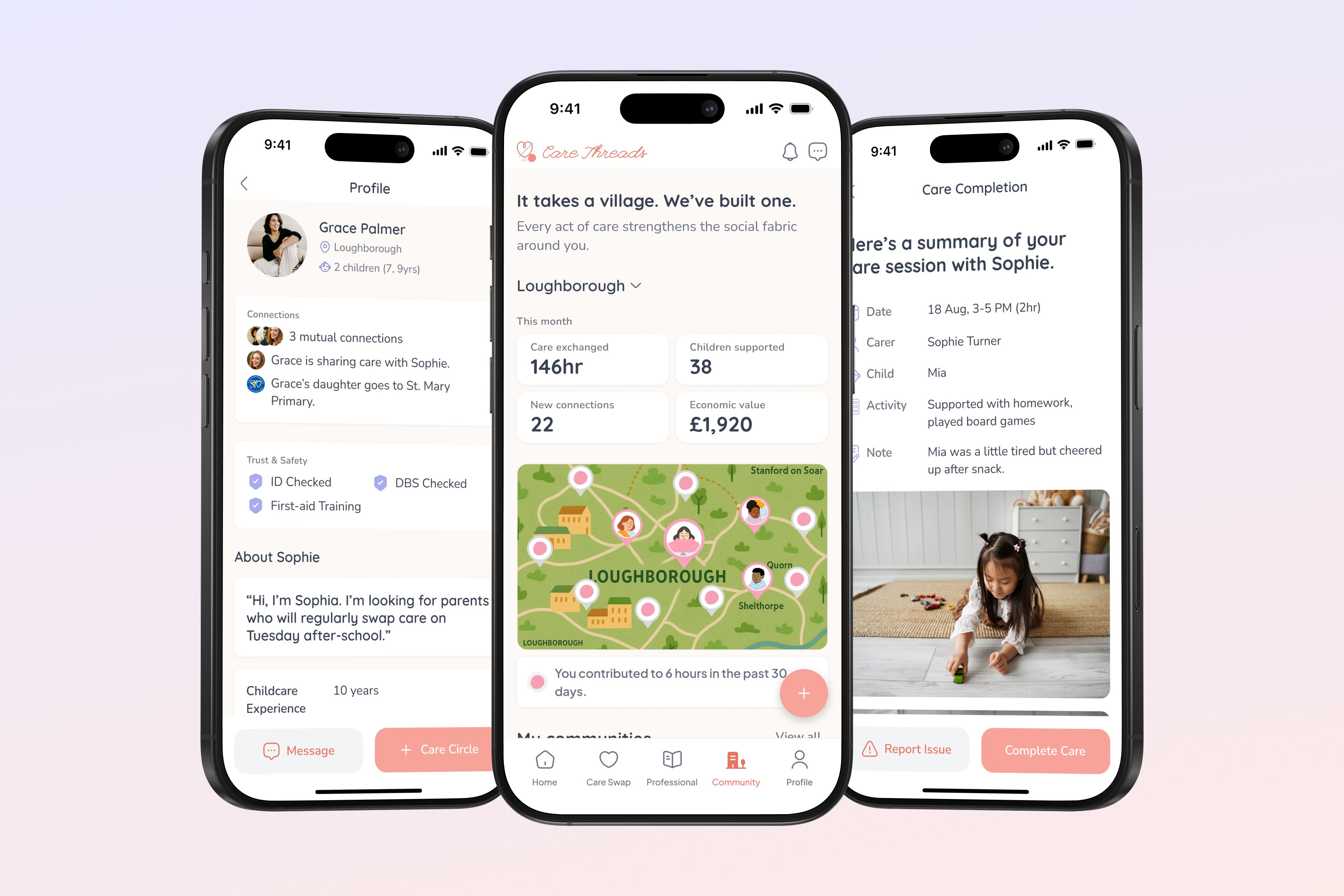
The key UX challenge was enabling trust in childcare between parents. Research showed that parents are highly reluctant to leave their children with strangers, yet even within trusted relationships, they hesitate to ask for help due to feelings of guilt and emotional burden. The challenge was not to create trust between unfamiliar parents, but to expand existing trust while reducing the pressure of asking for care.
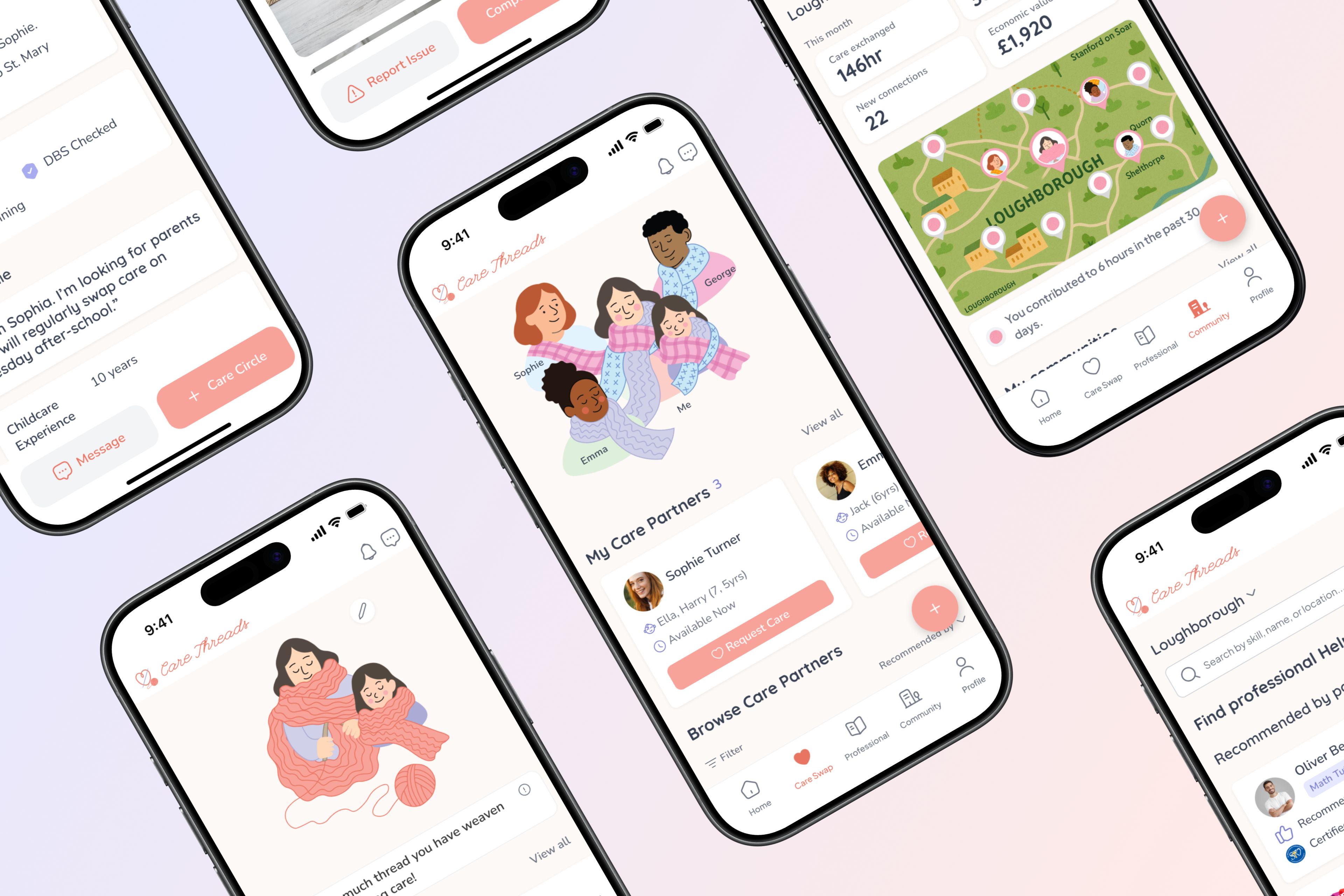
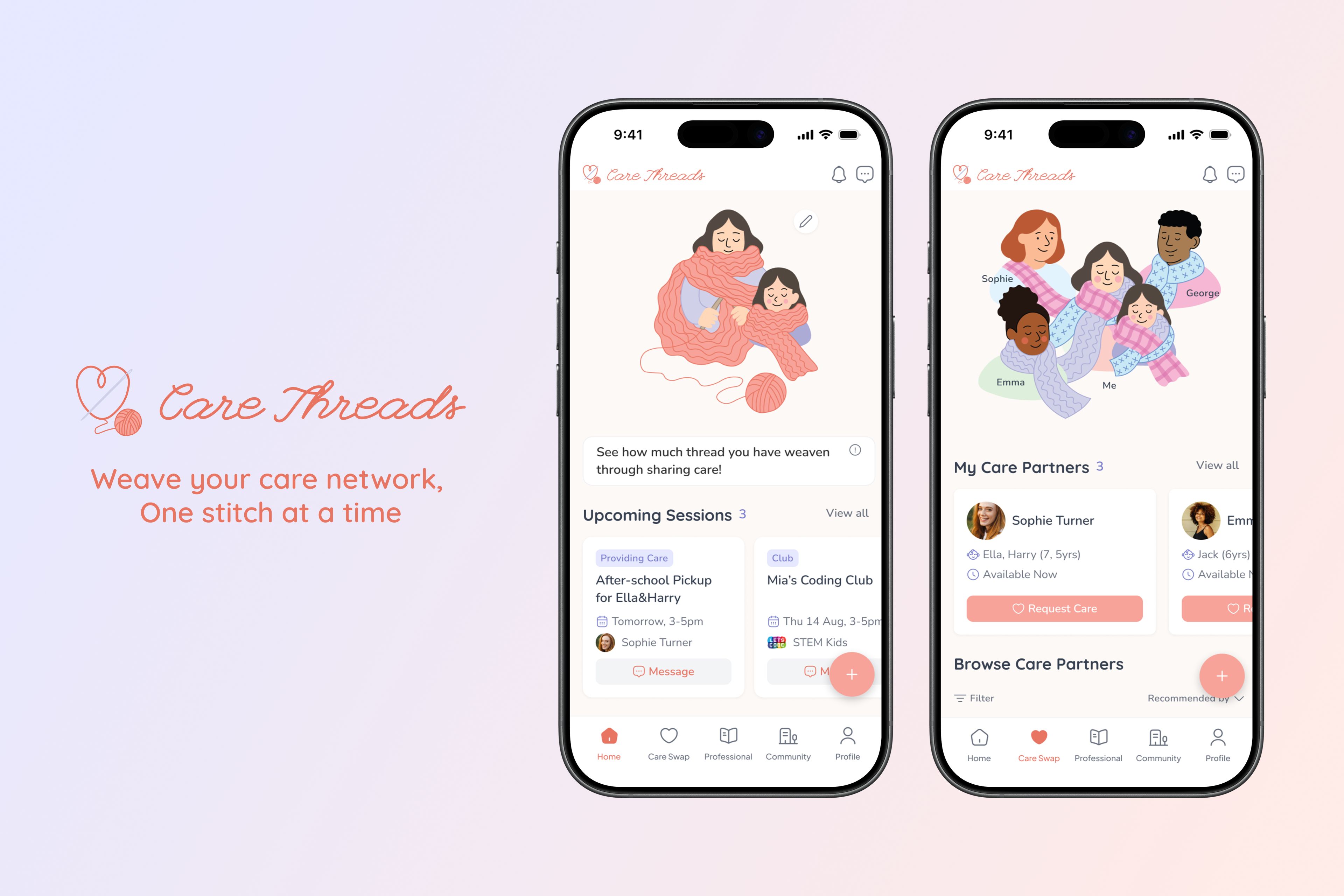
Care Threads addresses this by expanding parents’ trusted circles through mutual connections, recommendations, and shared communities. By formalising childcare exchange as a shared agreement, it reframes care from a personal favour into a reciprocal commitment, reducing emotional friction and making care exchange feel balanced.
What was your personal highlight in the development process? Was there an aha!-moment, was there a low point?
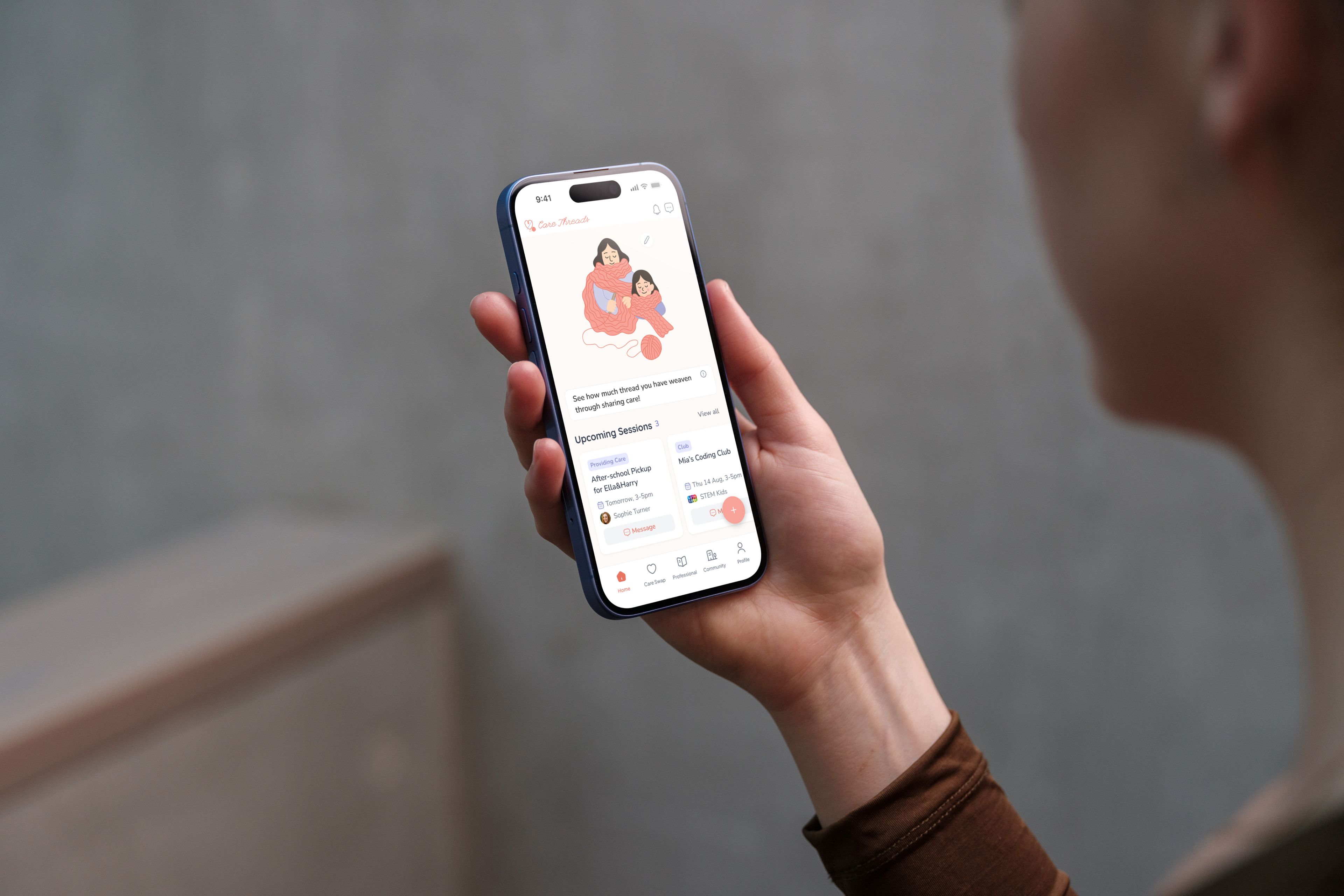
My personal highlight was developing the concept of Care Threads. Initially, the project was based on a care credit system to ensure fairness in care exchange. However, interviews revealed that parents cannot always offer care equally due to differing capacities and circumstances. During lo-fi testing, I also received feedback that the concept felt overly focused on logistics and lacked an emotional component. These insights led me to rethink what meaningful mutual care meant. I shifted my focus from transactional fairness to emotional connection, using the image of a shared scarf whose threads grow longer with each care exchange to symbolise deepening trust and relationships between parents.
Where do you see yourself and the project in the next five years?
I envision the project’s future as an exploration of how informal, community-based childcare could be supported. If developed further, it would initially launch in London, where many multicultural families lack nearby care networks. Over time, I imagine neighbourhoods where informal care exchange becomes more visible and active, with strengthened connections, reduced stress, and lower childcare costs. Personally, I see myself working as a service designer who carefully considers for social complexity and human dynamics, contributing to services that meaningfully improve people’s daily lives.