Designers
Garam Kim, Minju Oh, Yebin Lee, Myeongbin Go
Year
2026
Category
New Talent
Country
Korea, Republic
School
Hongik University
Teacher
Sangmok Jung
Three questions to the project team
What was the particular challenge of the project from a UX point of view?
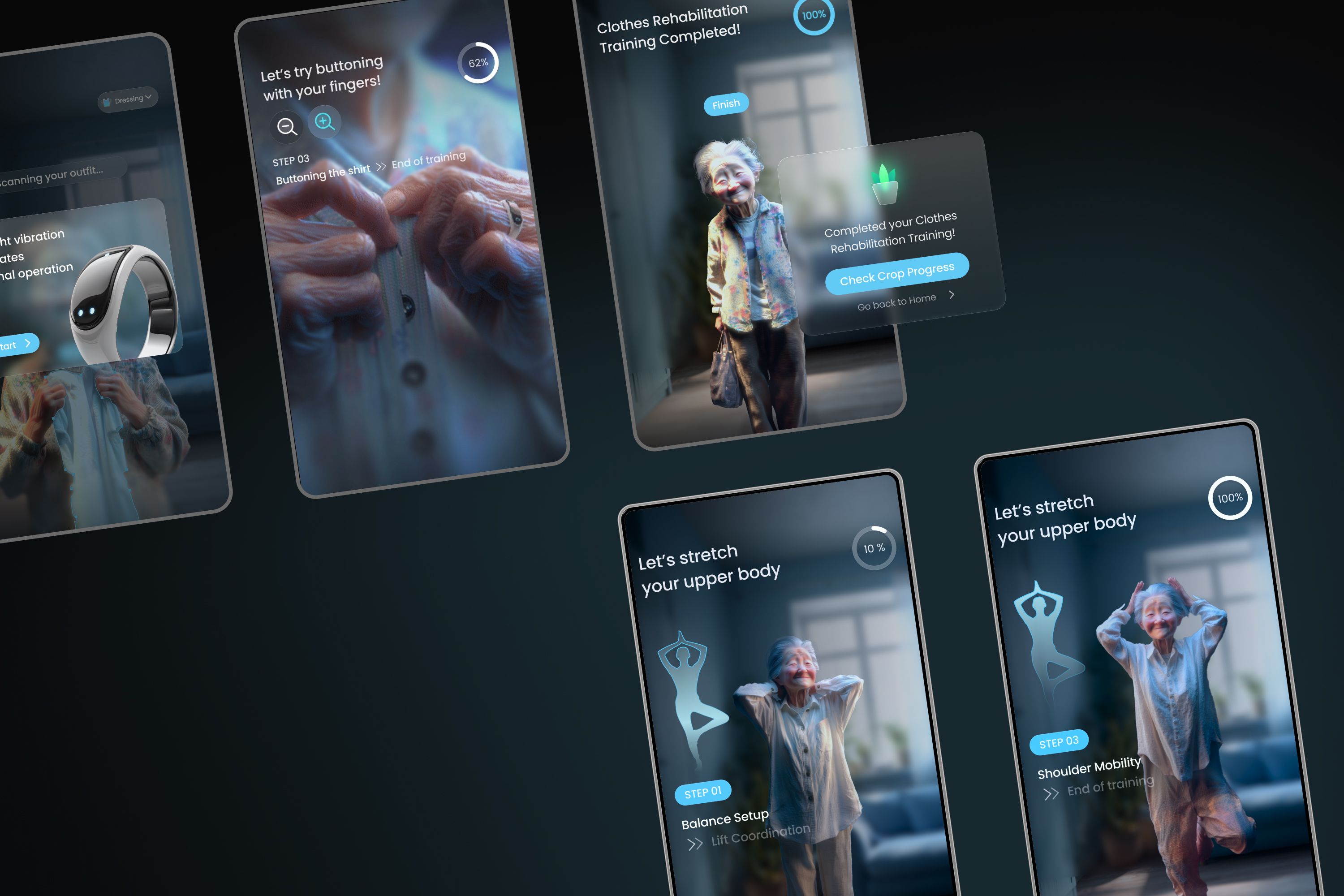
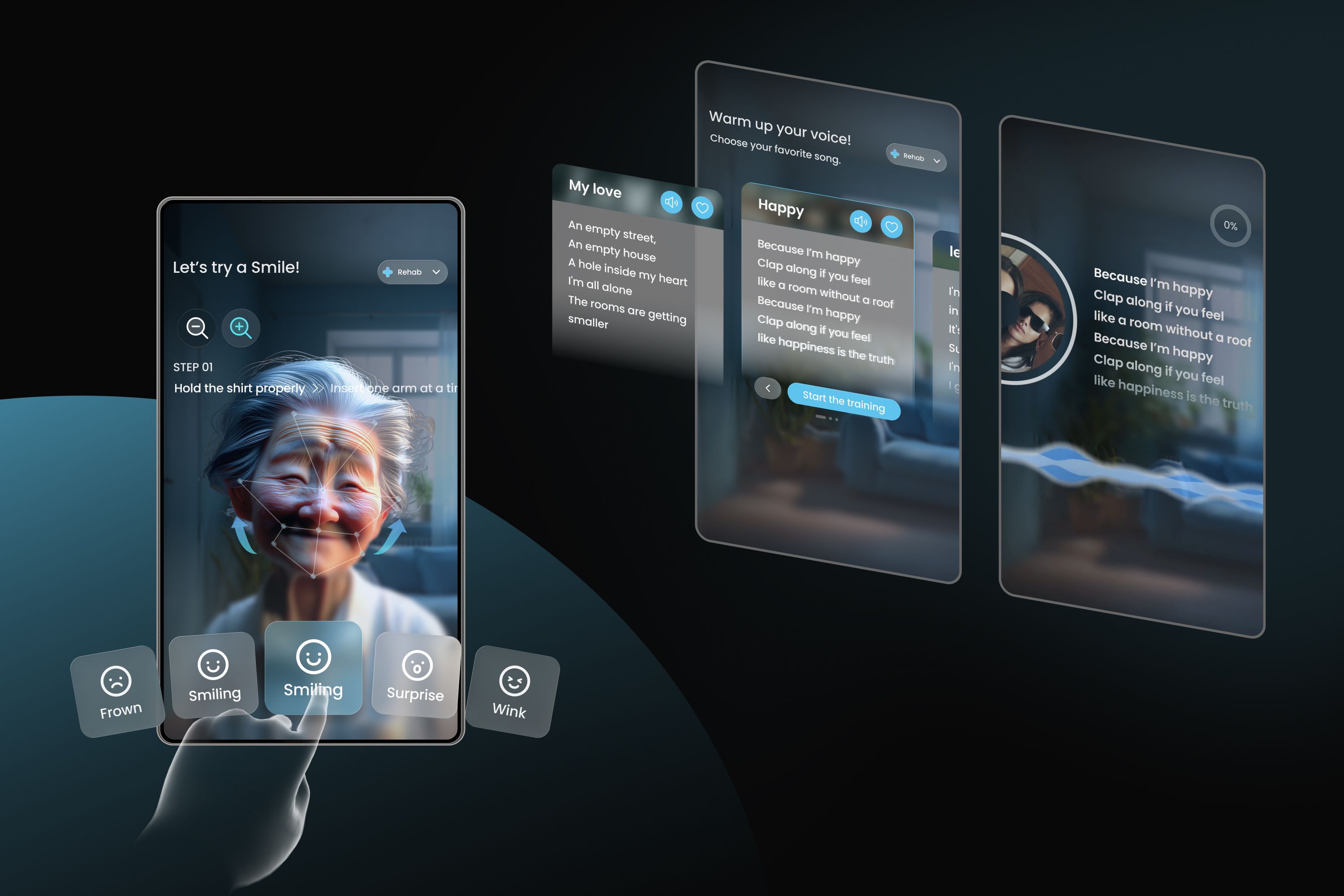
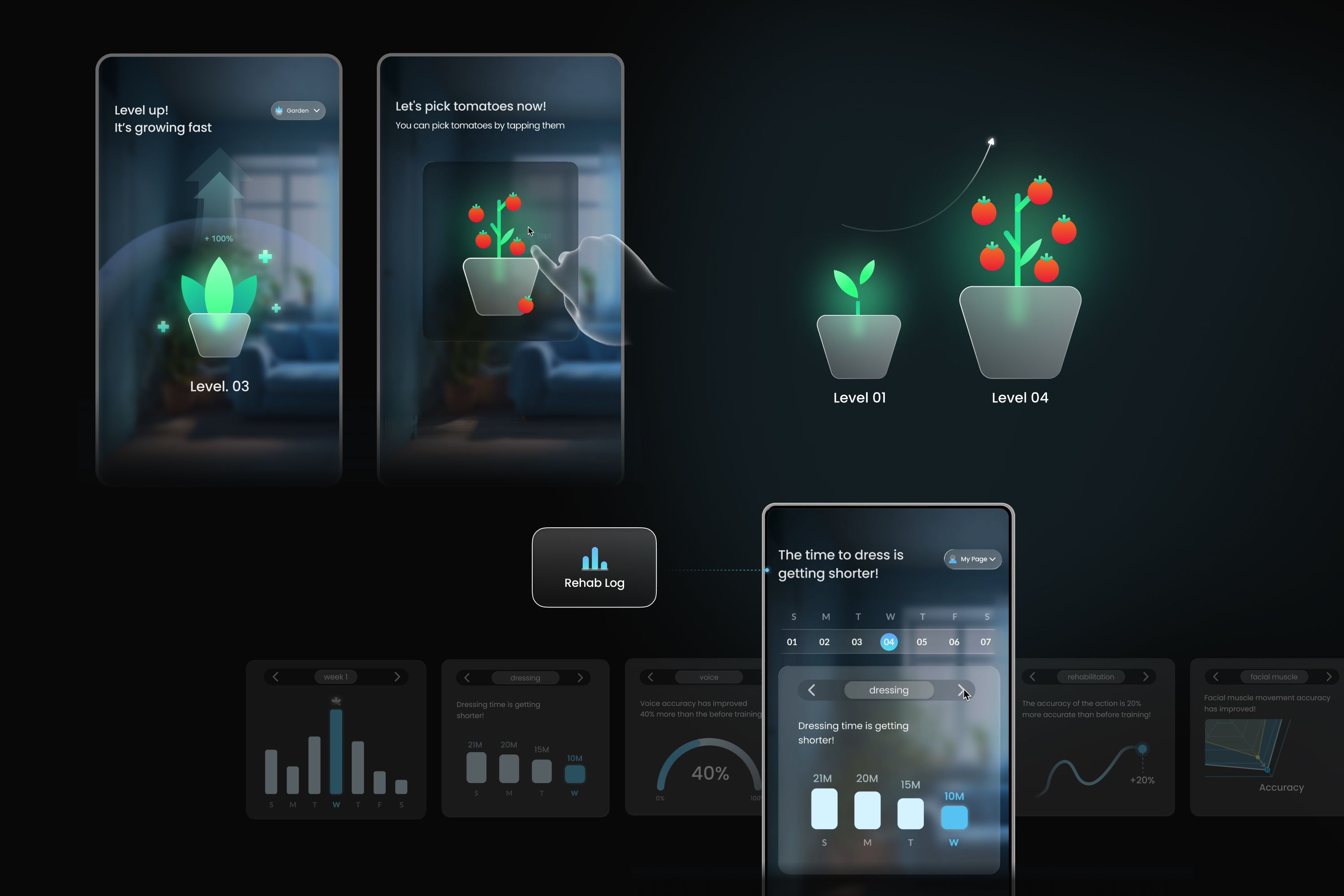
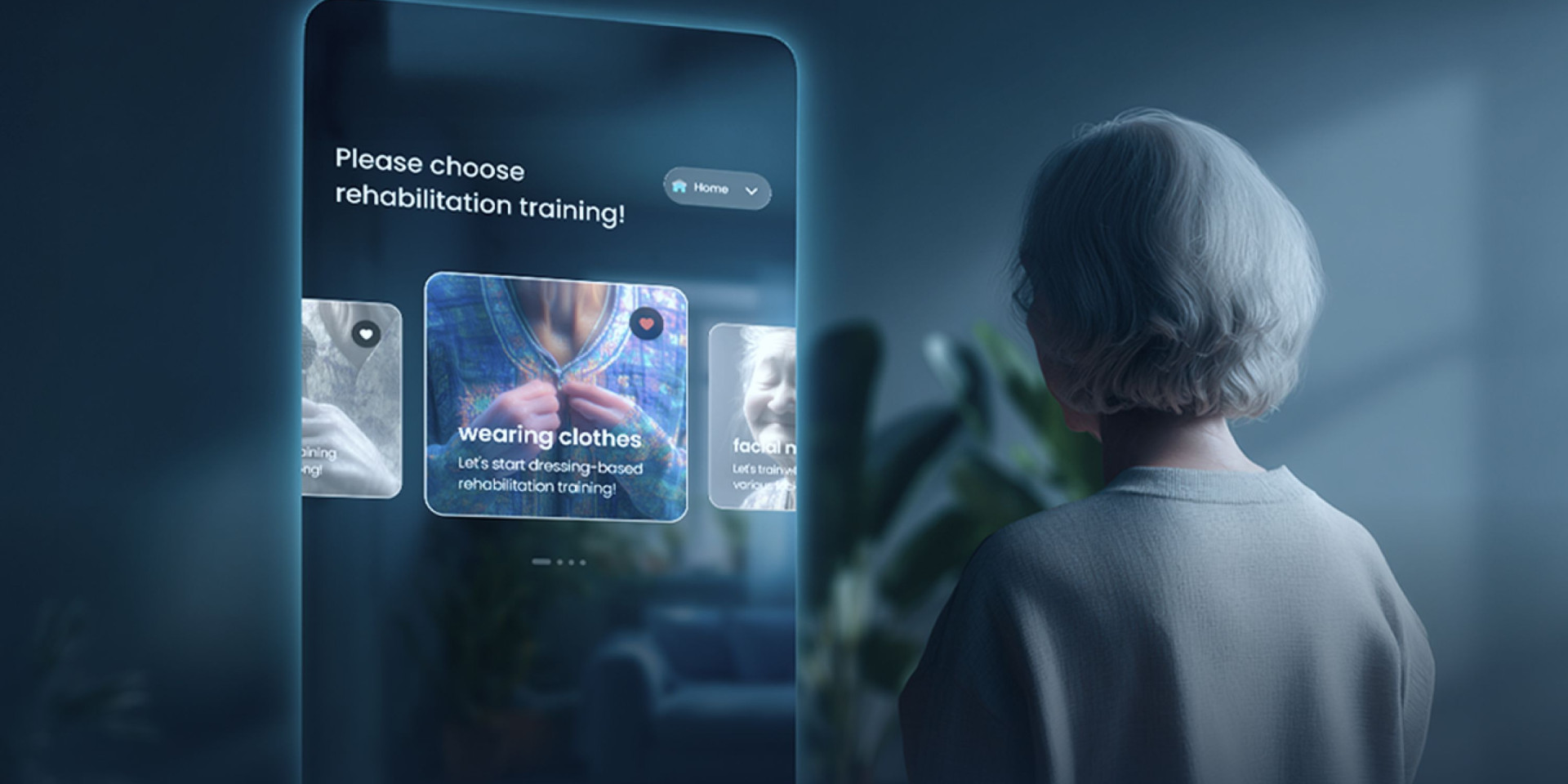
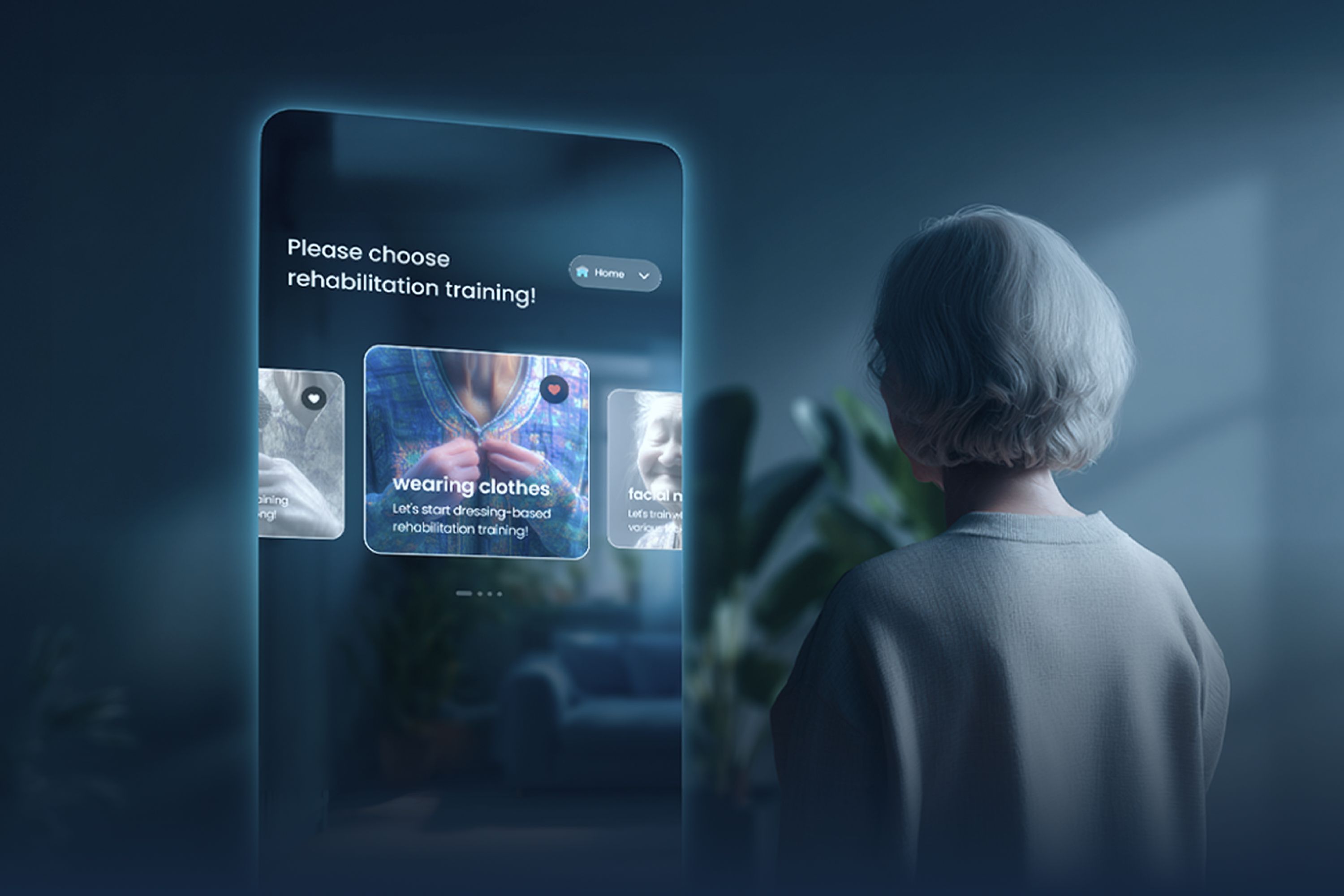
The greatest UX challenge of Clomi was redefining rehabilitation so it would not feel like a medical task or repetitive training. For people with Parkinson’s disease, rehabilitation is often perceived as burdensome, making sustained engagement difficult. Our aim was to shift this into an experience users would want to continue. Rather than prioritizing precise motion correction or data-driven feedback, we focused on everyday actions and emotional flow. The smart mirror and wearable ring were designed as supportive companions. By linking small achievements to plant growth and tangible rewards, recovery became part of daily life. Balancing functional support with emotional continuity shaped the core UX challenge.
What was your personal highlight in the development process? Was there an aha!-moment, was there a low point?
The most memorable moment was realizing that well-designed functions do not always lead to sustainable rehabilitation. Initially, we focused on improving movement accuracy and expanding functional capabilities. However, consultations with Parkinson’s specialists revealed that many patients discontinue rehabilitation not due to lack of will, but because it is experienced as burdensome. This insight shifted our focus toward designing a UX that could blend naturally into daily life. We reframed rehabilitation as familiar actions such as dressing, stretching, singing, or facial exercises and used plant growth as a positive metaphor to redefine rehabilitation as a meaningful, accumulative daily experience.
Where do you see yourself and the project in the next five years?
In five years, Clomi will be established as a reliable service that enables people with Parkinson’s disease to continue rehabilitation consistently within their daily lives, without relying on frequent hospital visits. Its goal is to support early- and mid-stage patients in choosing rehabilitation that fits their condition, within the comfort of their homes, and sustaining it without burden. The smart mirror and wearable ring act as supportive companions that understand users’ daily rhythms and physical changes, making rehabilitation a natural part of everyday life rather than a time-bound medical routine.