Designers
Timon Frey, Alice Sopp, Natalie Gröner
Year
2026
Category
New Talent
Country
Germany
School
University of Applied Sciences Schwäbisch Gmünd
Teacher
Susanne Schade, Gabriele Niki Reichert
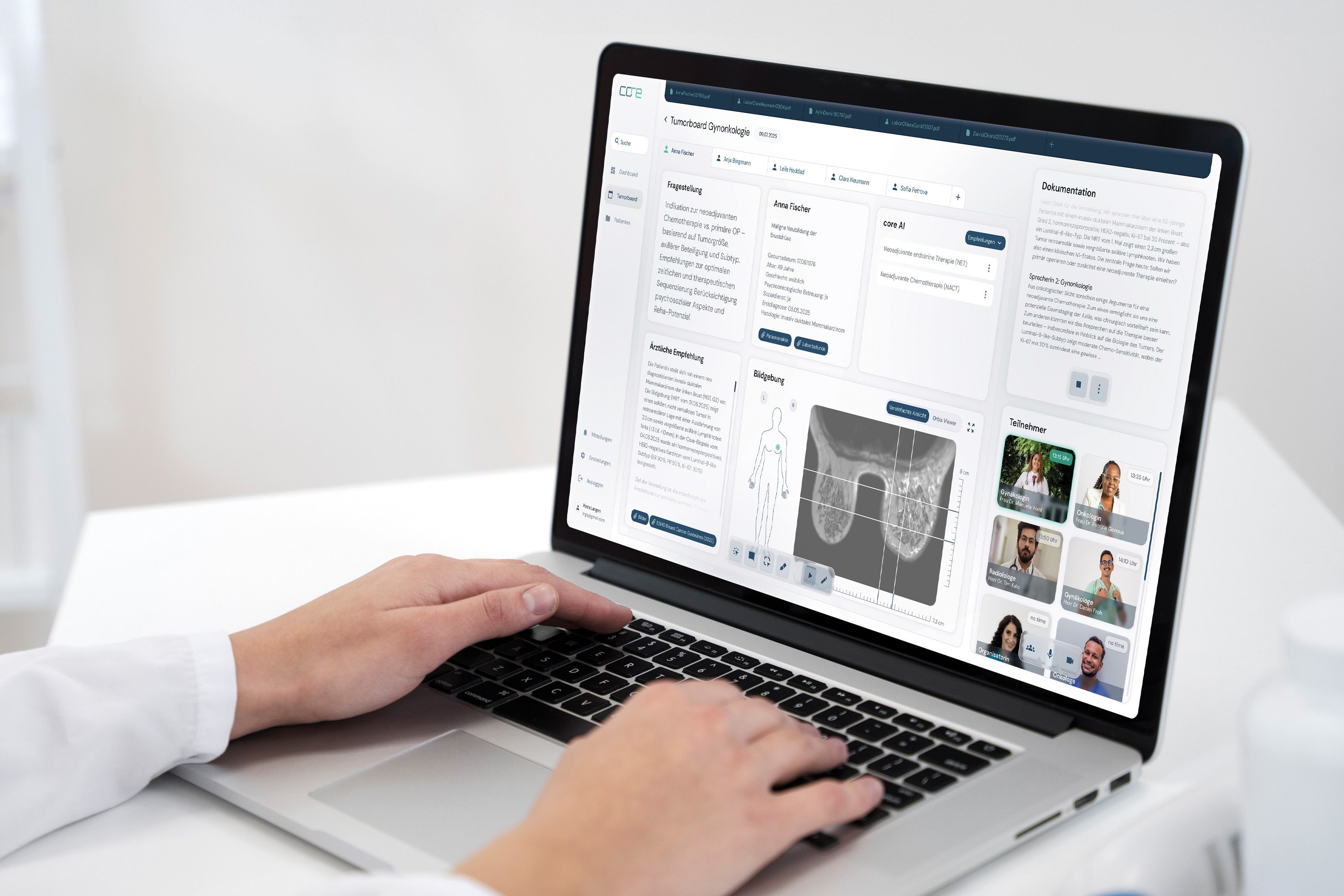
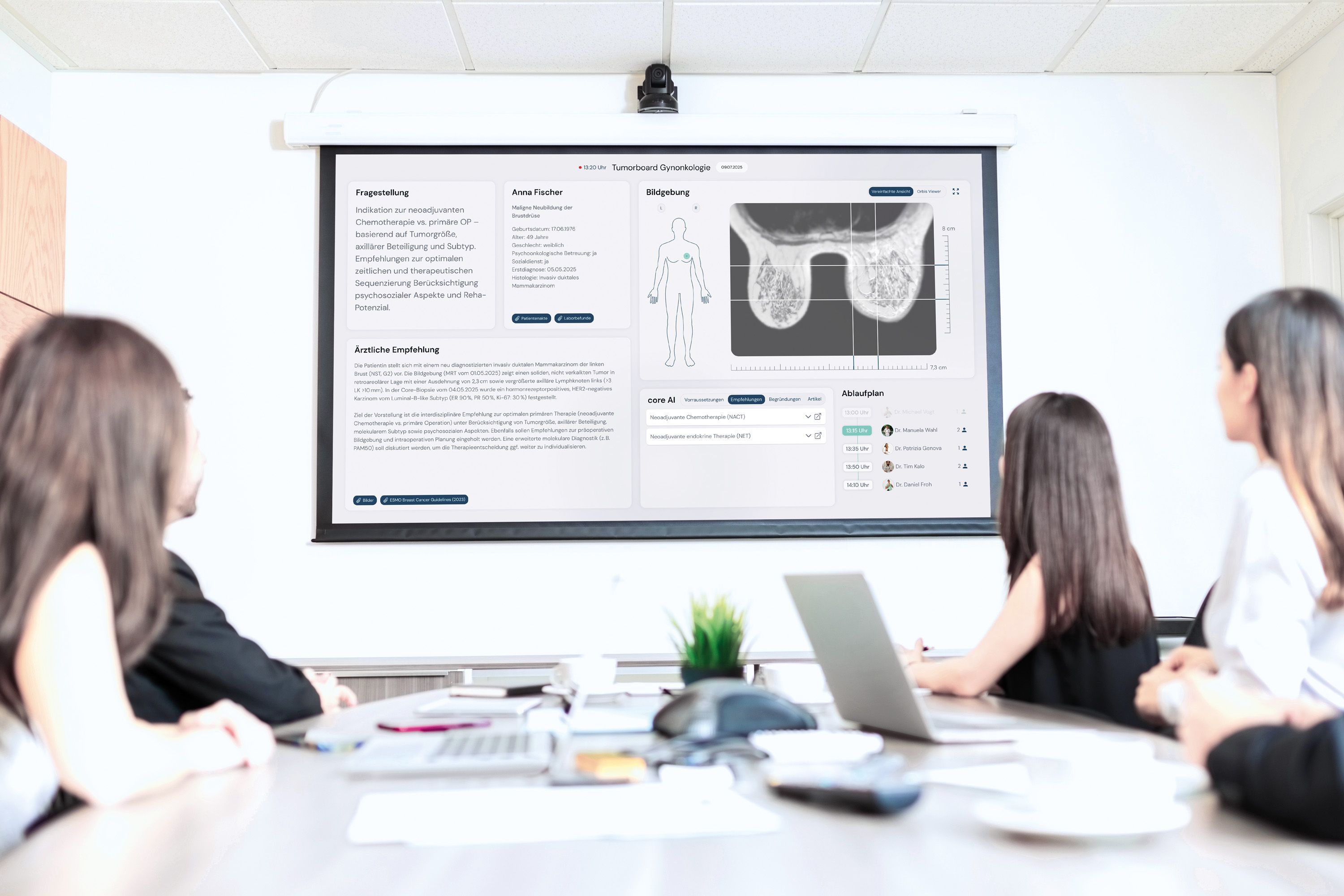
»Core stands out for its clear relevance to real-world oncology workflows, in which fragmented data and poor coordination hinder effective decision-making. The jury was impressed by its need-driven use of AI to unify information, support case comparison, and reduce cognitive load in high-stakes settings. The submission excels at translating in-depth user research into an intuitive workflow that seamlessly connects data, stakeholders, and documentation. Its system-level perspective and adaptive learning approach establish it as a credible, forward-looking solution for oncology practices.«
UX Design Awards Jury 2026 Spring
And the award goes to...
Three questions to the project team
What was the particular challenge of the project from a UX point of view?
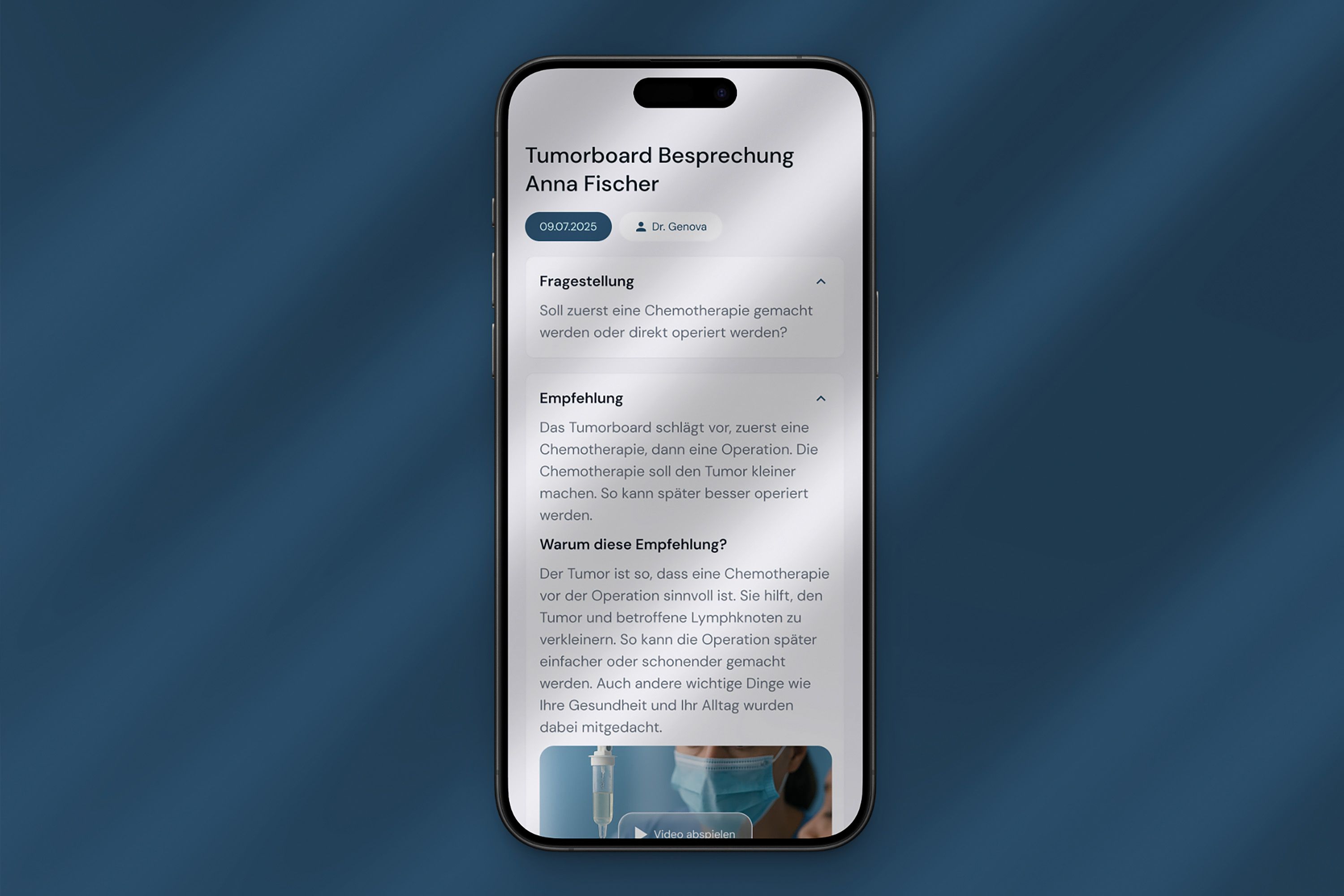
Designing core meant creating clarity in one of the most time-critical and cognitively demanding environments in healthcare. Tumorboards unite interdisciplinary teams, fragmented data and life-changing decisions — often with only two minutes per case. A key challenge was to extend this effective discussion time by structuring information so it becomes immediately accessible. At the same time, the organizational effort behind each case was a major pain point, with data collection and coordination consuming significant time. We had to redesign this workflow, standardize and communicate clinical information more clearly and reduce cognitive load while supporting both immediate decisions and the long-term progress of personalized oncology.
What was your personal highlight in the development process? Was there an aha!-moment, was there a low point?
The most impactful moment was shadowing a real tumor board. Seeing how fast cases move, how many systems run in parallel and how much pressure clinicians face made the design problem very tangible. Interviews across different hospitals confirmed how universal these struggles are. A major challenge for us was breaking down highly complex medical content without losing meaning and exploring how AI could support this responsibly. The real turning point came when our user journey revealed the tumor board itself as the bottleneck of the oncology process. Hearing later from clinicians that our concept genuinely eased their workflow was the moment everything clicked.
Where do you see yourself and the project in the next five years?
In five years, core could be implemented nationwide, ideally procured through the Federal Ministry for Digital Affairs and rolled out across German hospitals to standardize tumor-board workflows and improve equity in cancer care. A unified structure and consistent data collection would significantly strengthen personalized medicine. We’ve already shared the concept with interested clinics and hope elements will inspire future solutions. Even small improvements in this context can have meaningful clinical impact. For us, the project shows how design can create real value in environments where clarity, structure and usability directly influence medical outcomes — and it motivates us to keep working on systems that matter.