Designers
Jiayi Wang
Year
2026
Category
New Talent
Country
China
School
Xiamen University
Teacher
Xutong Zhao, Samuel Penn
Three questions to the project team
What was the particular challenge of the project from a UX point of view?
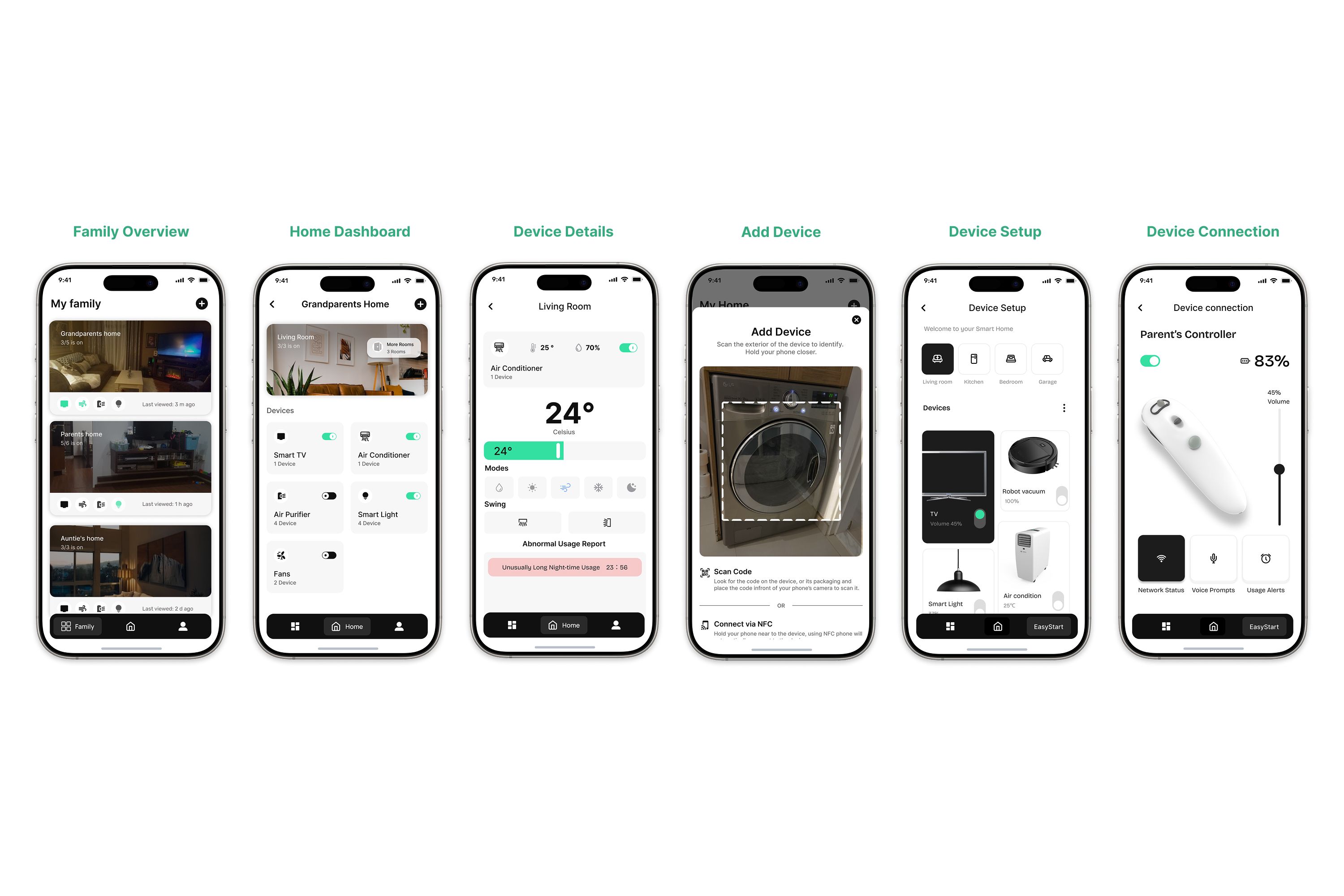
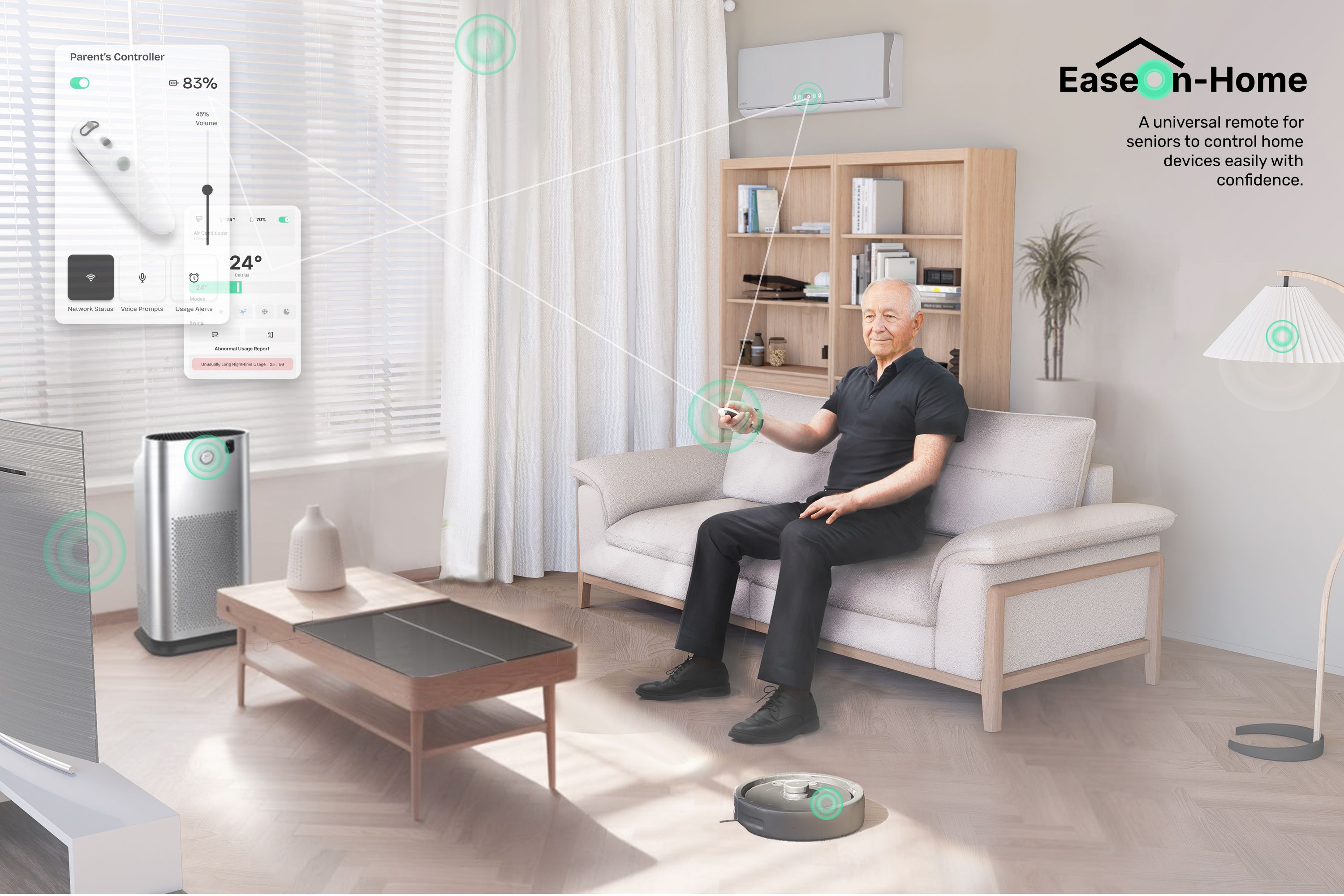
The main UX challenge of this project was understanding the complex differences between older adults’ attitudes, actual abilities, and expectations toward technology. Many are open to learning new appliances and possess stronger learning capabilities than commonly assumed, yet their sensitivity to errors, need for reassurance, and slower operational rhythm differ from conventional UX models. It was also observed that family members often expect “one-button solutions,” which can unintentionally reduce the autonomy of older adults. Therefore, the challenge was not simply to “simplify the interface,” but to rebuild complex workflows into a more predictable, low-barrier interaction model without removing meaningful control or agency.
What was your personal highlight in the development process? Was there an aha!-moment, was there a low point?
The most memorable part of the process came from interviews. Many participants actively demonstrated the new technical skills they had learned, which contradicted common stereotypes and made me realize that reduced capability is not the central barrier—rather, their autonomy is often underestimated.
The low point came when I received criticism that my product seemed no different from existing smart-home controllers. This made me question whether I had truly reduced the learning burden, or simply introduced complexity in another form. This doubt pushed me to re-examine the interaction logic and focus more on users’ expectations and emotional experience during use.
Where do you see yourself and the project in the next five years?
In the next five years, I hope to continue exploring the relationship between technology and people from a more systematic perspective, combining spatial perception from my background in environmental design with interaction logic in UX.
As for the project itself, I hope it can serve as a call for manufacturers to pay attention to cross-brand consistency and low-anxiety interactions. As technology expands, designers need to intentionally preserve interpretability and transitional space for users at different stages, rather than reducing autonomy. Regardless of how technology evolves, people still need to be treated gently.