Designers
Lingjie Guo
Year
2026
Category
Concept
Country
United States
Design Studio / Department
Lingjie Guo
Three questions to the project team
What was the particular challenge of the project from a UX point of view?
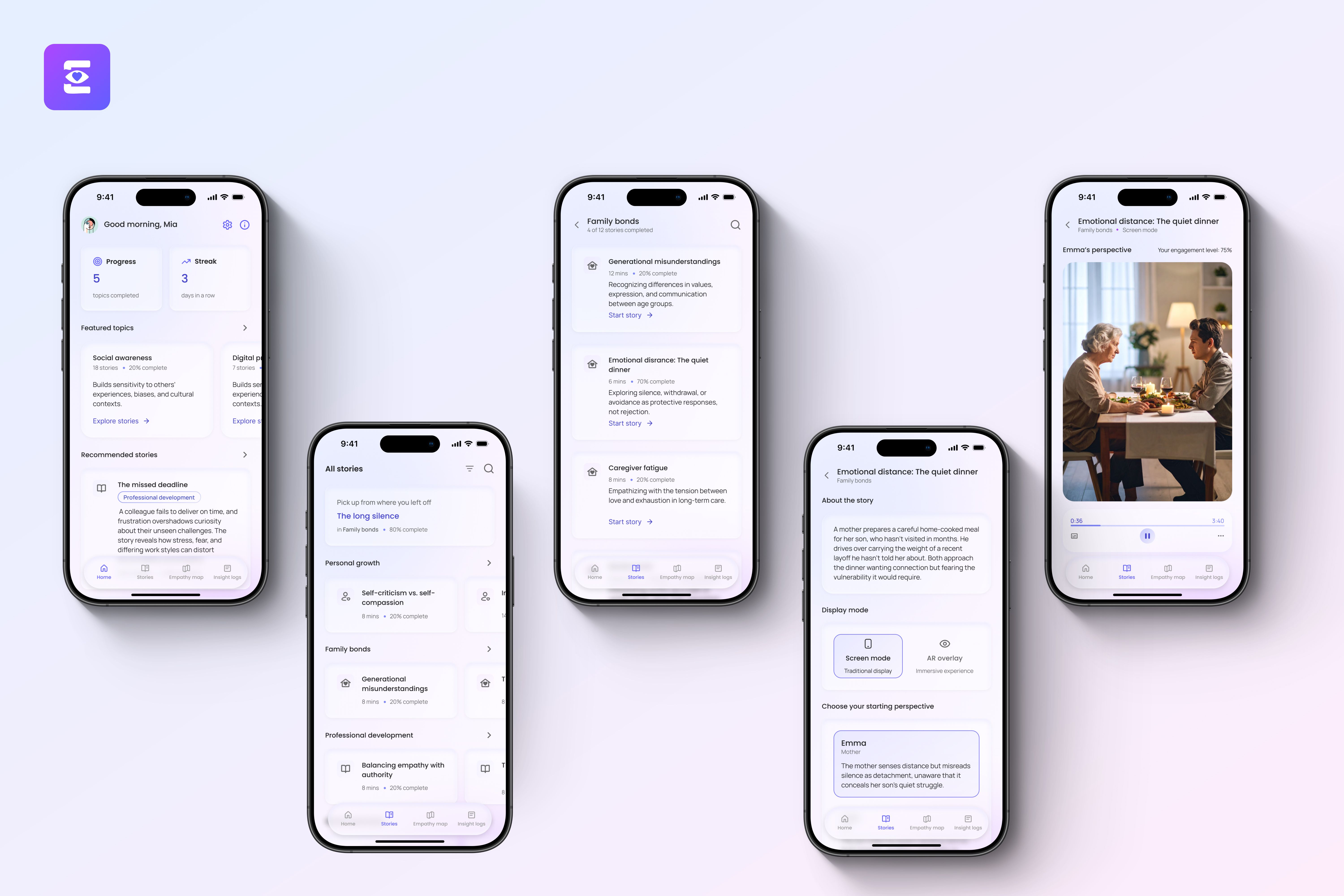
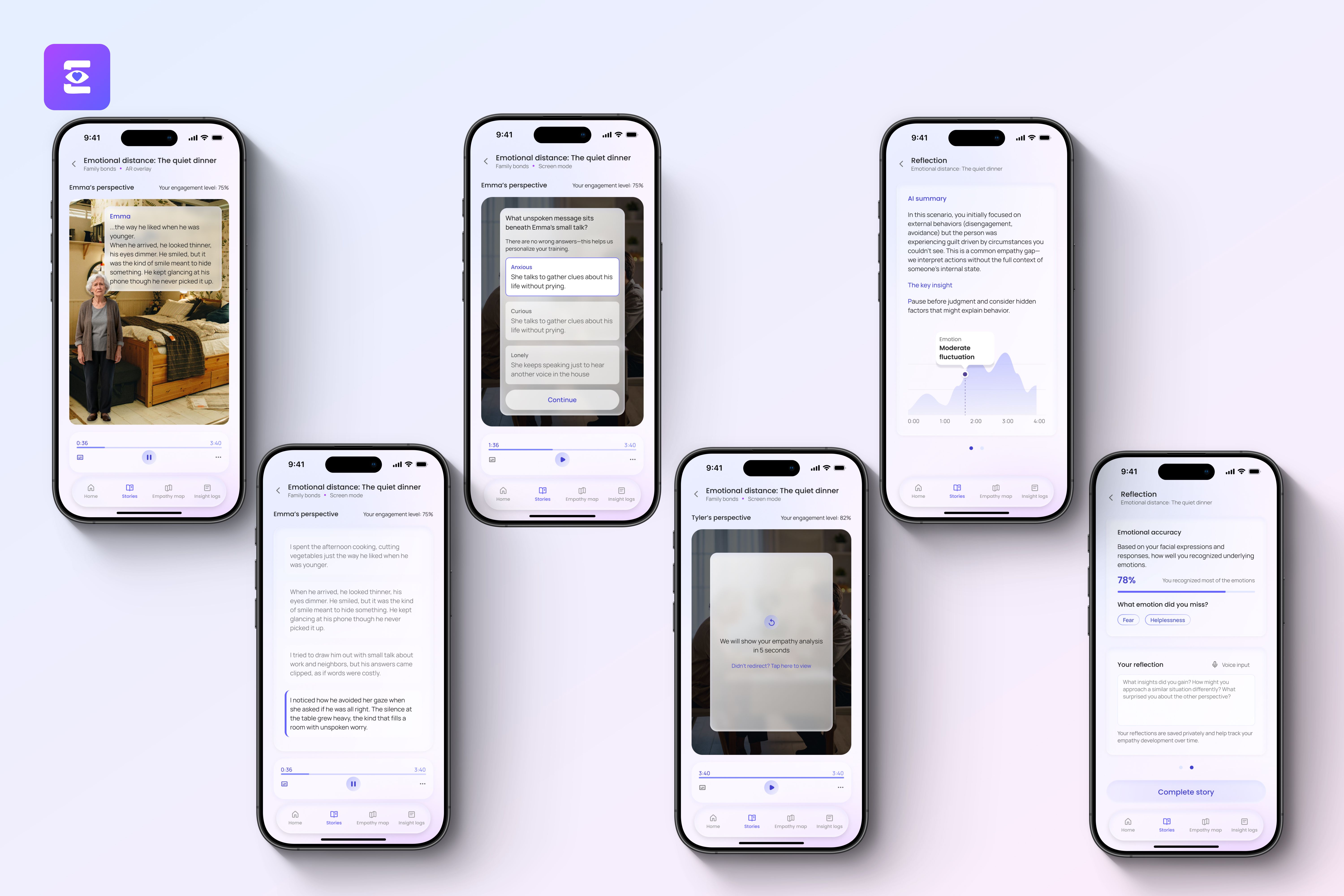
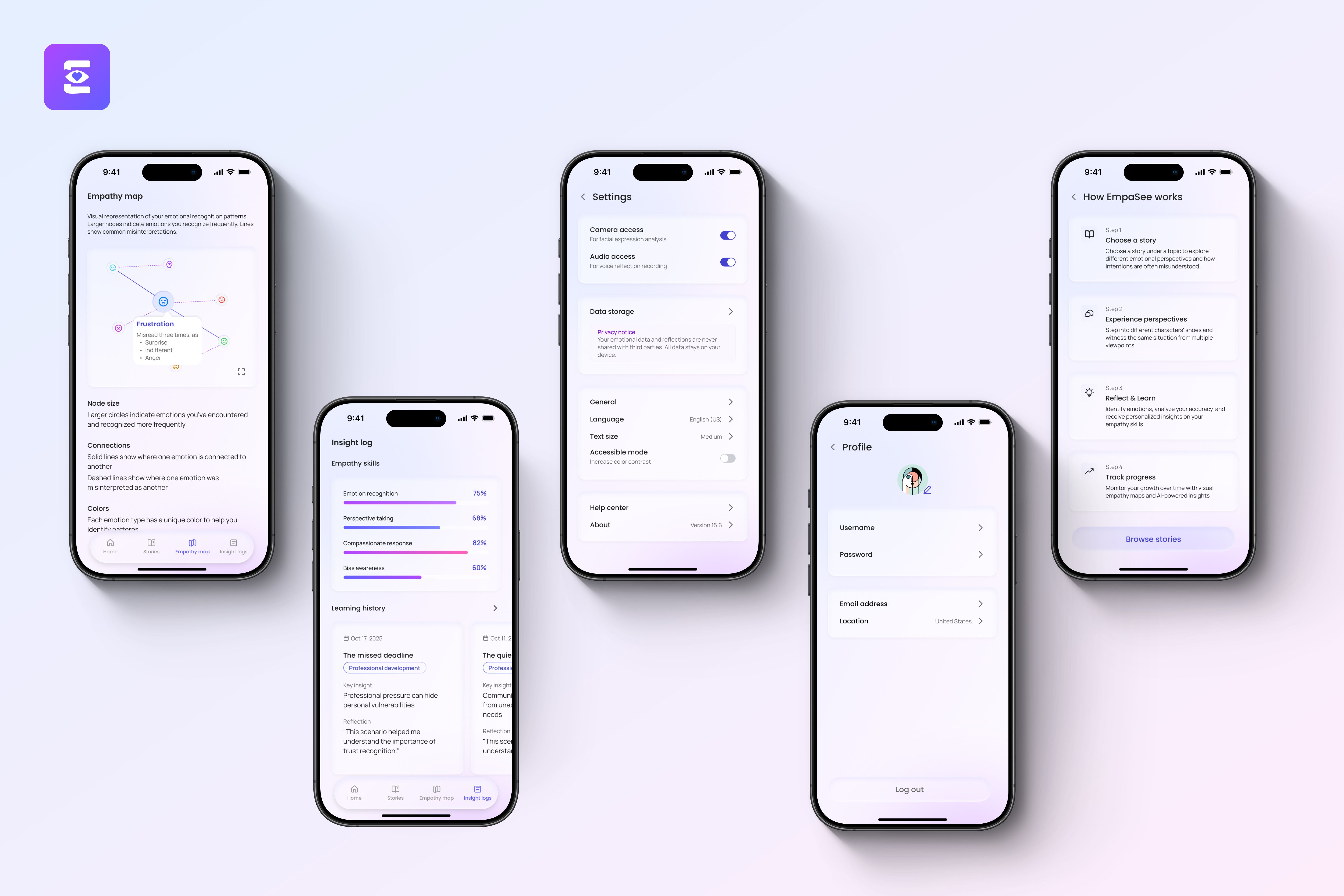
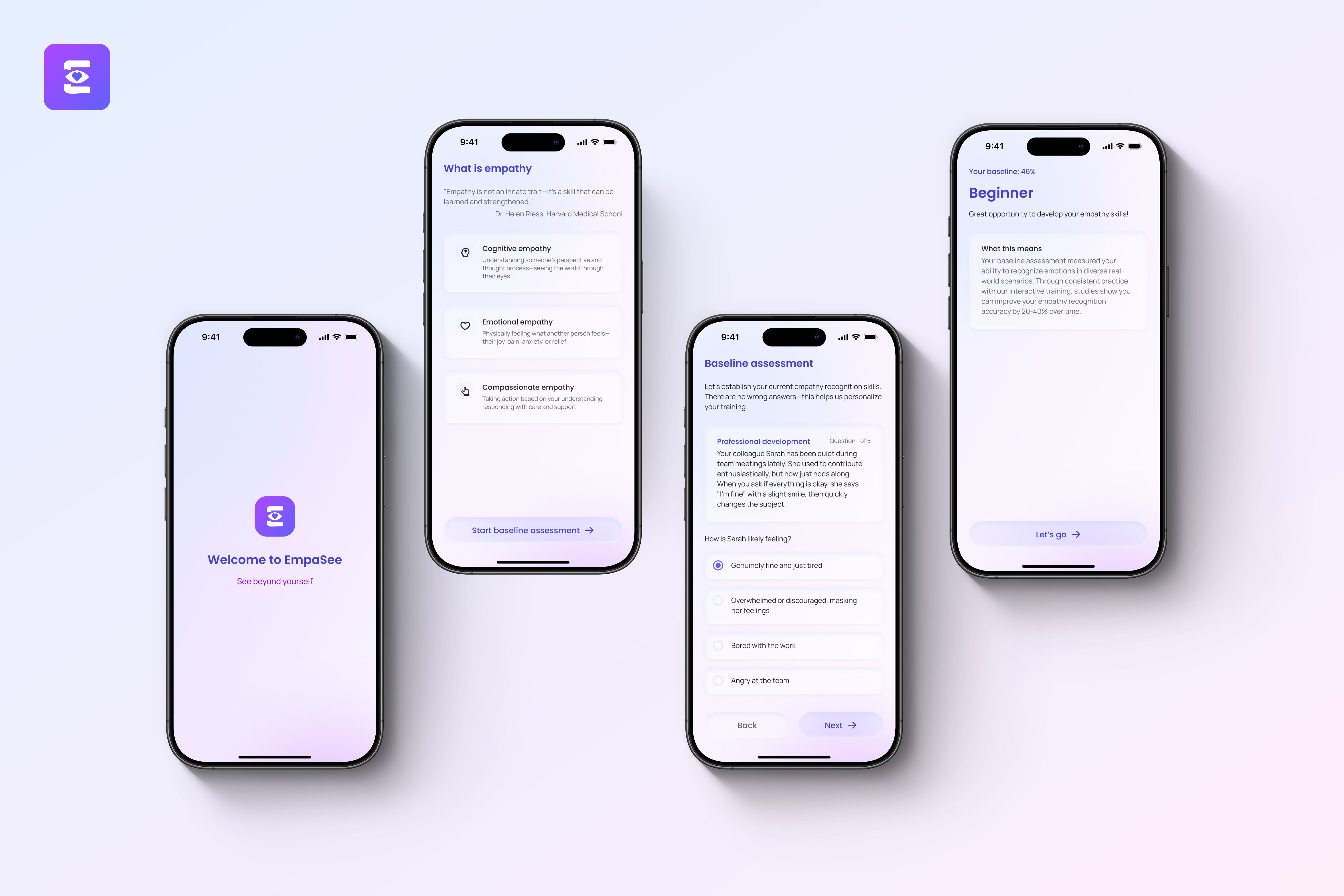
The main UX challenge was turning empathy—an internal, emotional process—into something that could be practiced through clear, structured interaction. Users needed a way to observe emotion without feeling judged, so the interface had to guide reflection while staying quiet and neutral. Another challenge was showing perspective shifts in a simple way that did not overwhelm users. AR overlay, colors, and pacing needed to be subtle, consistent, and easy to read. The design also had to support emotional safety, reduce cognitive load, and keep the experience calm so users could focus on understanding rather than performing.
What was your personal highlight in the development process? Was there an aha!-moment, was there a low point?
The highlight came when the UX flow settled into a simple loop of observe, switch perspective, and reflect. This structure made the concept clear and removed unnecessary steps. Another high point was simplifying perspective switching to a single tap, which proved the interface could teach without heavy guidance. The low point was early versions that added scoring, dense layouts, and complex navigation. These elements created cognitive load and worked against the calm, reflective nature of the project, forcing a full redesign toward clarity and emotional safety.
Where do you see yourself and the project in the next five years?
The project will continue refining how digital tools teach emotional understanding. The goal is to build a model that stays simple, clear, and focused on perception rather than performance. In five years, the concept could evolve into a broader set of perspective-based learning tools, each centered on calm interaction and emotional clarity. Personally, I expect to deepen my work in user experience with a stronger focus on cognitive and emotional design, using projects like EmpaSee to explore how technology can support clearer communication and better understanding in daily life.