Designers
Sreesha
Year
2026
Category
New Talent
Country
United States
School
Indiana University, Indianapolis
Teacher
Zebulun Wood
Three questions to the project team
What was the particular challenge of the project from a UX point of view?
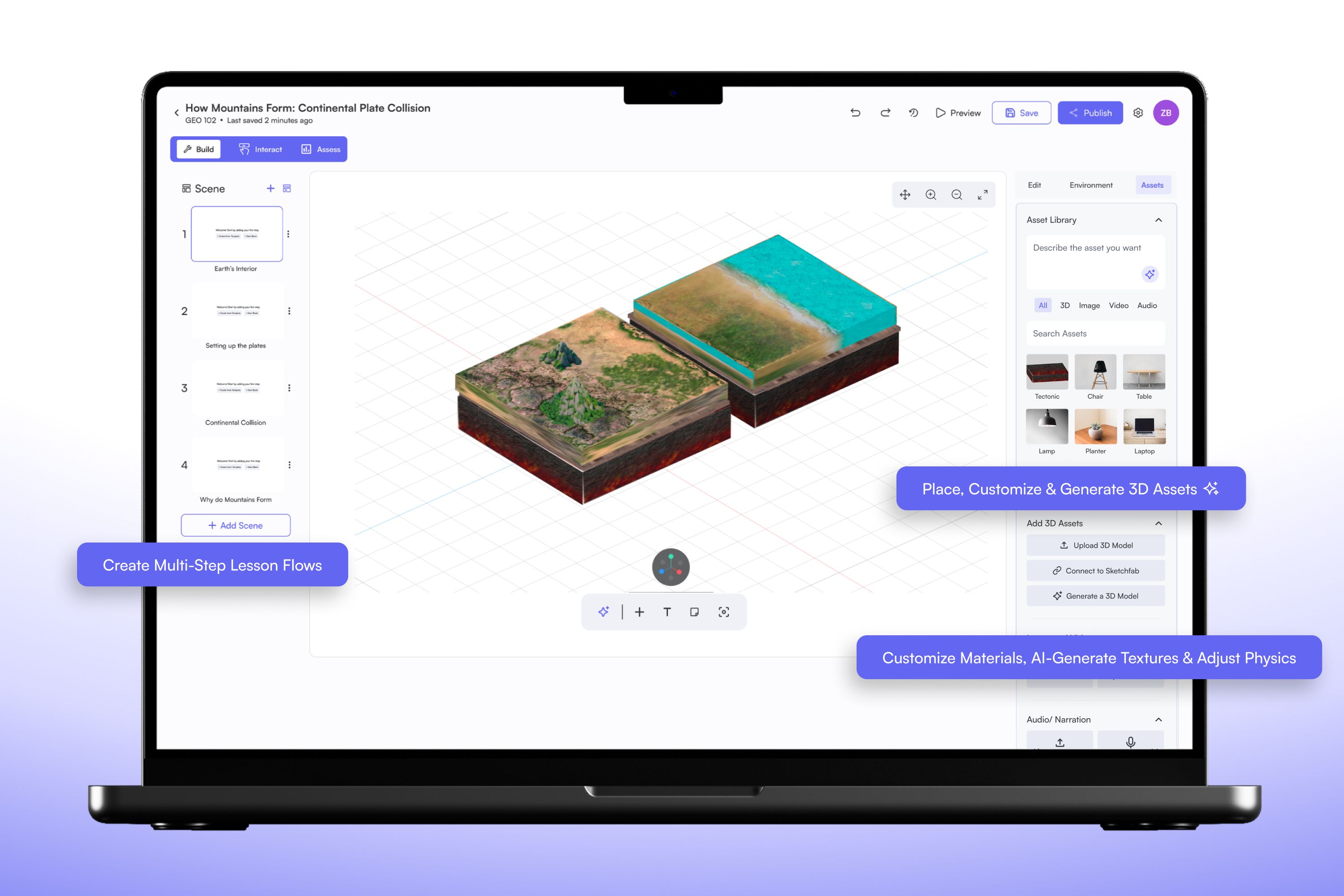
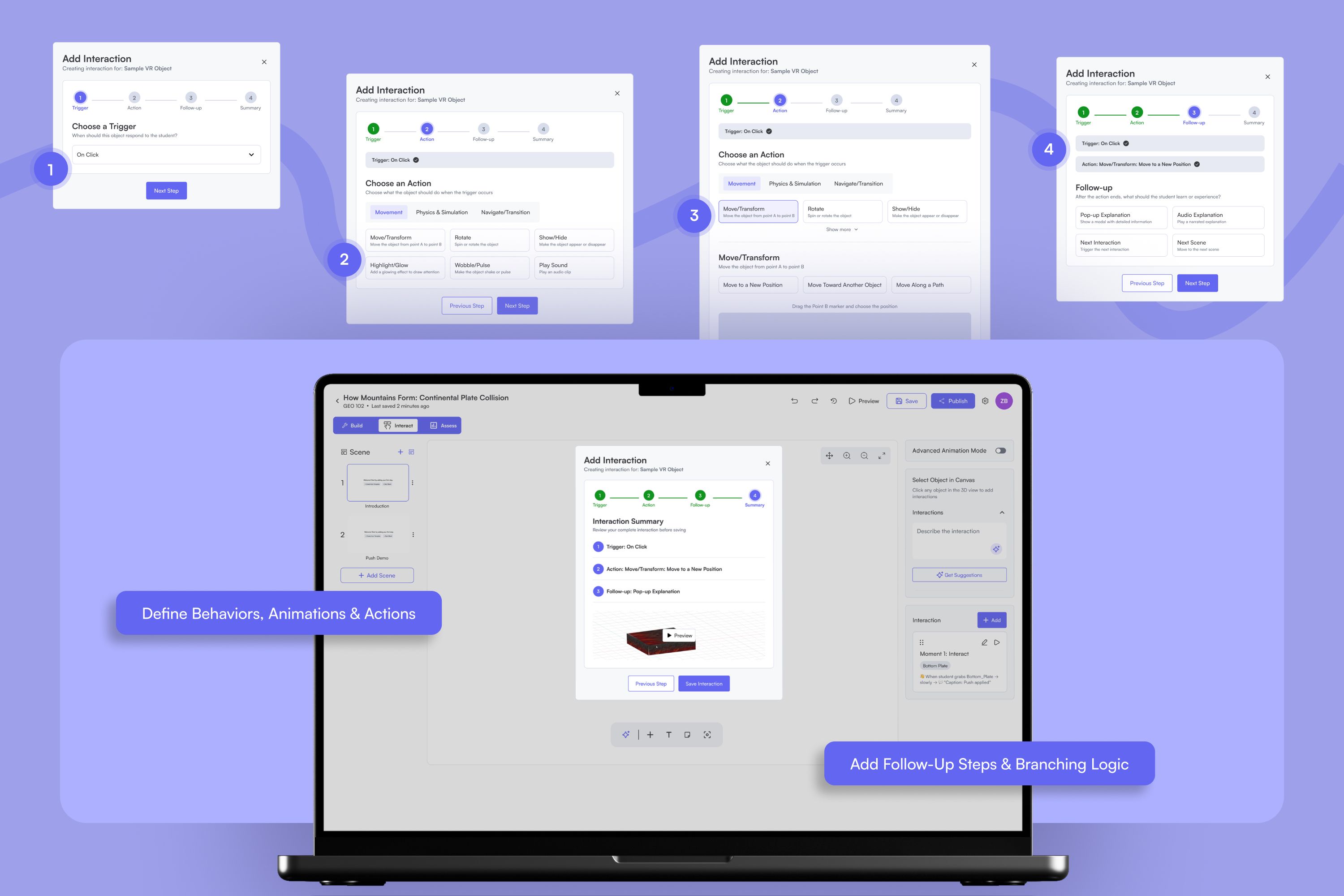
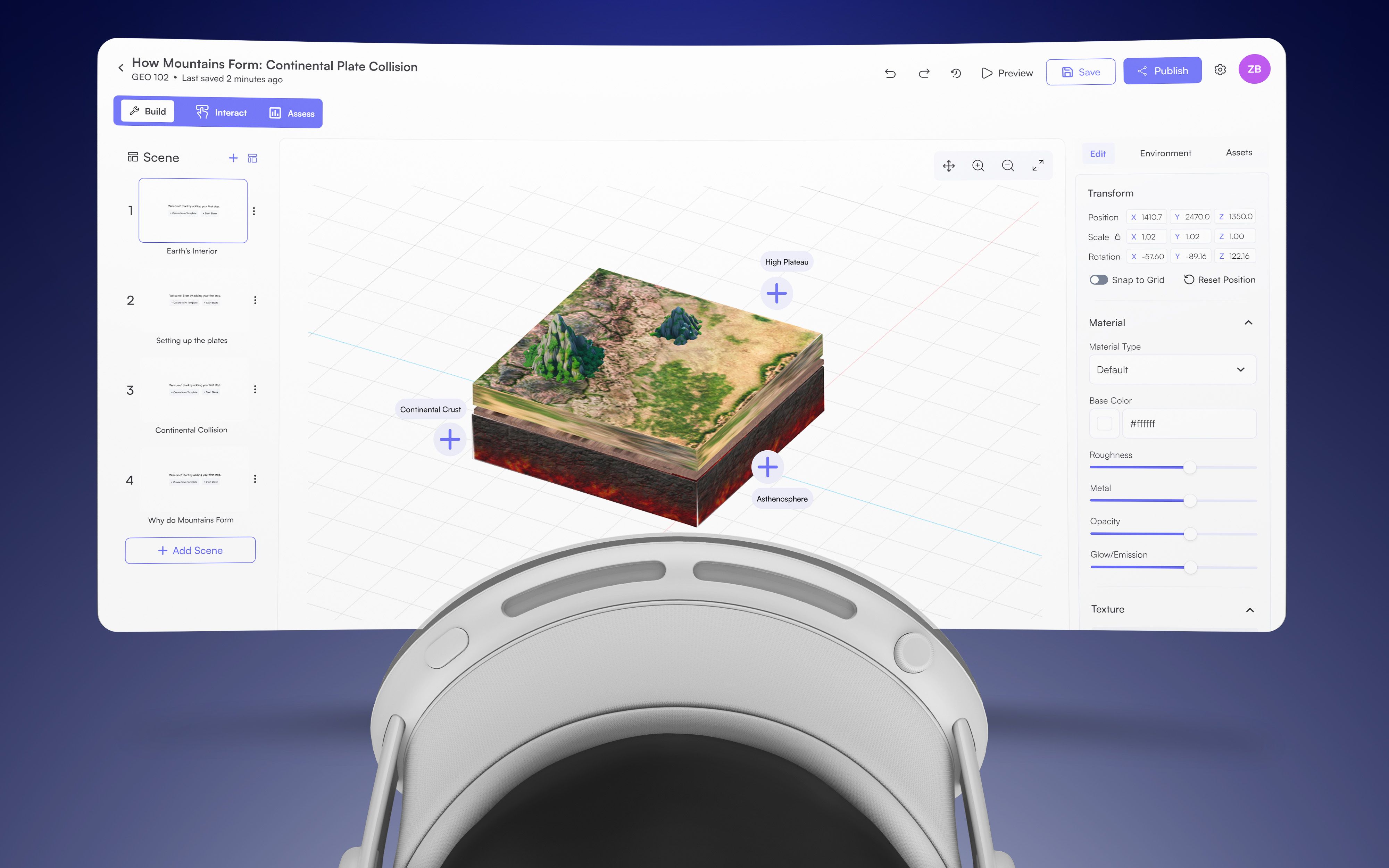
The core challenge was designing a single, intuitive flow that could support two very different needs at once: creative 3D building and structured lesson design. Educators wanted freedom to explore and create in 3D, but also needed clear guidance to add checkpoints, questions, and learning moments that form a complete lesson. From a UX perspective, this meant preventing cognitive overload while still exposing complex functionality. The interface had to guide educators through objectives, progression, and assessment without feeling rigid or interrupting their creative flow. Designing this balance between flexibility and structure while supporting different skill levels and accessibility needs was the central UX challenge of the project.
What was your personal highlight in the development process? Was there an aha!-moment, was there a low point?
One of my biggest highlights in the development process was the moment we realized the tool shouldn’t be designed as a 3D editor with lesson features added on, but as a lesson-building experience where 3D is just one of the mediums. That shift changed how we approached the entire flow and helped simplify what initially felt like an overwhelming problem.
The lowest point came during early user testing, when the initial concepts failed to resonate with educators and felt misaligned with their mental models. The key “aha” moment followed when we reset the UX and reframed the experience into three stages: Build, Interact and Assess, which immediately reduced complexity and clarified how the tool fit into educators’ teaching workflows.
Where do you see yourself and the project in the next five years?
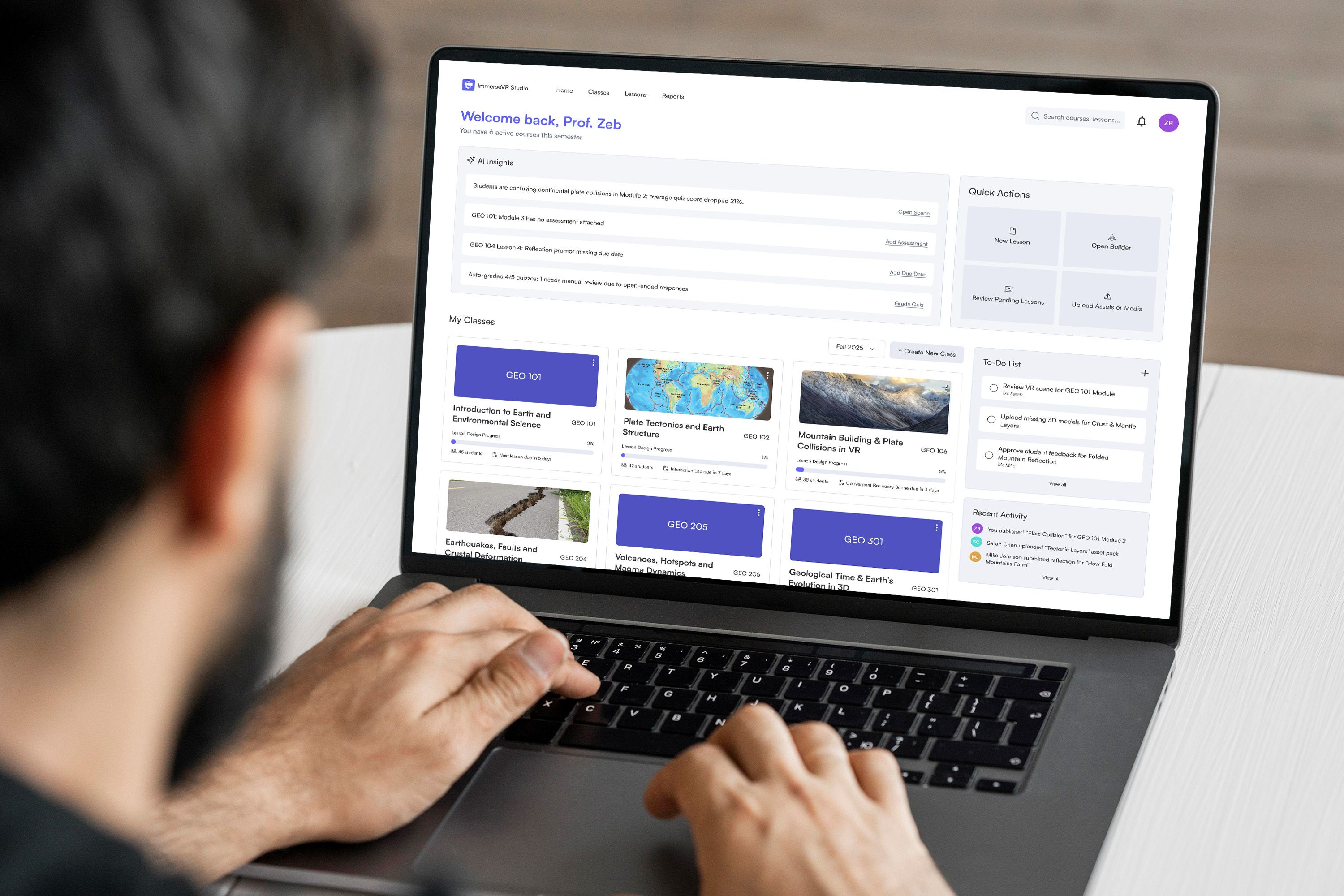
Over the next five years, I see the project evolving into a scalable platform for immersive, lesson-driven education, particularly for complex fields like medical training. In the near term, we are building the platform in close collaboration with medical school educators to ensure it fits naturally into existing teaching workflows and curriculum needs.
Longer term, I envision the platform expanding to support K–12 learners and a wider range of educational contexts. For me, this project represents a broader commitment to designing human-centered systems in emerging technologies that meaningfully enhance learning at scale. A play where immersive tools don’t replace educators, but amplify how they teach and how students learn.