Designers
Amenih Abdul Rahman, Sana Javed Mukhtar
Year
2026
Category
Product
Country
Denmark
Design Studio / Department
SwipBox UX & User-Planet
Three questions to the project team
What was the particular challenge of the project from a UX point of view?
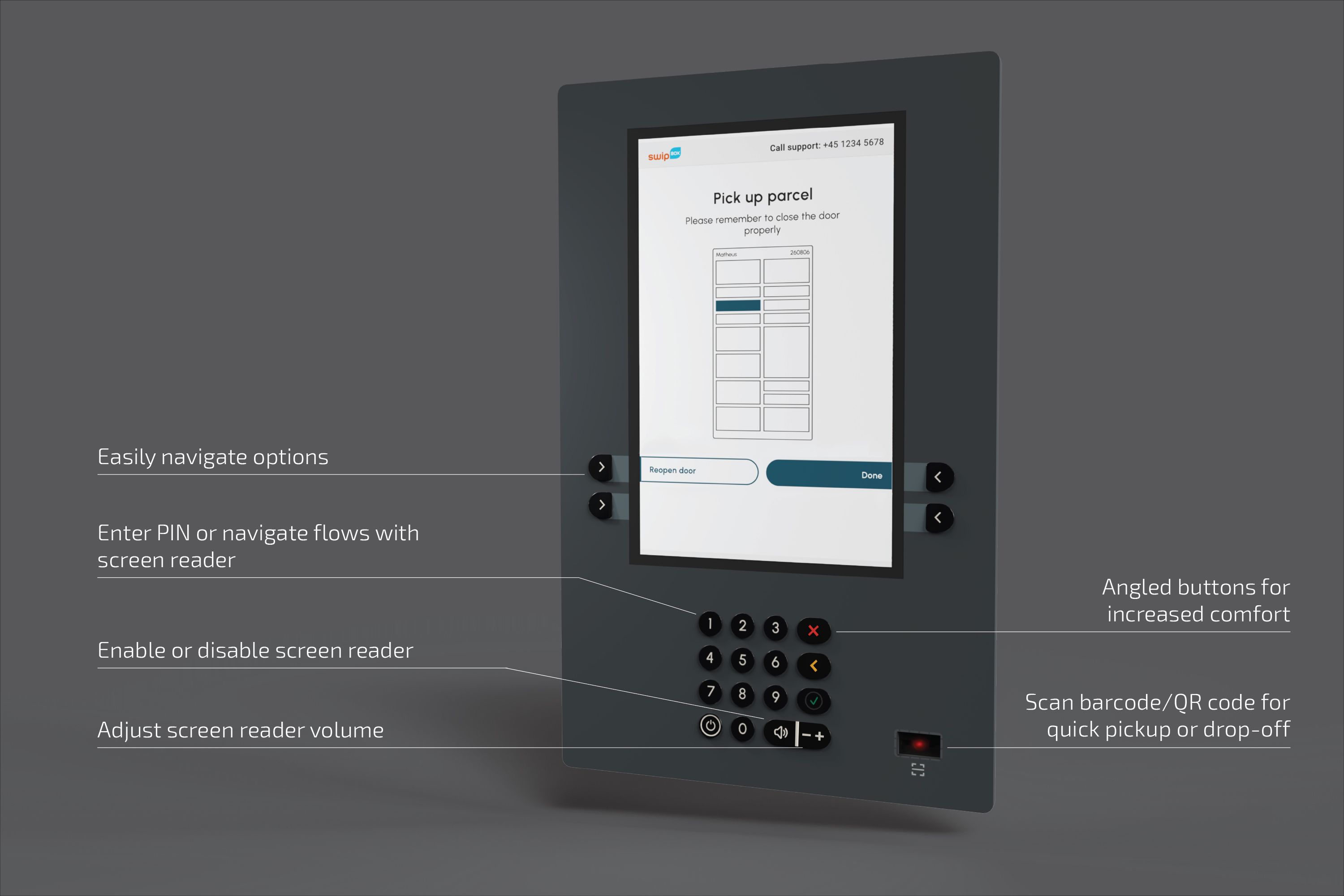
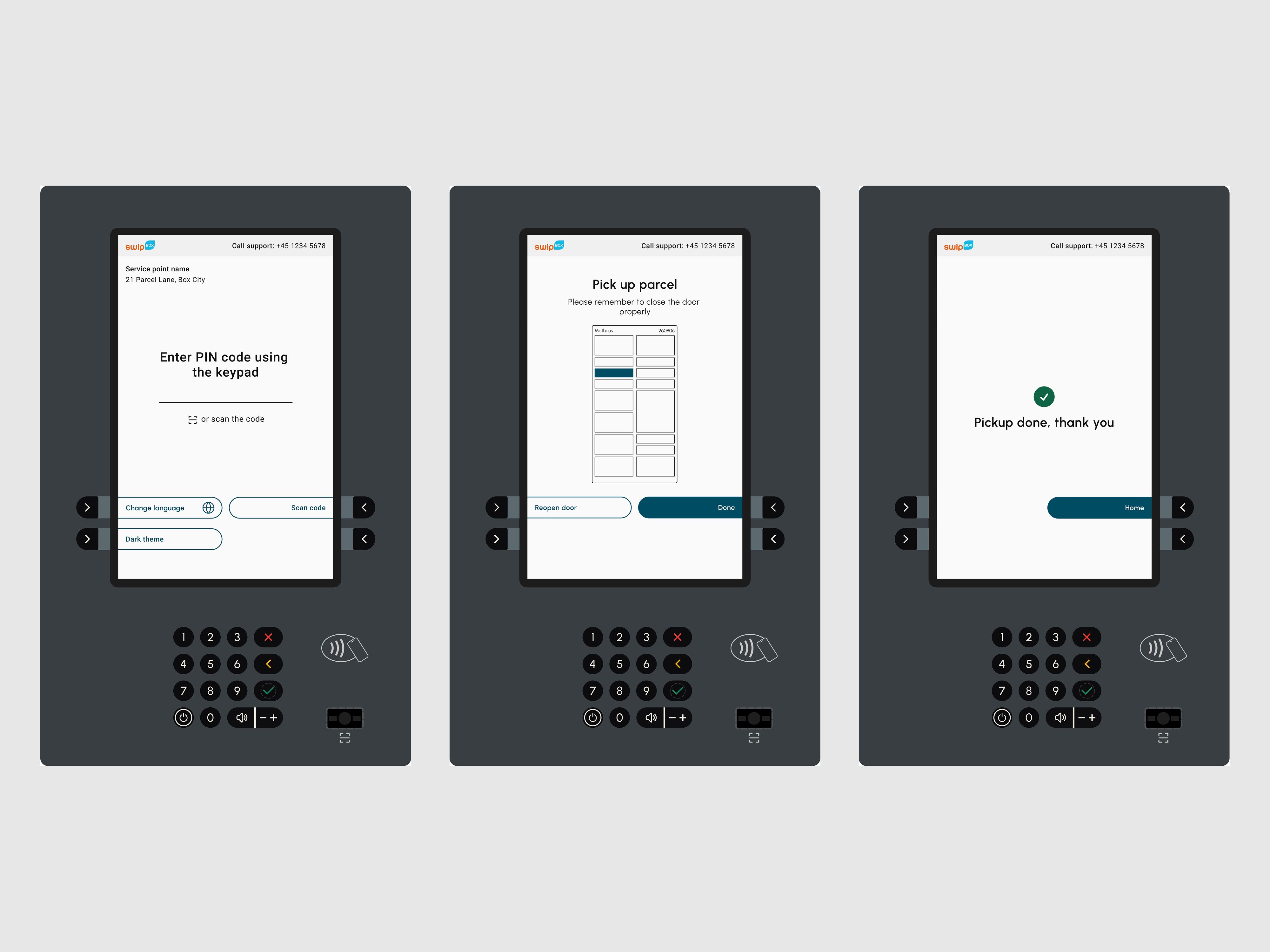
The early challenge wasn’t design ,it was mindset. Some questioned designing for disabled users at all, until they saw how inaccessible many everyday products truly are. That insight shifted attitudes and united everyone behind inclusive design. Once the team understood the “why,” we faced the “how.” Meeting strict EU accessibility standards, and doing so while preserving a seamless experience for all users—meant rethinking layouts and flows within tight hardware limits. The mix of physical keypad and touchscreen also required careful interpretation of the standards to ensure a coherent UX across both inputs. And with teams in three locations, aligning on evolving requirements added another layer of complexity.
What was your personal highlight in the development process? Was there an aha!-moment, was there a low point?
A real aha! moment was observing a blind participant interacting with the 3D prototype, successfully completing a parcel pickup flow.
The user relied solely on keypad layout with the embossed buttons and voice instructions, using only the physical buttons to control the flow. No hesitation, no external help, just intuitive interaction.
That’s when it clicked: We’re not just testing a concept, we’re building real independence into the product.
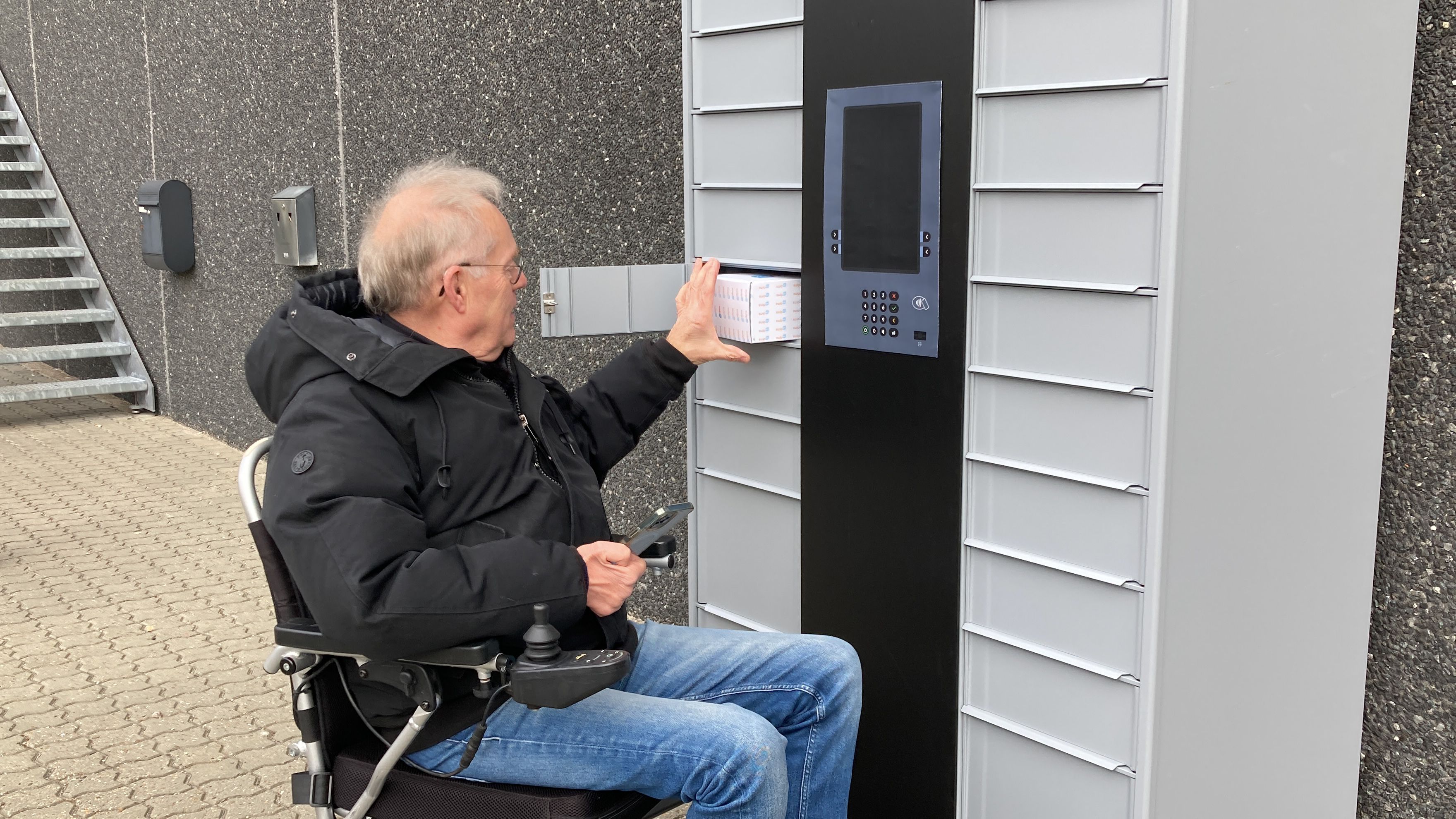
This was particularly validating as we’d struggled to design a keypad that would work for everyone, whether from a wheelchair or a standing position.
User testing validated all of our early design decisions and was clear confirmation that inclusive design isn't a compromise, it’s a foundation.
Where do you see yourself and the project in the next five years?
We expect to see our new products rolling out during 2026, so the most exciting phase is still ahead of us. We’re looking forward to seeing them in real use and refining flows as new insights emerge.
In five years, we see this project shaping our entire ecosystem: future products will build on these accessibility foundations rather than starting from scratch. The project has already shifted how we collaborate and make decisions, and we hope its long-term impact will raise expectations for accessibility across the industry. And as designers, we expect to grow alongside it – continually sharpening how we turn user diversity into better experiences for everyone.