Designers
Alexander Wagner, Hanul Yim, Thianon Klausmann
Year
2026
Category
New Talent
Country
Germany
School
Berlin International University of Applied Sciences
Teacher
Henrik Riess, Felix Mueller, Alexander Tibus, Robin Woern, Barbora Demovic
Three questions to the project team
What was the particular challenge of the project from a UX point of view?
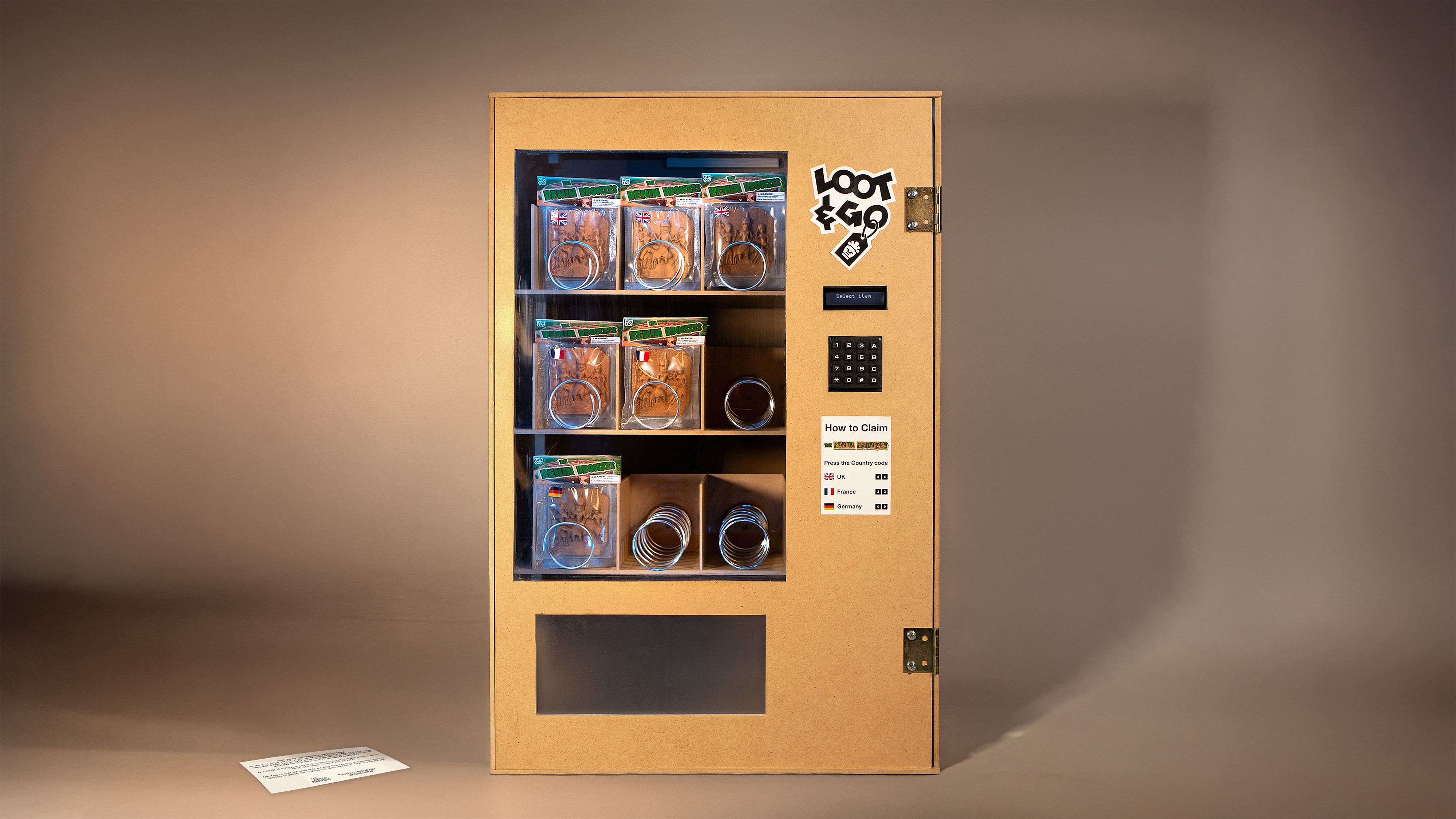
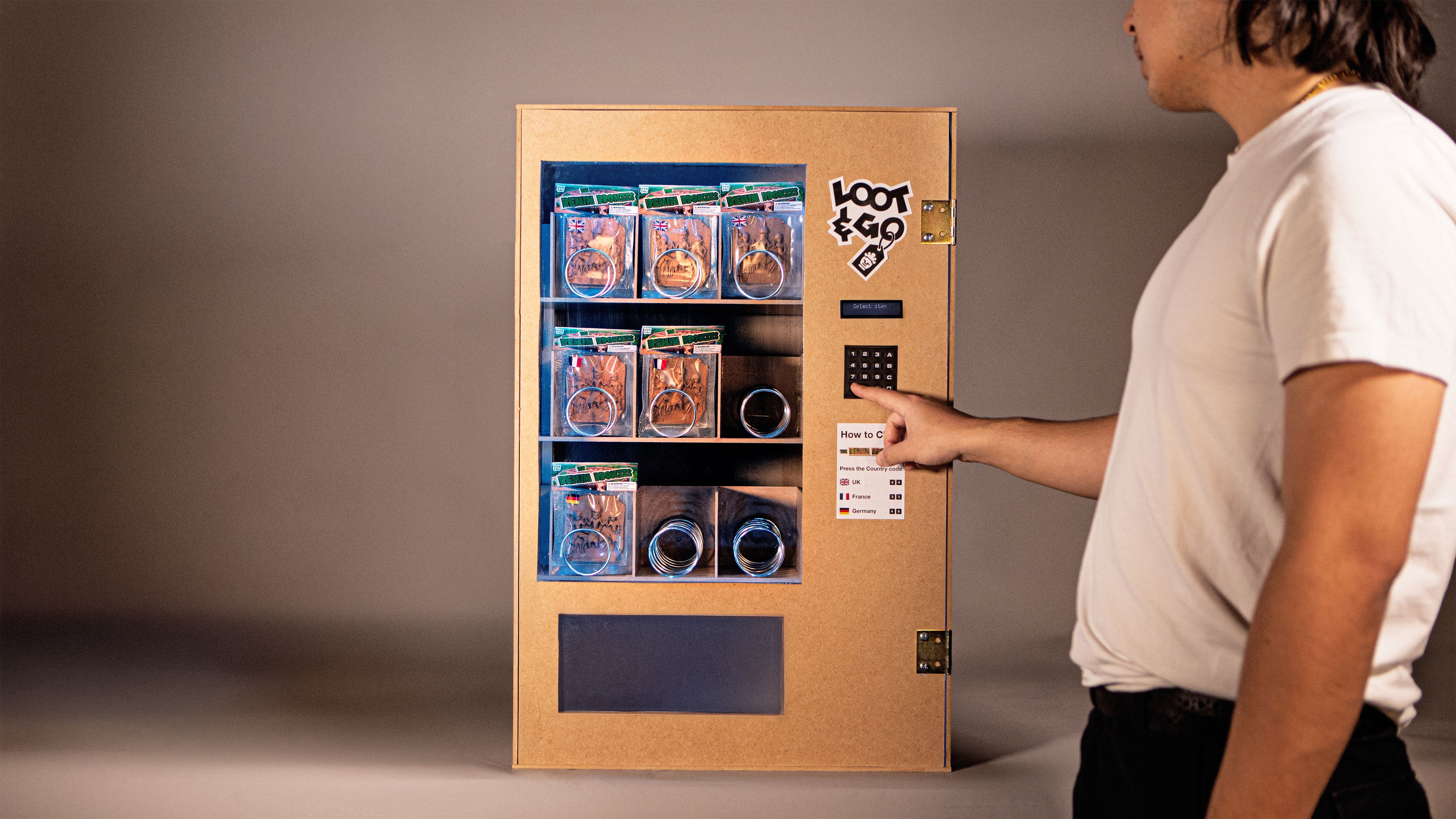
The main UX challenge was designing a journey that communicates a complex political issue in a single, understandable interaction. The topic of restitution is often hidden behind legal and institutional language, so the experience had to provide just enough context without overwhelming users. Translating abstract policy differences into an intuitive, physical interaction was central to the UX design challenge.
What was your personal highlight in the development process? Was there an aha!-moment, was there a low point?
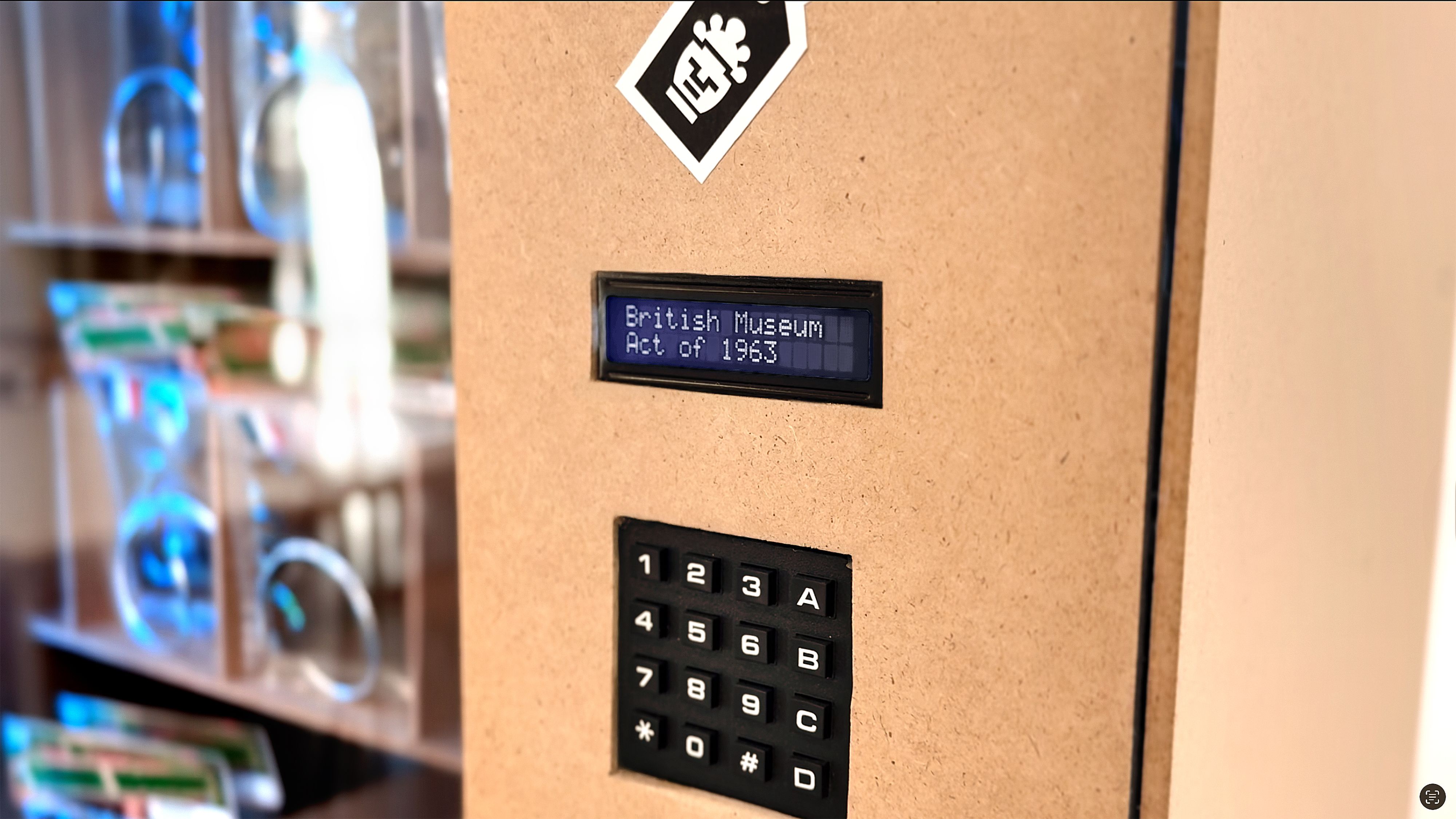
The key "aha!" moment occurred during prototyping, when we realized that different mechanical behaviors could metaphorically represent each country’s restitution stance. Germany fully dispensed the replica, while the UK and France appeared to dispense it but pull it back halfway, transforming complex political positions into an immediate, embodied experience. This moment clarified the project’s core interaction logic.
Where do you see yourself and the project in the next five years?
In the next five years, we see Loot & Go being adapted for exhibitions, museums, and educational contexts beyond its original scope. The project could expand to include additional countries, artifacts, or historical cases while maintaining its core UX principle: translating abstract political processes into tangible experiences. For us as designers, the project represents a foundation for working with critical, experience-driven UX at the intersection of physical computing, storytelling, and public engagement.