Designers
Jeong Eun Yoo
Year
2026
Category
New Talent
Country
Korea, Republic
School
Royal College of Art
Teacher
Ji Hyun Yoo
Three questions to the project team
What was the particular challenge of the project from a UX point of view?
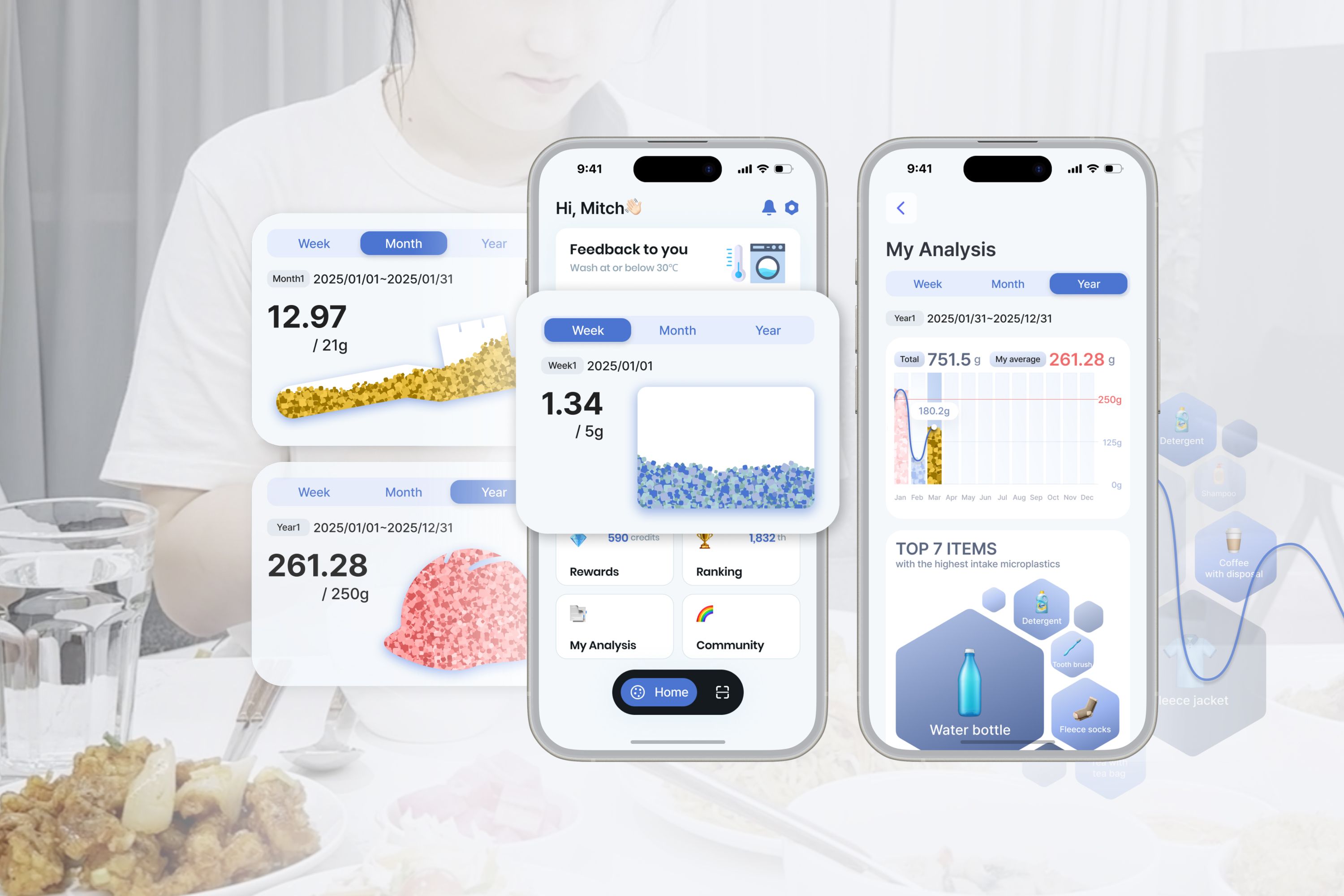
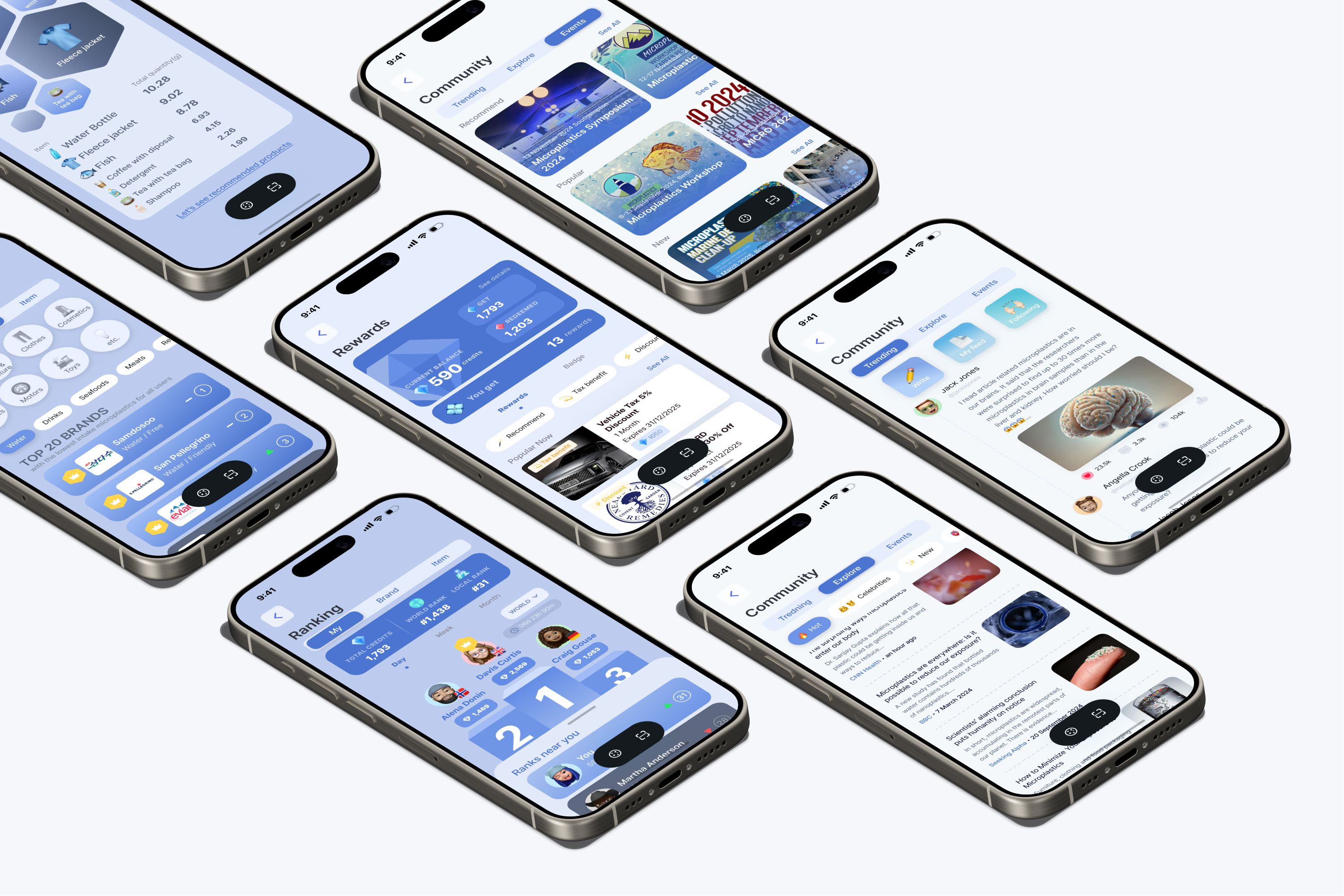
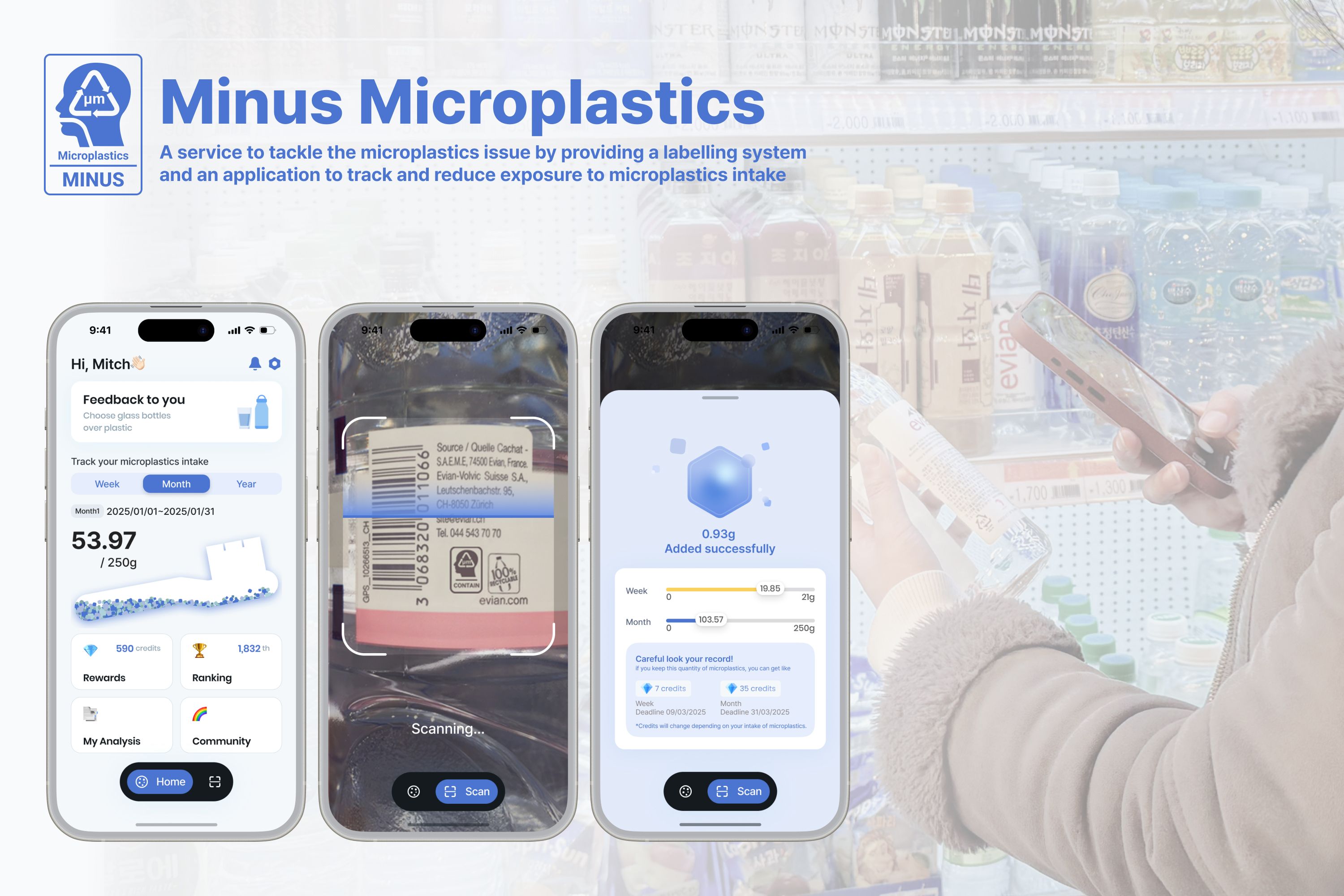
The key UX challenge was translating complex and evolving scientific knowledge about microplastics into actions people could realistically take in everyday life. While awareness is growing, research revealed that many users struggle not with concern, but with knowing what to do differently. The challenge was to design an interface that lowers cognitive load, avoids fear-driven messaging, and fits seamlessly into daily routines. This required balancing scientific accuracy with clarity, creating intuitive indicators instead of raw data, and designing a journey that supports gradual behaviour change rather than one-off decisions. Ensuring usability across different literacy levels while maintaining credibility was central to the UX approach.
What was your personal highlight in the development process? Was there an aha!-moment, was there a low point?
The most significant aha!-moment came when I realised that many people were not inactive because they did not care, but because they lacked practical ways to act through interviews. Participants were aware of microplastic risks, yet felt powerless due to unclear information and the absence of tools to track their exposure. This insight shifted the project’s focus from raising awareness to designing for actionability, redefining the service as a decision-support tool rather than an information platform.
A key difficulty was visualising exposure while maintaining scientific credibility. Through iterative design, the concepts of estimated exposure levels and visual trends emerged, creating a balance between accuracy and user understanding.
Where do you see yourself and the project in the next five years?
In next five years, I see MinusMicroplastics evolving into a trusted infrastructure that supports everyday decision-making, research, and policy development around microplastic exposure. The project aims to build partnerships with research institutions through MOUs to strengthen scientific credibility and refine shared labelling standards. Collaboration with ESG-oriented companies would enable incentive-based user programmes while creating value through aggregated, anonymised insights. The platform is envisioned as a scalable startup offering premium exposure reports and data-driven services. Personally, I aim to grow as a service designer working at the intersection of sustainability and public health, contributing to real-world impact.