Designers
Yun-Rou Chang, Chia-Chieh Tsai
Year
2026
Category
New Talent
Country
Taiwan
School
National Taipei University of Technology
Teacher
Ko-Chiu Wu, Chien-Wen Cheng
Three questions to the project team
What was the particular challenge of the project from a UX point of view?
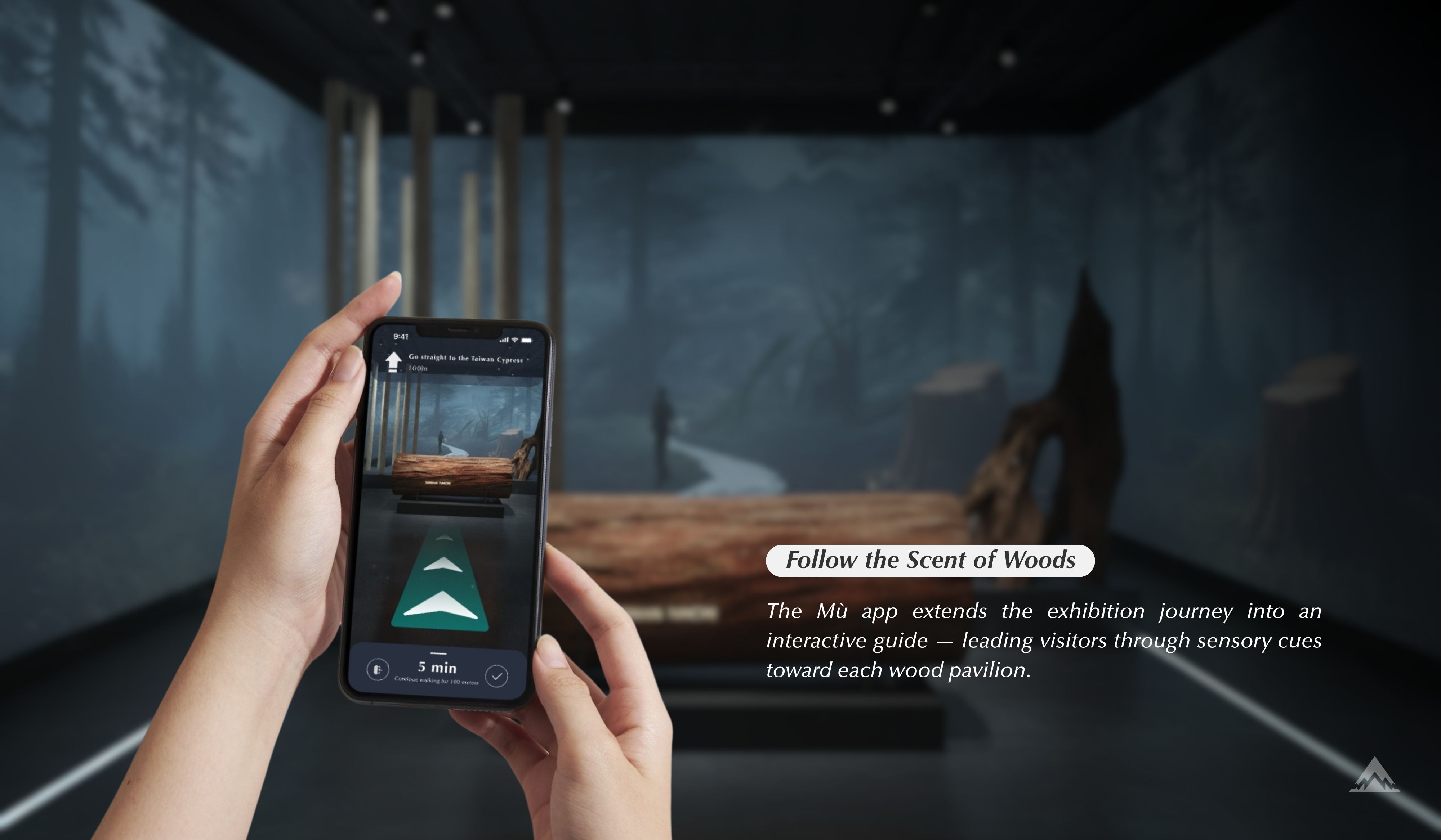
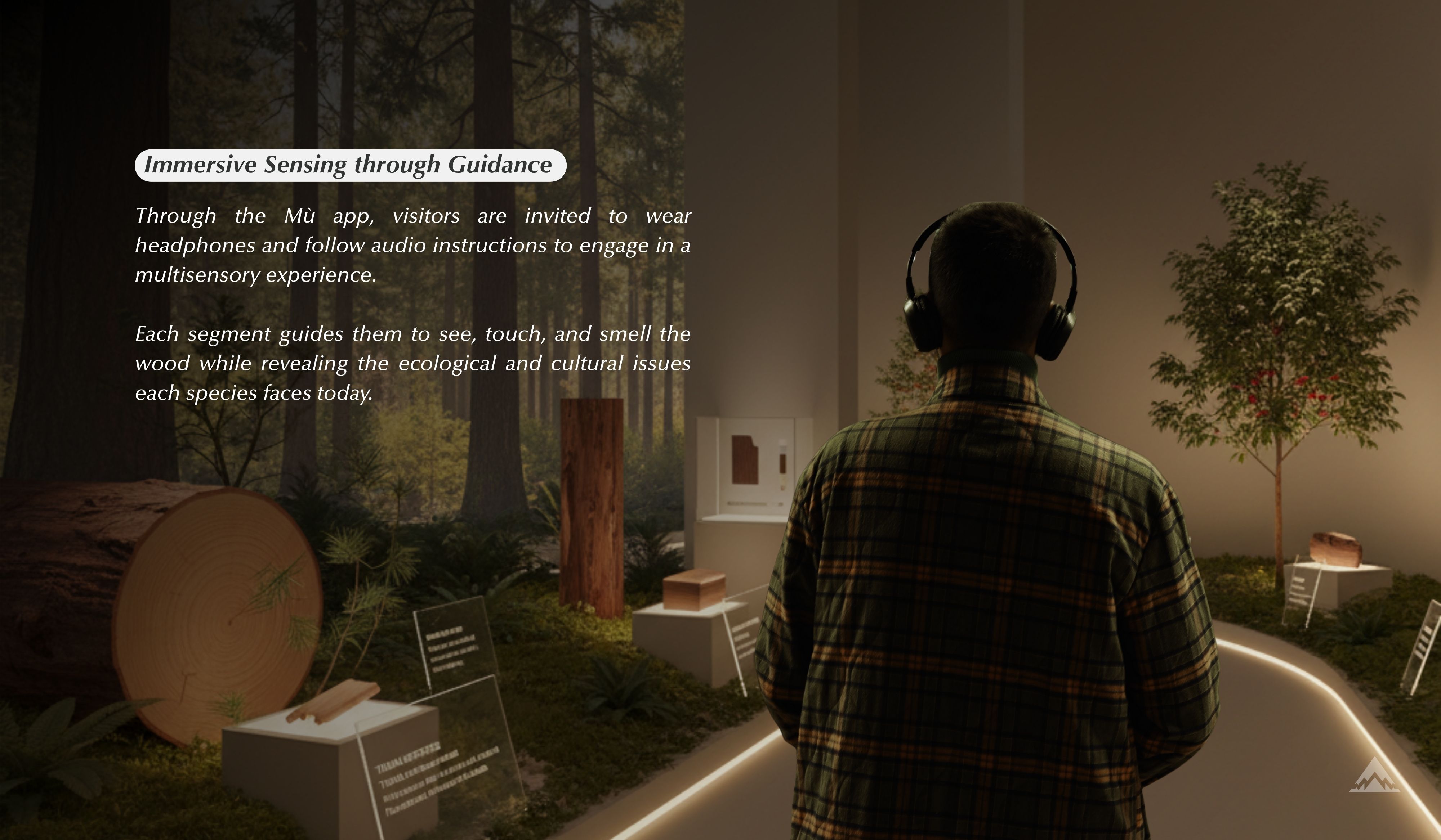
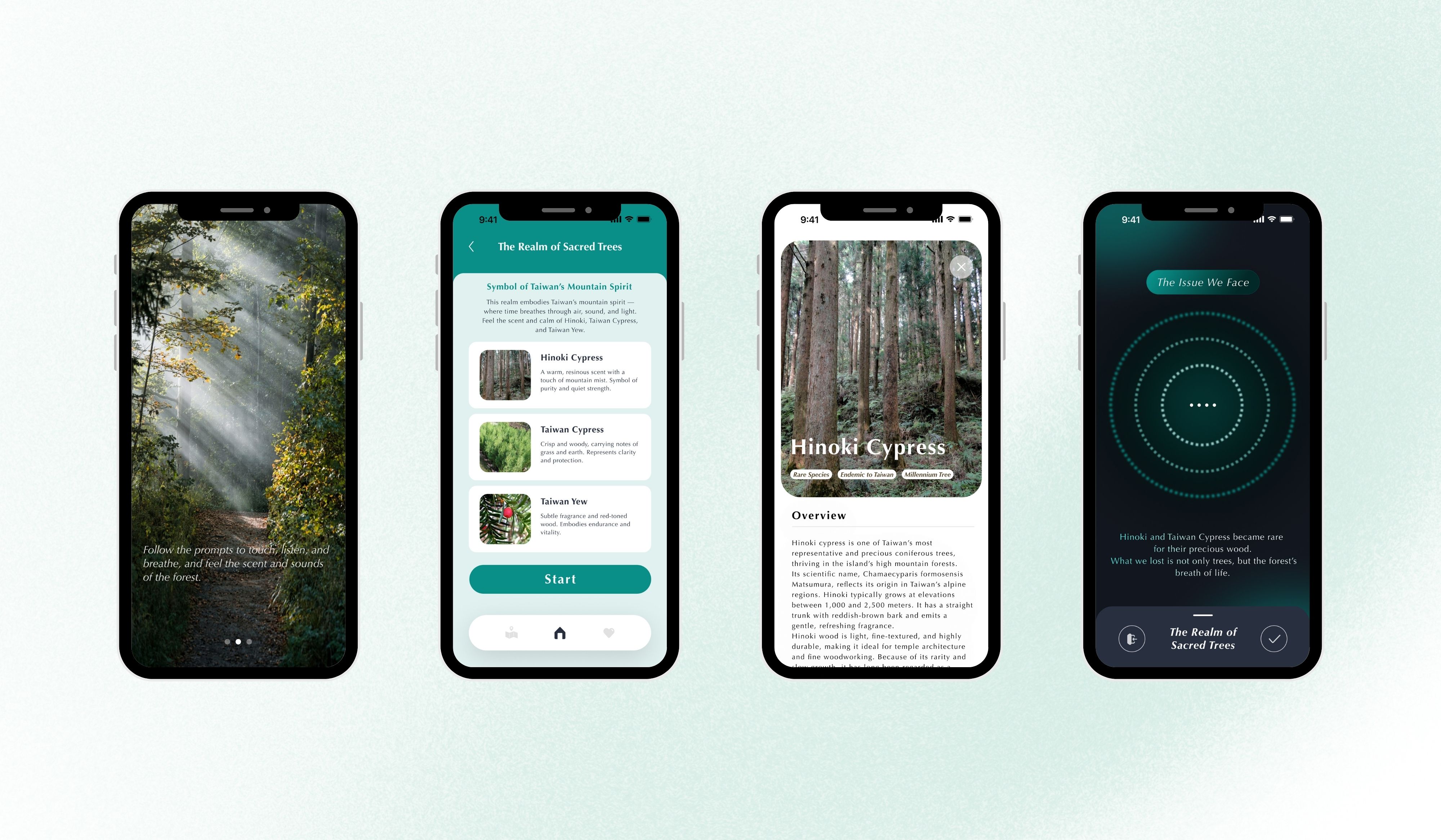
The core challenge was translating the abstract loss of Taiwan’s "precious woods," often seen merely as commercial commodities, into a felt reality for urbanites. Research showed that users were "nature-starved" yet "overload-averse," explicitly rejecting text-heavy museum lectures. The UX hurdle was orchestrating a "calm tech" experience that balanced physical sensory cues, such as scent and sound, with digital storytelling. Dual navigation pathways were designed, including structured tours and free exploration, to accommodate diverse pacing needs while ensuring that the transition from sensory immersion to ecological education felt seamless and restorative rather than demanding.
What was your personal highlight in the development process? Was there an aha!-moment, was there a low point?
Our 'aha-moment' came from quantitative research revealing a distinct paradox: young adults expressed high concern for sustainability yet possessed near-zero knowledge of native species. We assumed they wanted pure relaxation, but they actually craved deep educational content. This insight pivoted our strategy from abstract art to 'micro-learning.' We realized we could use sensory beauty as a 'hook' to deliver hard conservation truths. The highlight was defining the 'gradual layering' principle: first establishing an emotional bond through forest rhythms, then revealing the tragedy of illegal logging, transforming a simple visit into an act of witnessing.
Where do you see yourself and the project in the next five years?
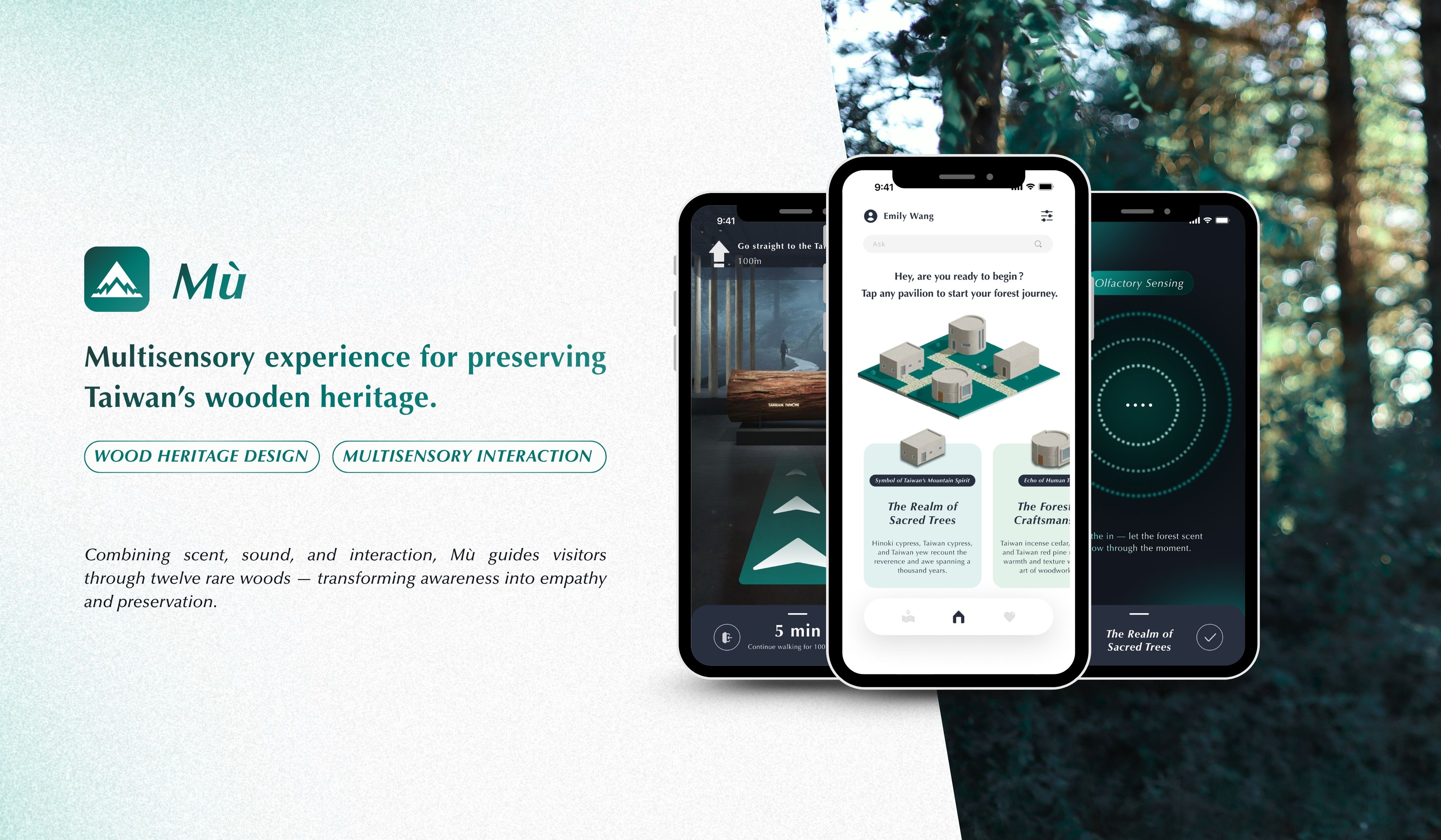
Currently, Mù is a high-fidelity prototype with a validated spatial narrative. In the next five years, we aim to bridge the gap between digital concepts and physical conservation. Our immediate focus is formative usability testing to refine the 'scent-to-digital' handoff and calibrate sensory dosing with technical partners. Long-term, we see Mù deployed as a modular installation in museums, serving as a critical link for screen-bound generations. By turning abstract data into felt experiences, we hope to build a 'Wood Passport' community that actively participates in protecting Taiwan’s remaining sacred trees.