Designers
Designers: Tony Fernandes, Ashley Nicodemus, Cygny Malvar, Alice Phipps, Sarah Field, Celeste Alcon
Year
2026
Category
Concept
Country
United States
Design Studio / Department
Design and Insights Departments
Three questions to the project team
What was the particular challenge of the project from a UX point of view?
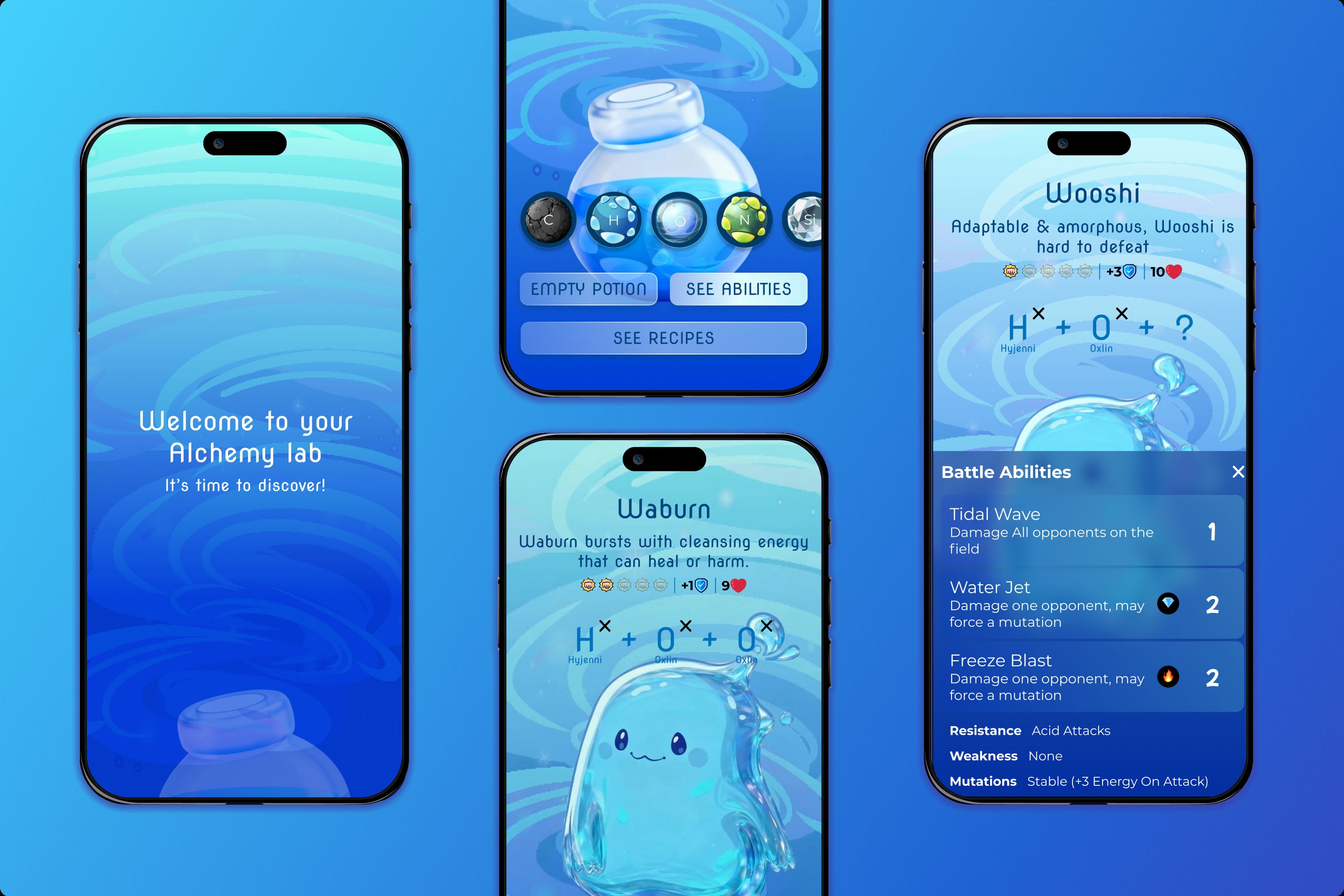
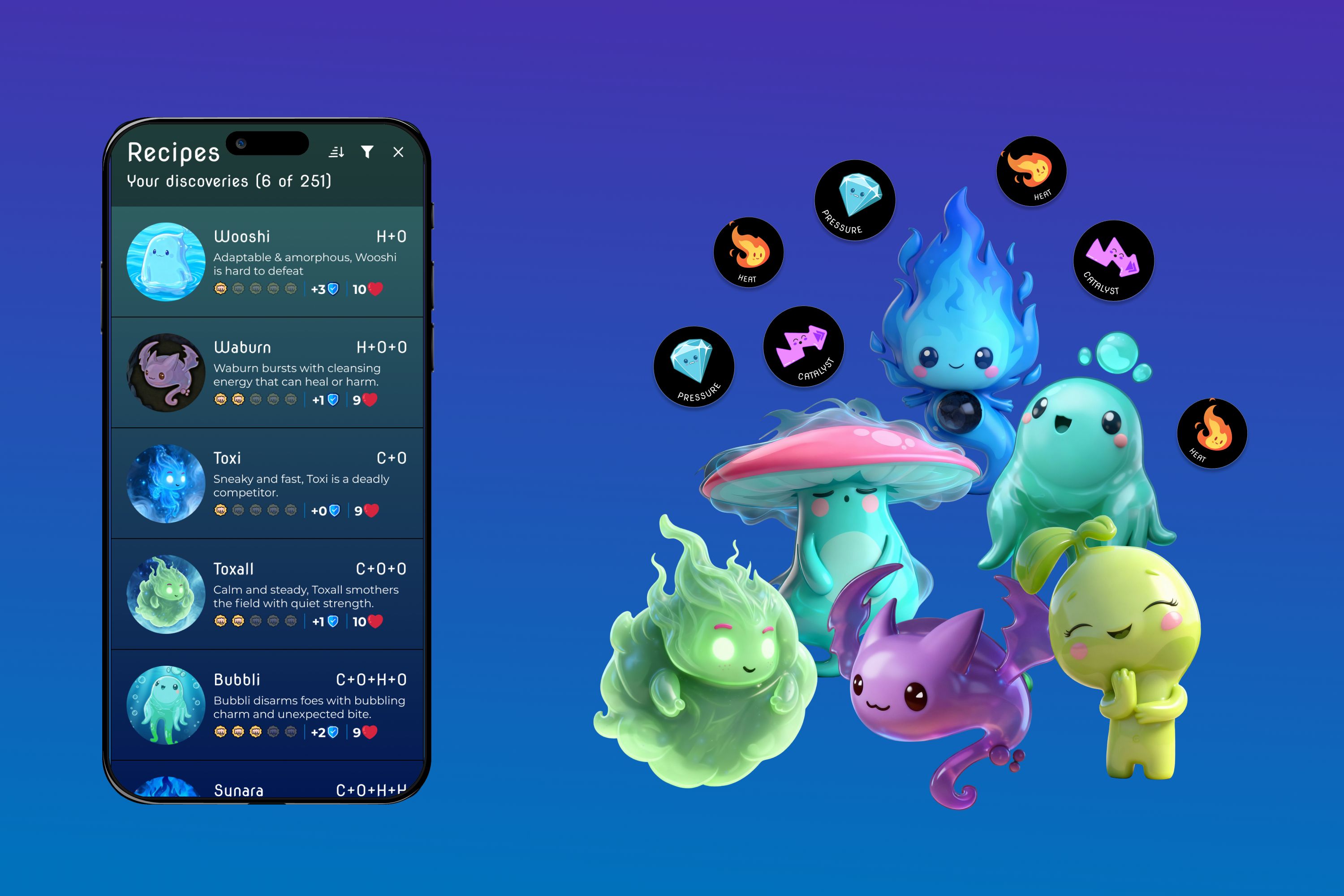
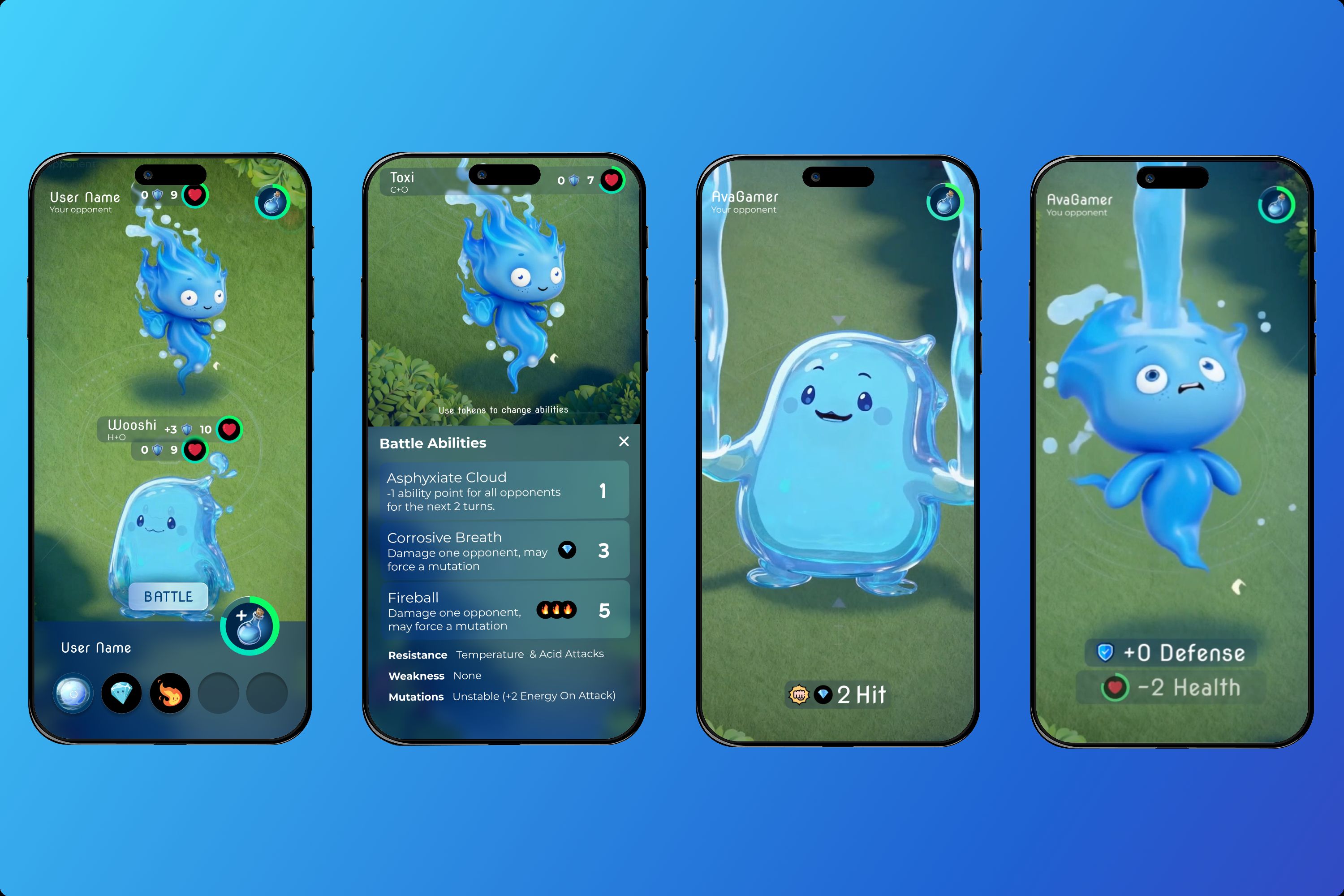
We set out to create an educational game that doesn’t feel educational, something simple to learn, fun to play, and deep enough for long-term engagement. We knew we needed to simplify the complexity of chemistry, so we focused on two core learning goals: molecules have unique properties, and when molecules interact, they create reactions. These goals defined where to stay true to science and where to gamify. Molecules become imaginative characters inspired by their chemical properties. Battles mirror real chemical reactions, showing factors that influence reactions, common reaction types, and signs of chemical change. Players absorb these concepts naturally as they discover characters, learn their abilities, and develop strategic matchups.
What was your personal highlight in the development process? Was there an aha!-moment, was there a low point?
Our favorite moment was testing the game with a group of weekly Magic: The Gathering players. Each tried a turn of the prototype and immediately bonded with the characters. One even said, “I’d be pissed if anyone mutated my Wooshi,” a favorite character in the game, confirming the emotional attachment we aimed for. They loved the surprise of combining elements to discover new characters, proof that we struck the right balance of science and fun, but wanted deeper battle strategy, especially around resource management and character balance. In response, we introduced a tier system with offensive, defensive, and support roles, and refined each character’s abilities to create clearer evolution paths and more meaningful team-building strategies.
Where do you see yourself and the project in the next five years?
Ultimately, the role of user experience is to match the needs and natural tendencies of the user. I believe that education does not currently provide a good user experience. Notions of gamification have often been treated superficially, and I want to change that. Having leveraged good design to transform scientific principles into gameplay, the next goal is to grow the reach of this idea. Starting with the periodic table grounds the learning in the basics of matter and life. The same approach can be applied to other scientific areas such as physics, electricity, and biology. I would also like to explore areas of reading and literature. I believe it will take at least five years to go from a new entrant to a recognized brand in this space.