Designers
Ji Yoon Ahn
Year
2026
Category
Concept
Country
United States
Design Studio / Department
Ji Yoon Ahn
Three questions to the project team
What was the particular challenge of the project from a UX point of view?
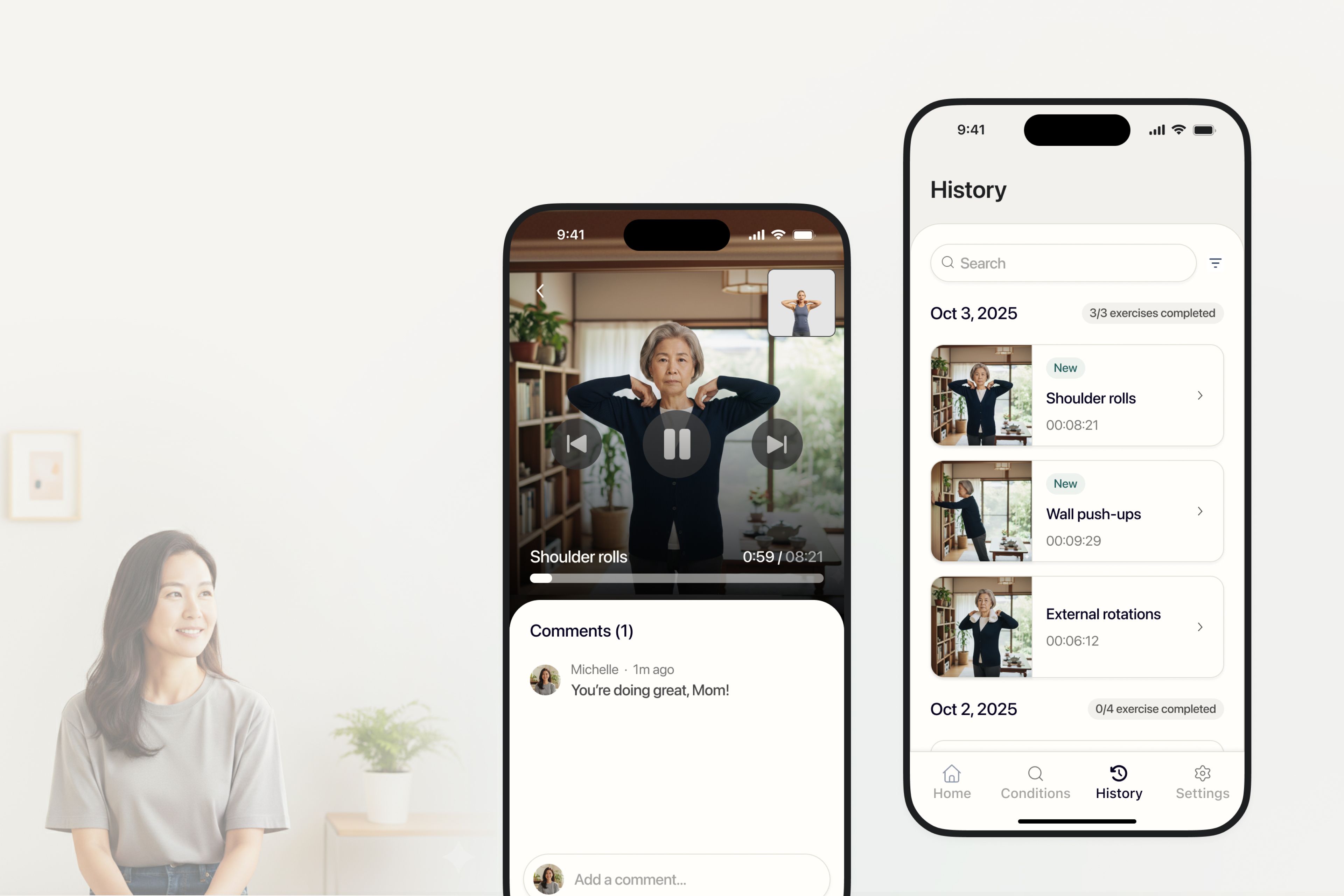
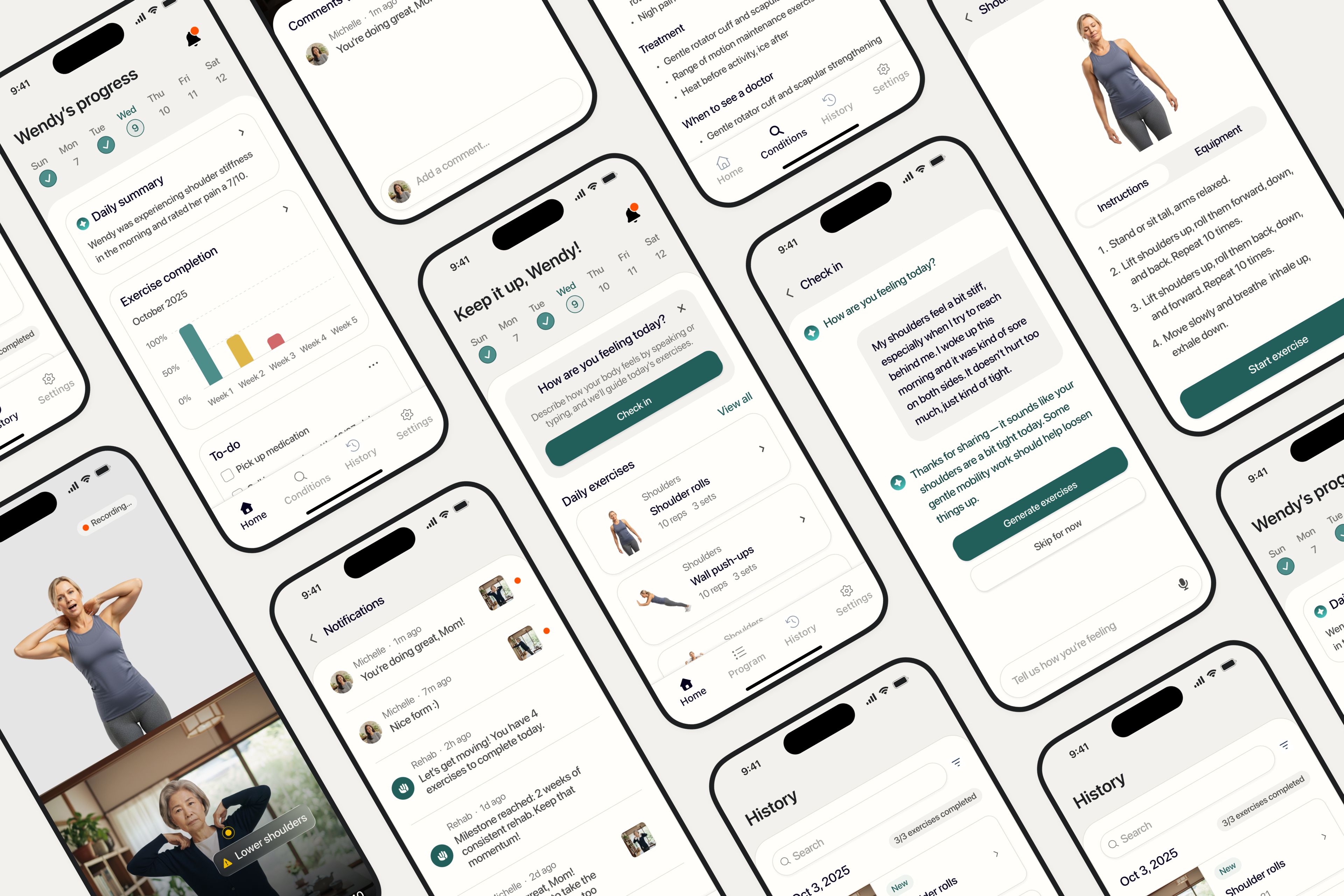
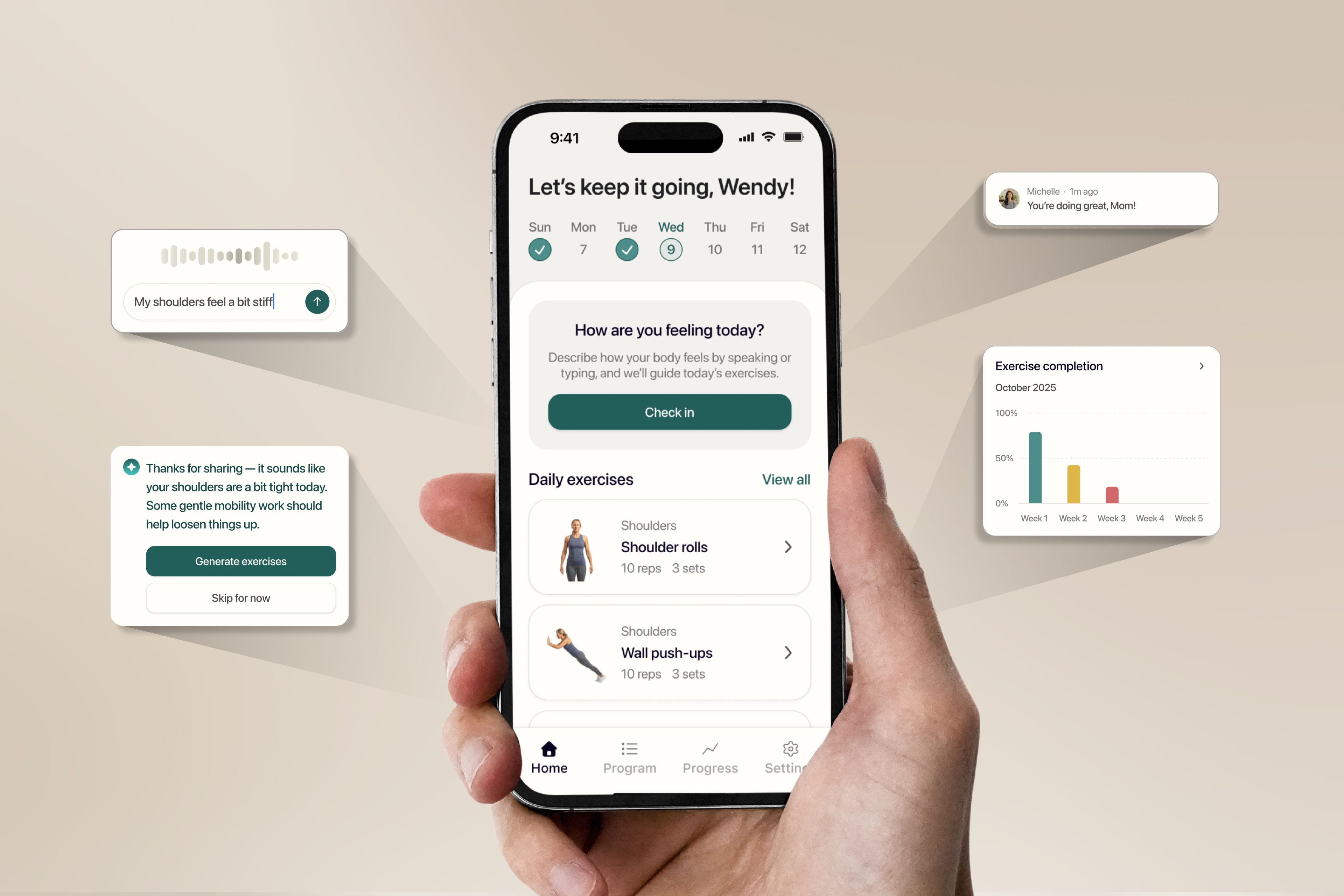
The main UX challenge was creating a system that served both elderly patients and caregivers without confusing or exhausting either group. Patients needed a calm, simple interface that lowered cognitive effort during recovery, while caregivers needed clear and concise insights that fit into their already demanding routines. Balancing accessibility, emotional reassurance, and information clarity required careful prioritization, thoughtful pacing, and constant refinement so the experience felt supportive and never overwhelming. This required revisiting flows, simplifying visual elements, and testing assumptions through scenario based evaluations to ensure both users could navigate the system confidently and complete tasks without frustration.
What was your personal highlight in the development process? Was there an aha!-moment, was there a low point?
My highlight was discovering how powerful the emotional layer of the problem really was. At first, I focused on physical rehabilitation tasks, but as I worked through the research, it became clear that fear, uncertainty, and lack of support defined the experience just as much as the exercises themselves. Realizing this shifted the entire direction of the design. The low point came earlier, when the concept felt too technical and disconnected from real human concerns. The breakthrough was reframing the solution to support confidence and connection, not just correct form.
Where do you see yourself and the project in the next five years?
In five years, I see this concept evolving into a trusted digital companion for at-home rehabilitation, one that adapts to more conditions and integrates smoothly with healthcare providers. It has the potential to reduce the emotional and logistical strain on both patients and caregivers by making recovery feel guided rather than isolated. Personally, I hope to continue shaping human-centered health technology that uses AI to create clarity and calm rather than complexity, and to build tools that make recovery and ongoing care feel more manageable for everyone involved.