Designers
Darshi Shah, Han Bao
Year
2026
Category
New Talent
Country
United States
School
Georgia Institute of Technolgy
Teacher
Carrie Bruce
Three questions to the project team
What was the particular challenge of the project from a UX point of view?
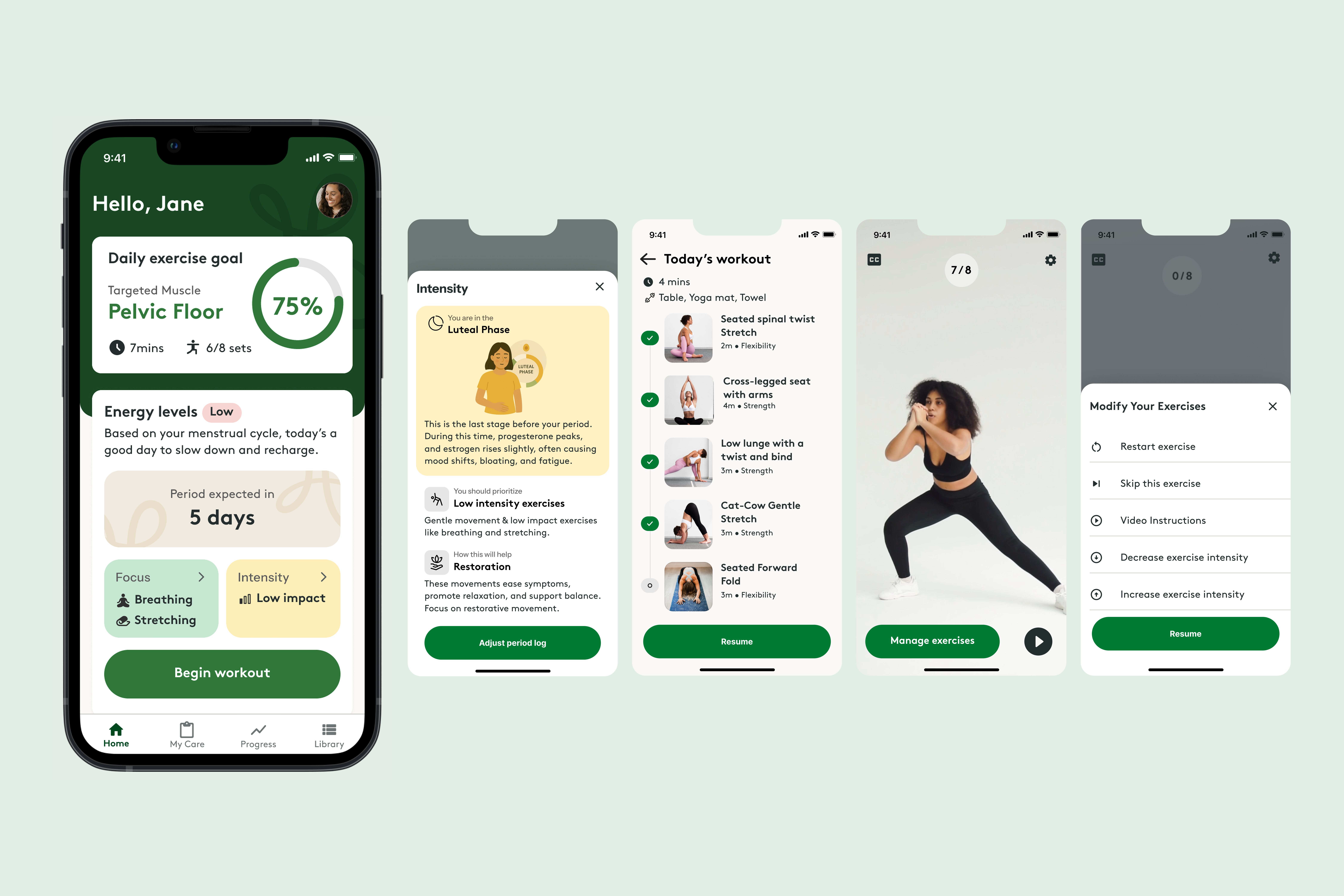
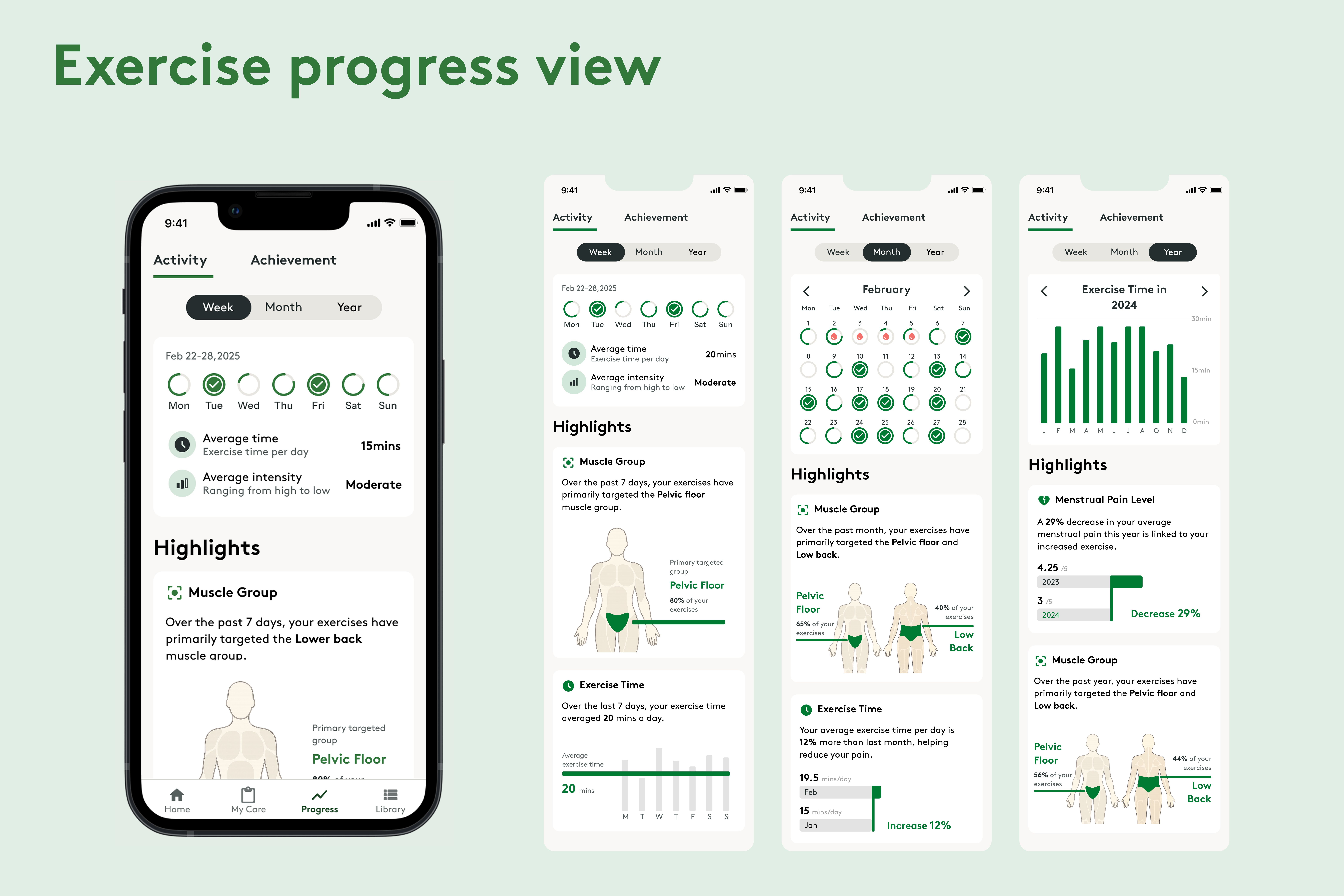
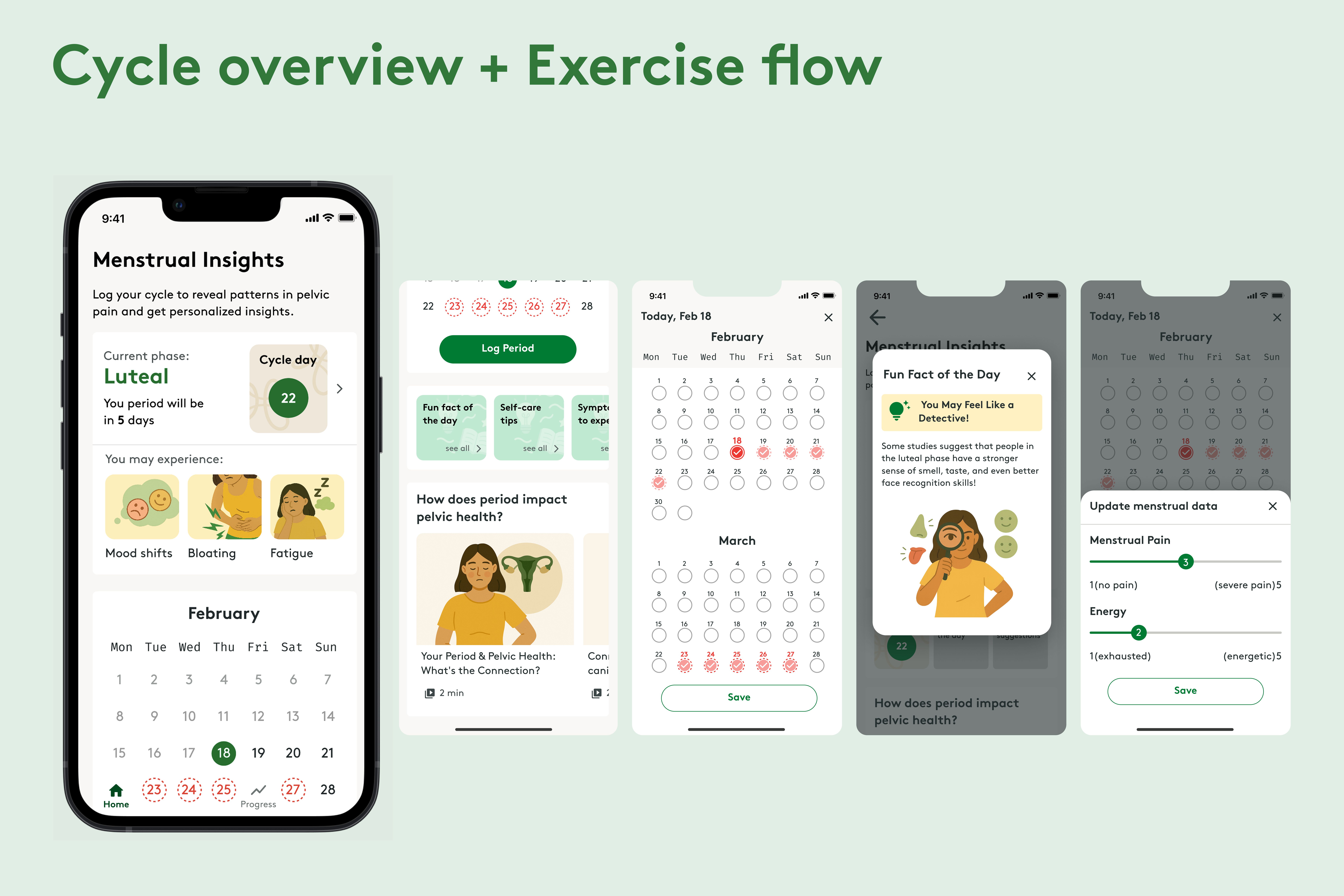
A key UX challenge was integrating menstrual tracking into an exercise app without shifting the product’s core intent: helping users complete workouts. We had to be careful not to make it feel like a period tracker, but also not bury the cycle info so much that it didn’t help. Through multiple rounds of UX research with users and women’s health experts, we tested placement, timing, and card content to surface the right info at the right time, especially before and during a period. We also iterated heavily on copy to keep it supportive and non prescriptive.
What was your personal highlight in the development process? Was there an aha!-moment, was there a low point?
One key highlight and turning point came during concept testing. We learned users were open to AI helping them understand their body, so we planned for it to be a visible, interactive part of the product. However, testing showed most participants preferred AI to operate silently in the backend, supporting decisions without requiring attention. They were comfortable with AI using their personal information, but they did not want “another chatbot.” Instead, they wanted clear, actionable insights they could use, like what to expect in a cycle phase and how that should impact their exercises. This became the foundation for our UX approach, emphasizing user control and trust.
Where do you see yourself and the project in the next five years?
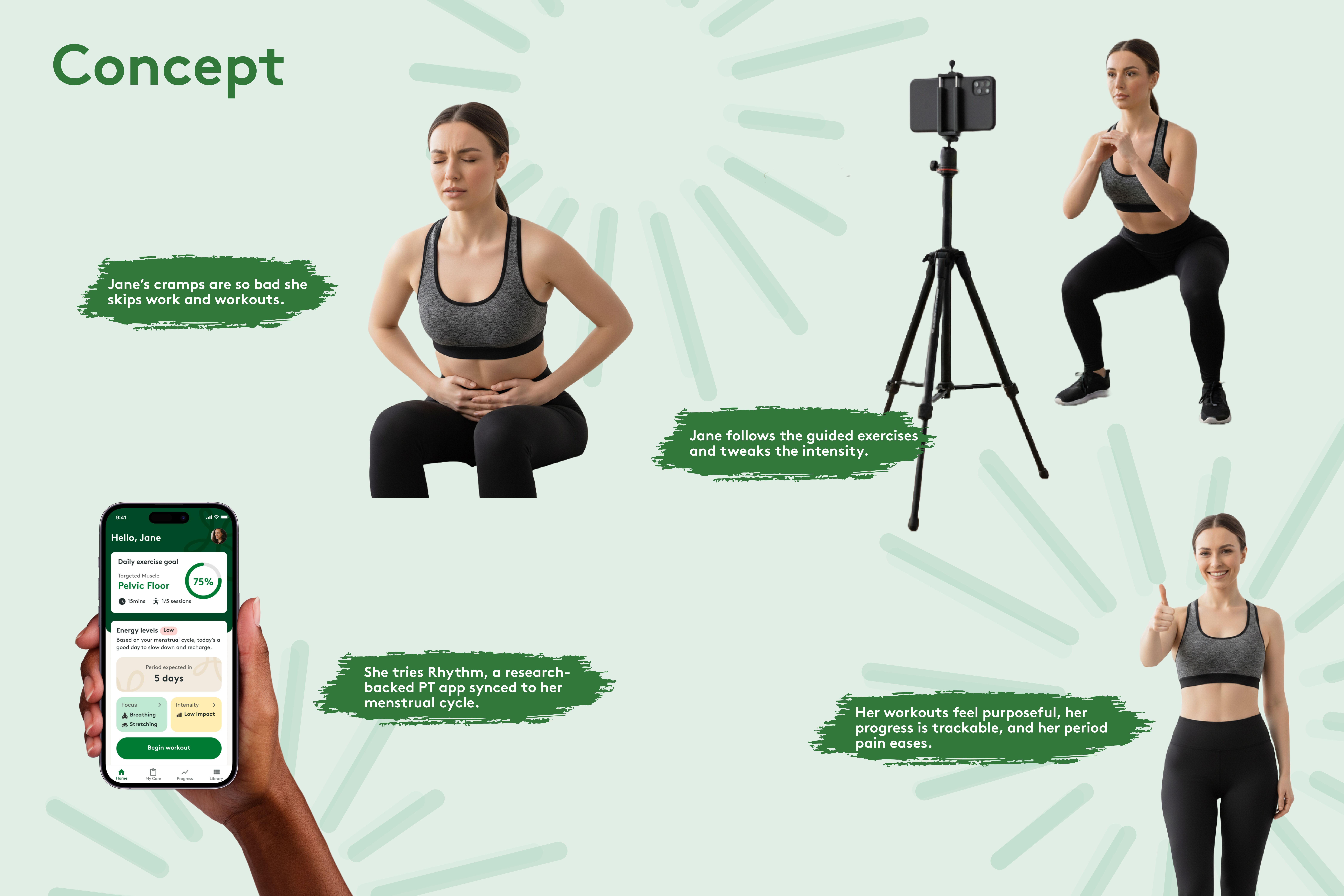
In five years, we see Rhythm evolving beyond an exercise app into a holistic, cycle-aware well-being platform that supports people who menstruate across different life stages and health needs. The project has the potential to contribute to a new standard for inclusive, data-informed health design that respects bodily diversity and user agency. Personally, we aim to continue designing AI-enabled health tools that prioritize trust, education, and long-term well-being. We hope Rhythm can serve as both a practical product and a model for ethical, human-centered innovation in digital health.