Designers
Zhekai Cai, Yaoyao Yin, Ziyi Cao, Jiansheng Zhu
Year
2026
Category
New Talent
Country
China
School
Shaanxi University of Science and Technology
Teacher
Jing Liu
Three questions to the project team
What was the particular challenge of the project from a UX point of view?
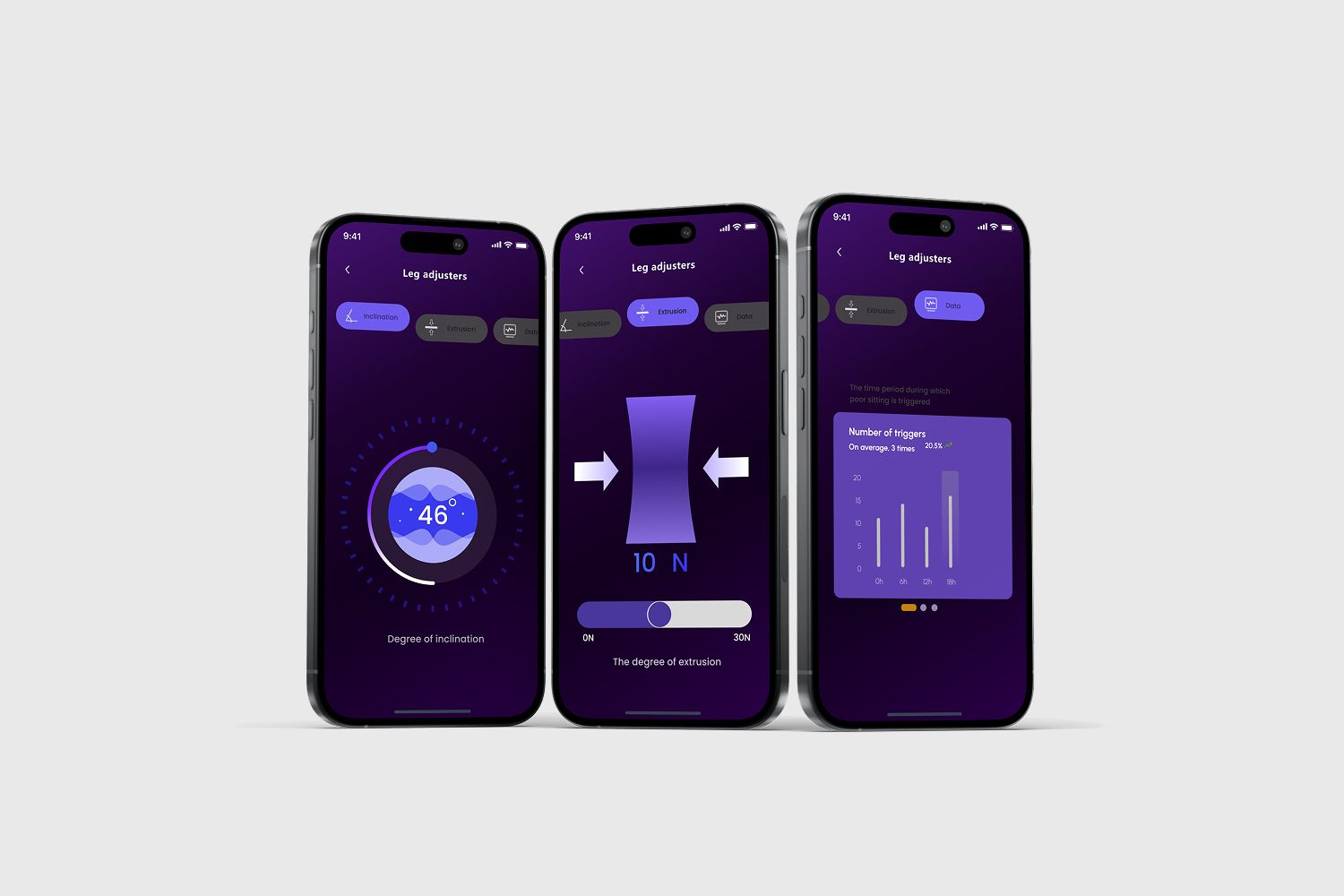
The key UX challenge is detecting unconscious posture deviations that occur during focused, prolonged sitting. These movements are subtle, individual, and easy to miss, making it difficult to set thresholds that remain accurate without causing disruptive alerts. The system must sense shifts precisely while minimizing false triggers.
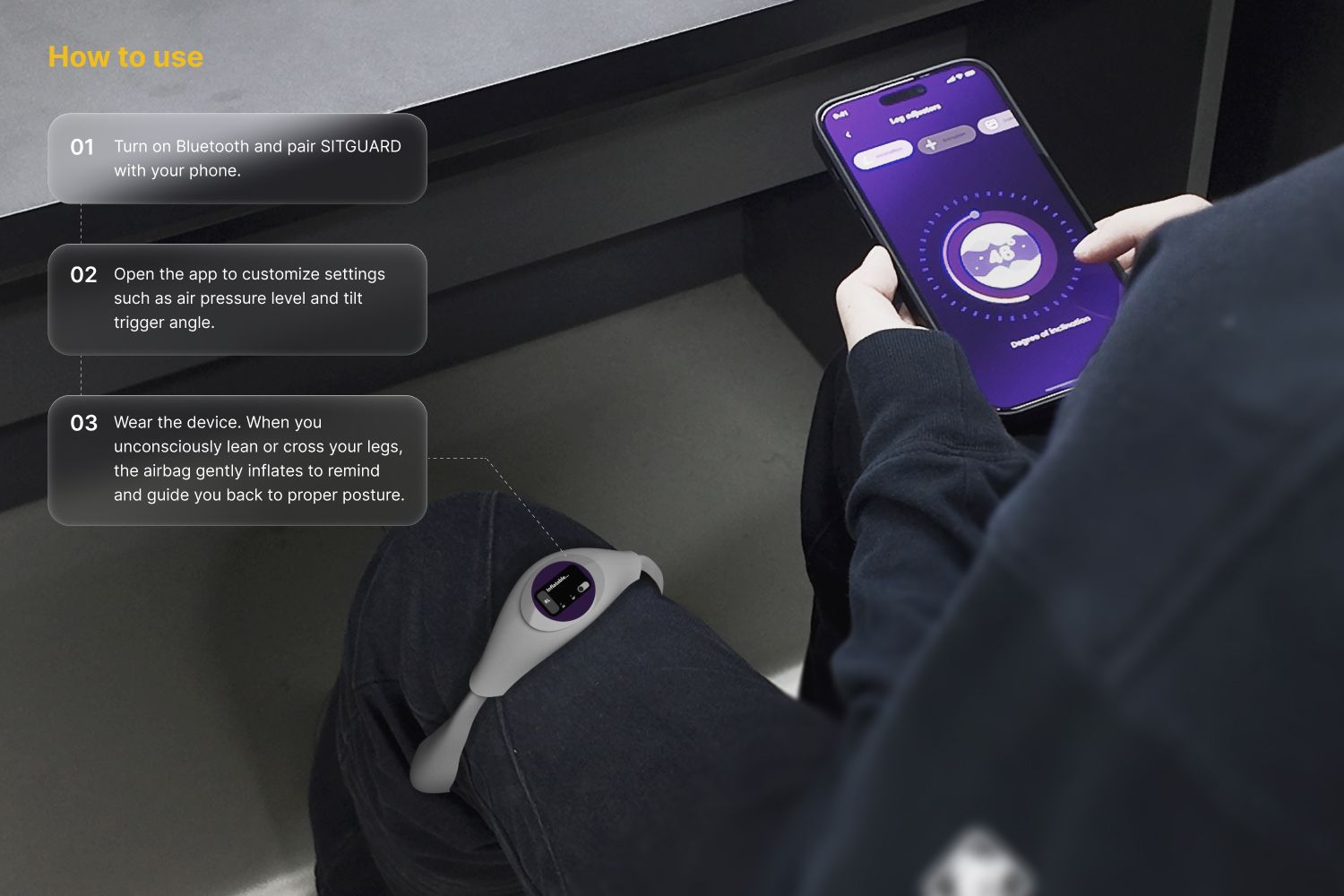
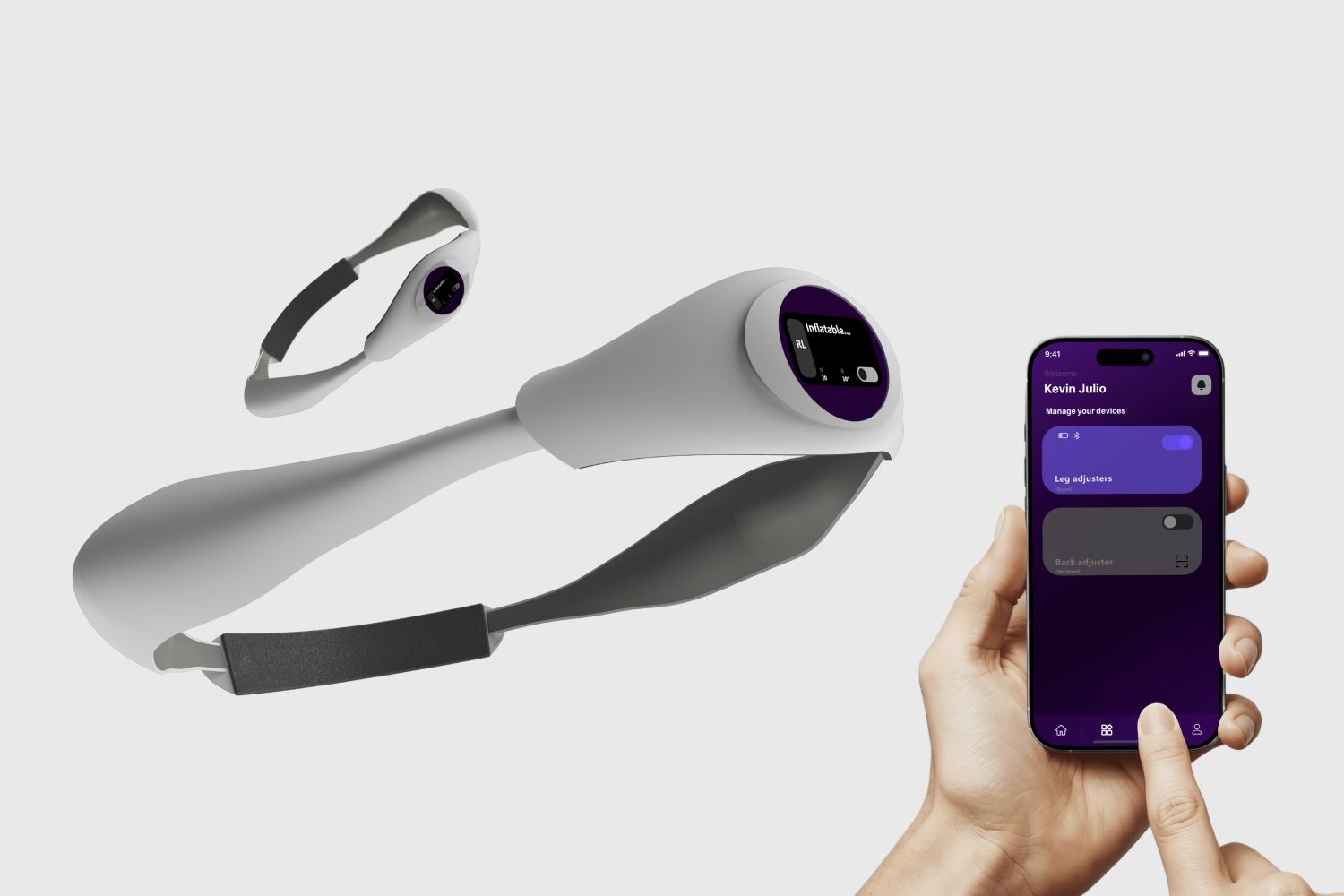
Another challenge is designing air-bladder feedback that remains gentle and unobtrusive, since users tolerate little interruption when concentrating.
Environmental variability—different seating setups, heights, and body types—further affects sensing accuracy and comfort. Ensuring stable performance across daily scenarios while keeping the device lightweight and unobtrusive is central to UX development.
What was your personal highlight in the development process? Was there an aha!-moment, was there a low point?
The most surprising insight was that users were largely unaware of their poor posture, even when it lasted for long periods. Many assumed they were sitting correctly until feedback revealed otherwise, showing that the issue is rooted in limited body awareness rather than forgetfulness.
Feedback testing also revealed that strong cues like vibration or sound were disliked for disrupting focus, while gentle air-bladder pressure felt natural and acceptable.
A notable moment occurred when a user began correcting posture on their own after several days of use, demonstrating that the system can support lasting posture awareness beyond immediate prompts.
Where do you see yourself and the project in the next five years?
Over the next five years, the project may develop into a broader posture-health system. Hardware improvements could include lighter, more sustainable materials and more accurate sensing with faster air-feedback response.
Software may provide personalized posture models and clearer long-term behavioral insights, supporting gradual, sustainable habit change.
The system may also expand through cooperation with schools, offices, and wellness programs, enabling posture awareness at larger scale. The long-term goal is to offer an accessible and sustainable solution that encourages healthier daily sitting patterns.