Designers
Ahra Jo, On Seul Seok
Year
2026
Category
Concept
Country
Korea, Republic
Design Studio / Department
Design Studio
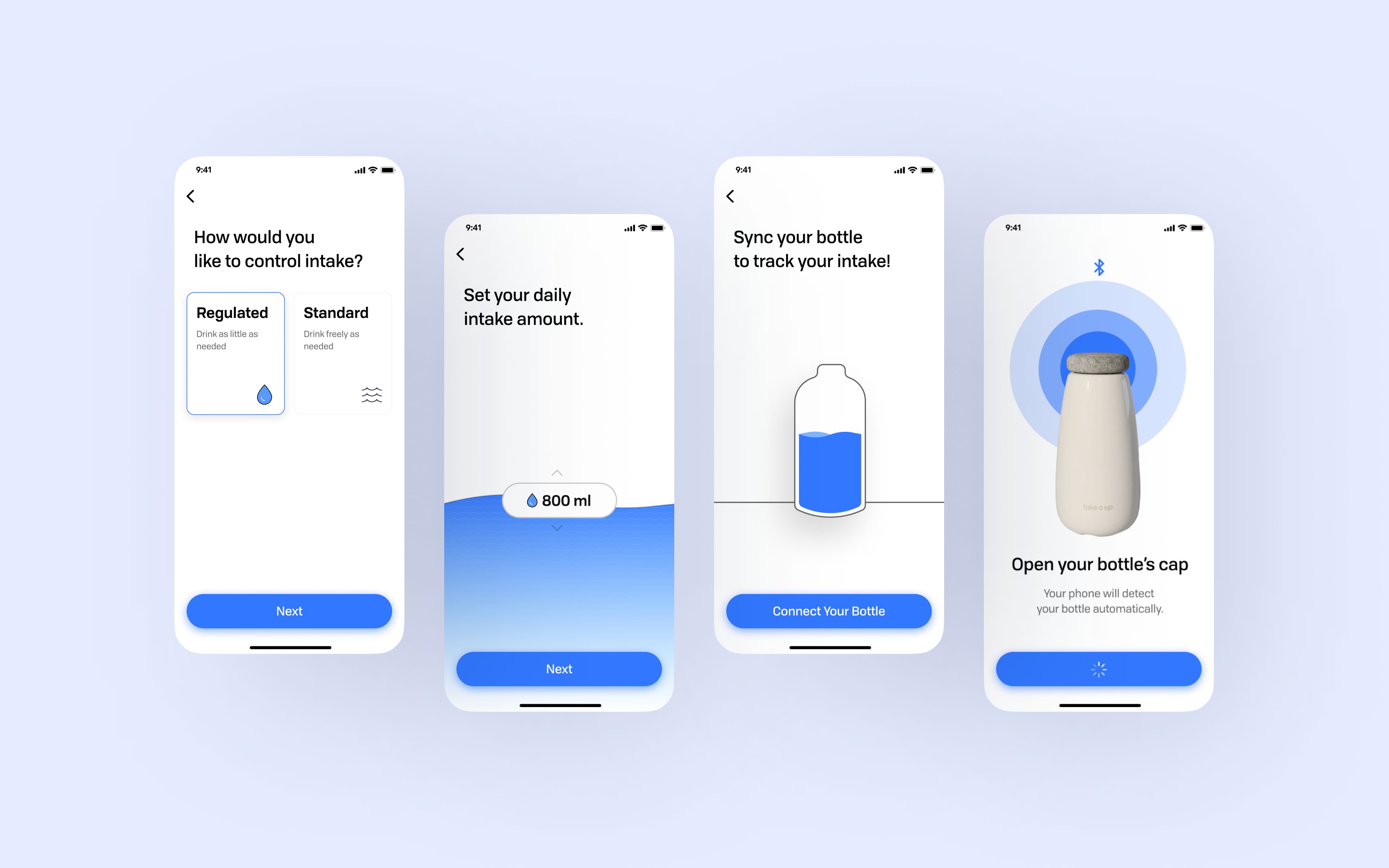
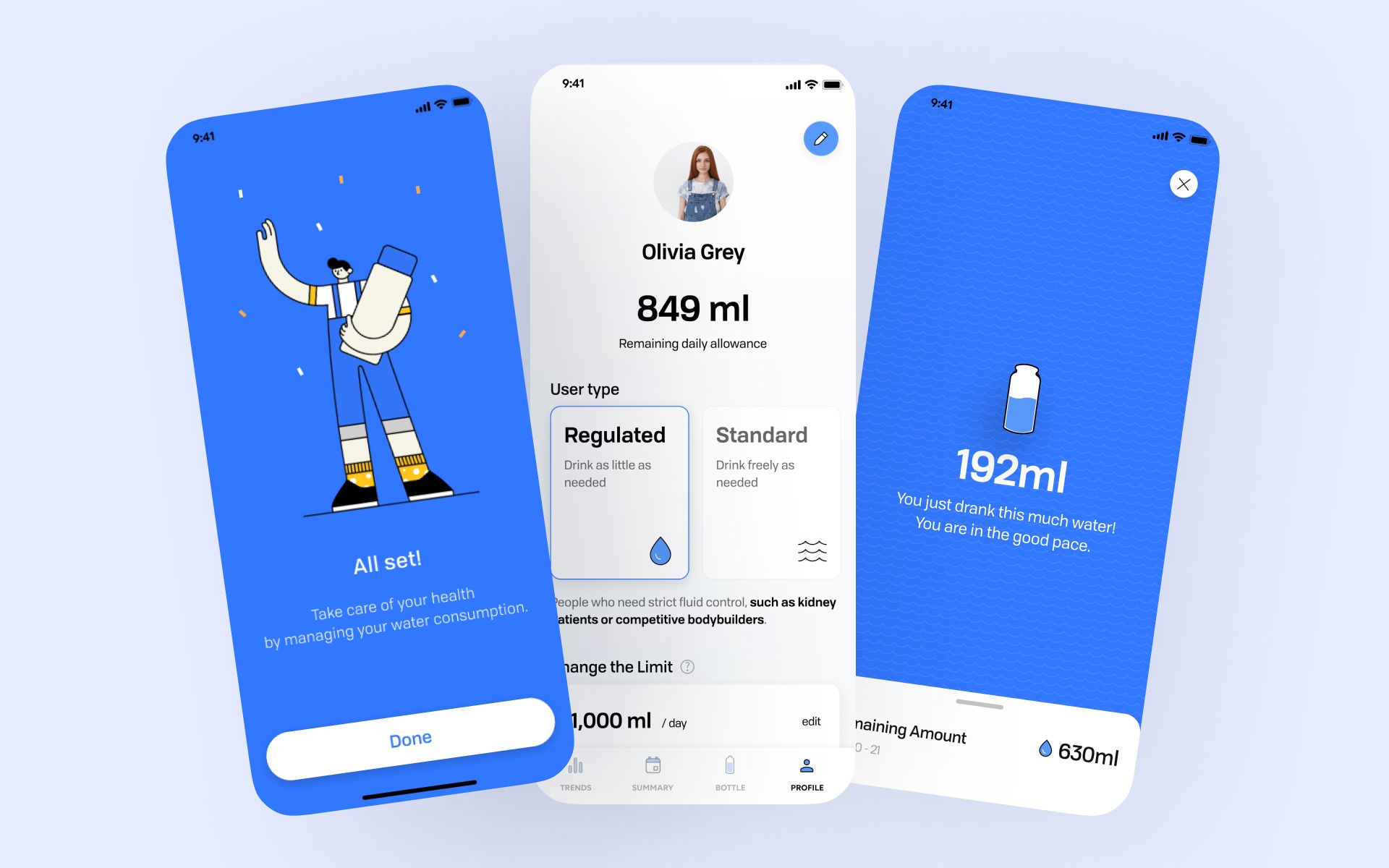
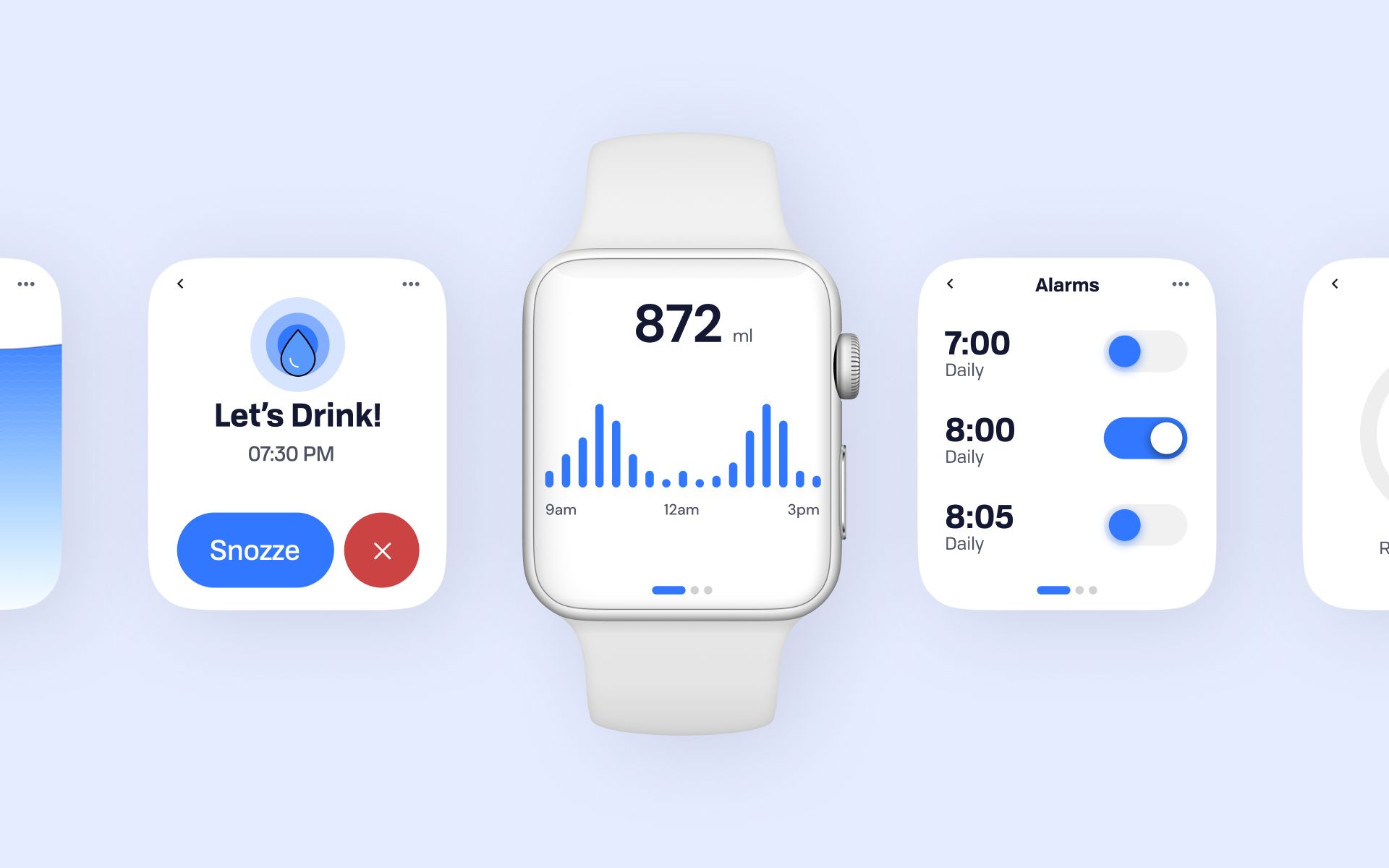
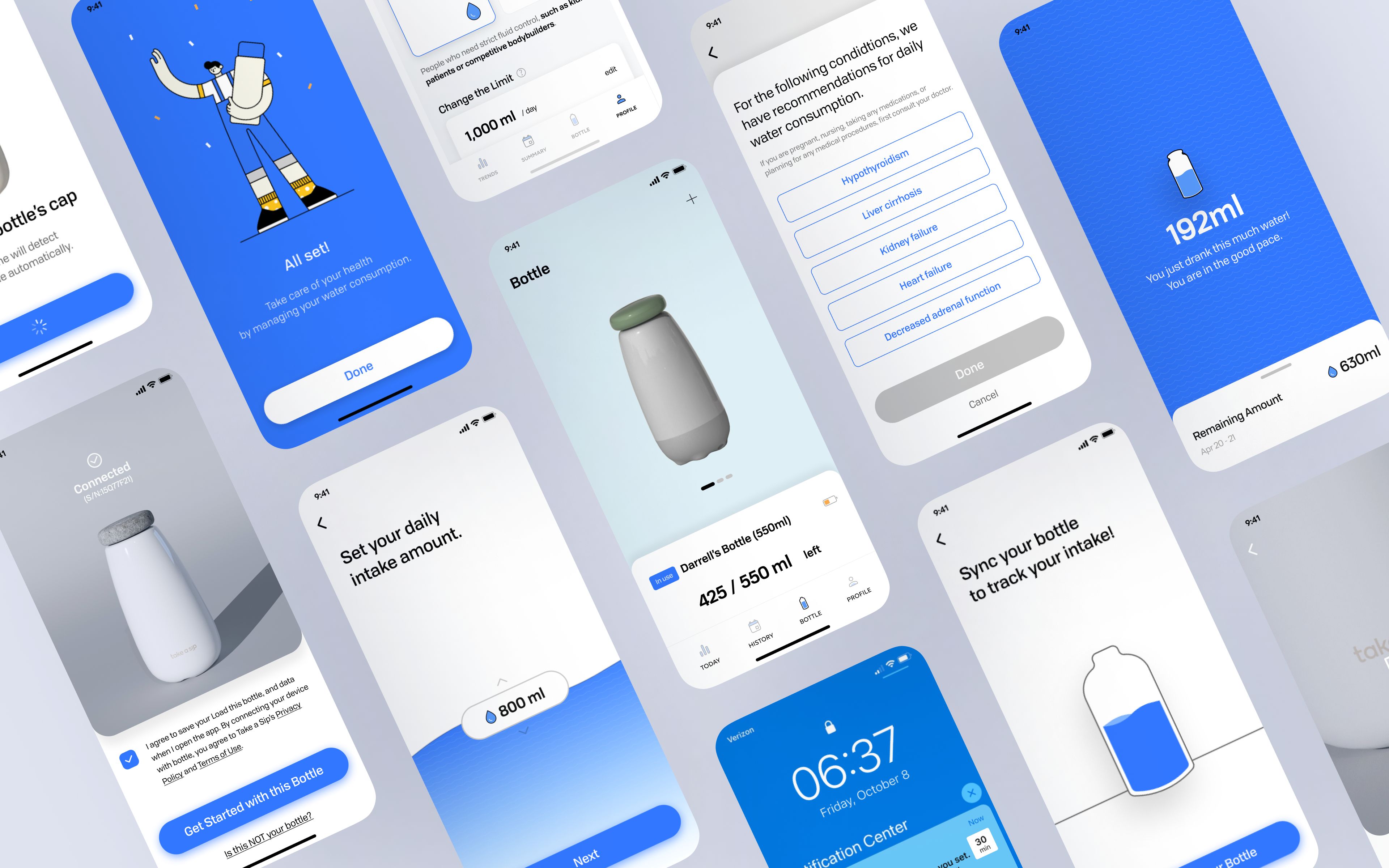
»Take A Sip addresses a life-threatening medical challenge in dialysis care, where even small mistakes in fluid intake can cause severe health consequences. The jury was convinced by its automated, precise monitoring, which replaces unreliable manual tracking and adapts to individual therapy plans. Seamlessly integrated into an everyday water bottle, Take A Sip avoids stigma and enables anonymous public use. Its intuitive user experience makes users feel supported rather than controlled, reducing fear and effort. Take A Sip is a clinically grounded project that aims to ensure safety, feasibility, and real-world impact.«
UX Design Awards Jury 2026 Spring
And the award goes to...
Three questions to the project team
What was the particular challenge of the project from a UX point of view?
The core challenge was designing for patients who can't trust their own thirst. Chronic kidney disease patients have strict daily fluid limits, and drinking even a little too much can lead to serious health problems. We needed to turn a stressful medical rule into helpful everyday guidance.
Most hydration apps fail because they just send reminders without showing what you've already consumed or helping you plan ahead. Our key insight was moving from simple alerts to smart planning. The interface shows patients not just what they've drunk, but what they have left and when to drink it throughout the day. We focused on reducing worry while keeping the accuracy these patients need to stay healthy.
What was your personal highlight in the development process? Was there an aha!-moment, was there a low point?
Our biggest moment came during testing when someone said the app made them feel 'in control for the first time.' Before this, they lived with constant worry about every drink.
The low point was realizing we couldn't build a working bottle prototype right away. Instead of waiting, we created a testing method where we manually tracked the water while participants used the app. This limitation actually helped us. We could focus completely on the user experience before dealing with hardware complexity.
Seeing people naturally understand and use the interface, even with our manual simulation, showed us we were solving the right problem.
Where do you see yourself and the project in the next five years?
In five years, we see Take a Sip recommended by kidney doctors and used as part of standard treatment. Our first step is finishing the hardware and running studies with partner hospitals.
Beyond kidney disease, we want to help people with heart failure, liver disease, and surgical recovery who also need to watch their fluids. Our bigger goal is showing how good design can make medical tools work like consumer products. Most health tech is either too clinical and scary, or too simple for real medical needs.
We believe we can create tools that are both medically accurate and actually supportive of daily life, changing how people manage chronic conditions.