Designers
Sofia Nunnari
Year
2026
Category
New Talent
Country
Switzerland
School
University of Applied Sciences and Arts of Southern Switzerland / DACD
Teacher
Martina Miani
Three questions to the project team
What was the particular challenge of the project from a UX point of view?
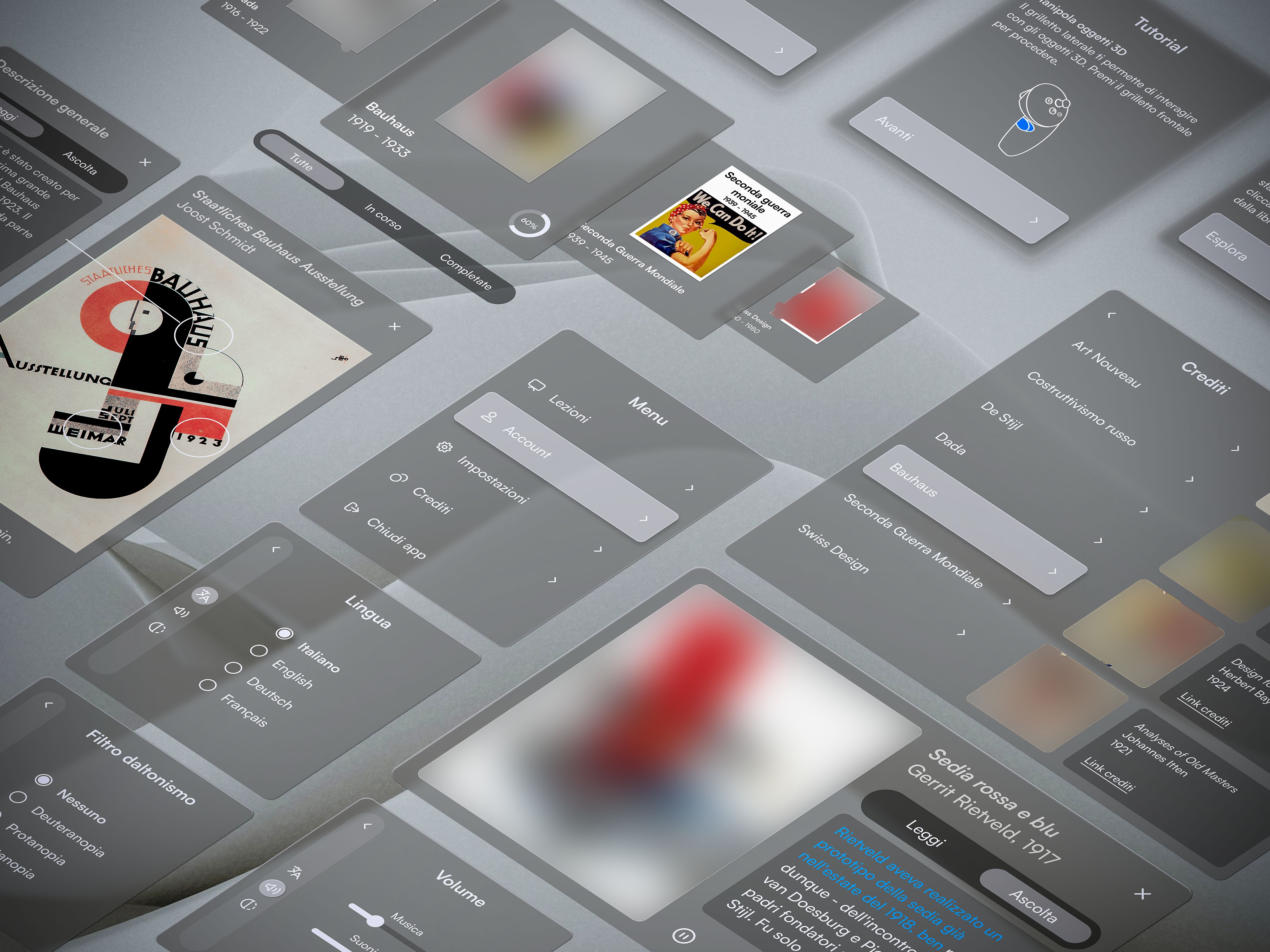
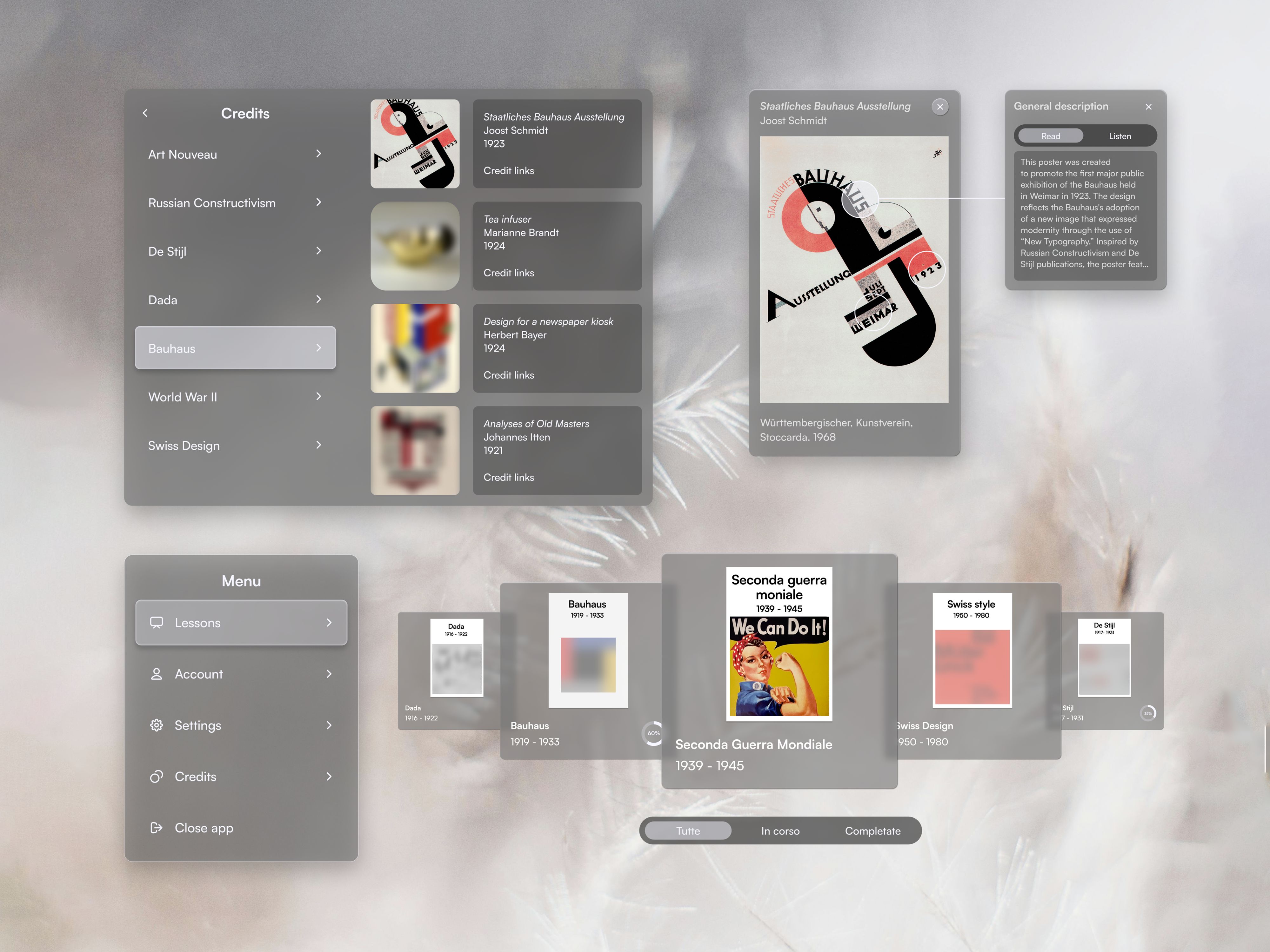
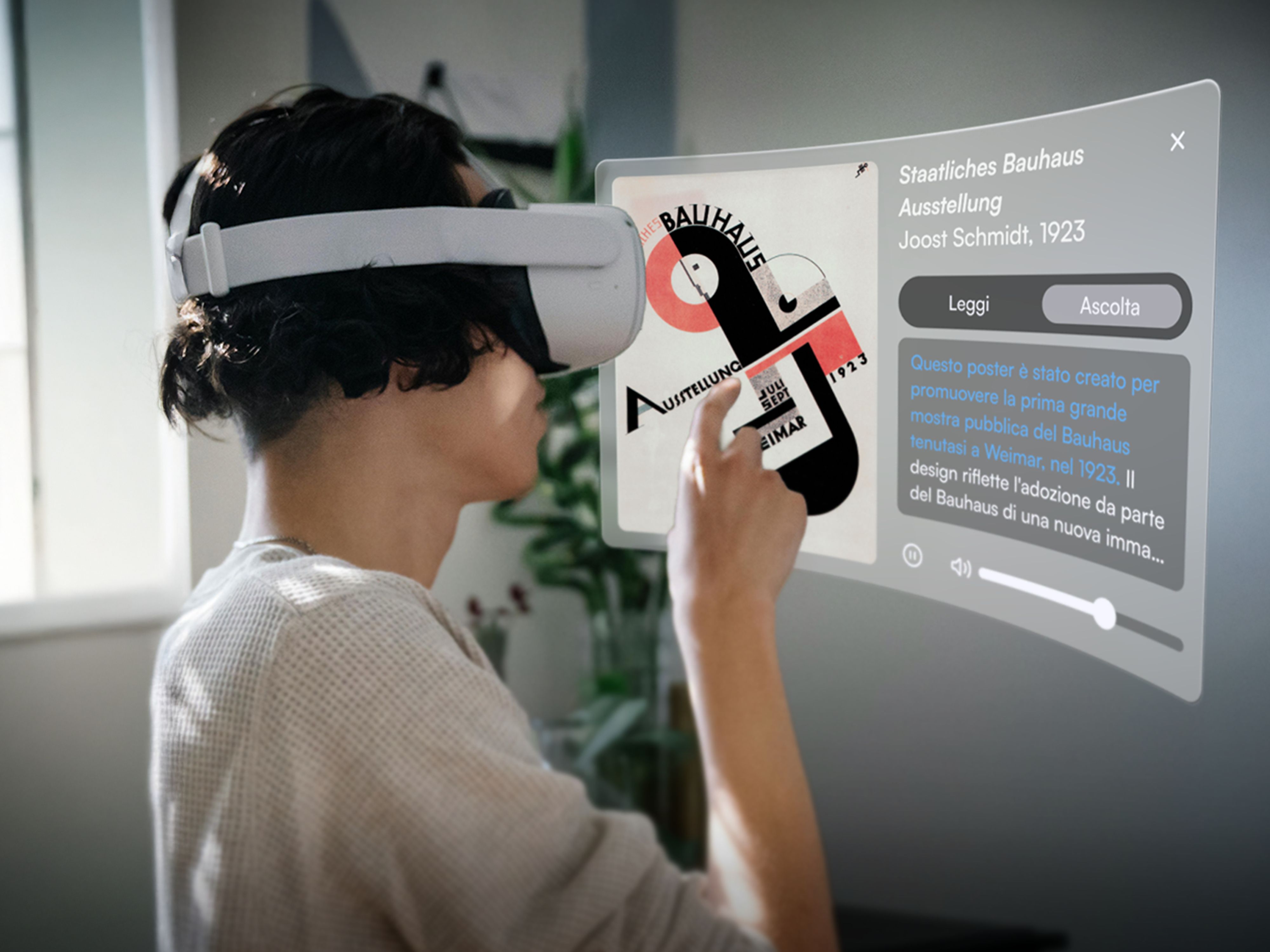
The main UX challenge was to translate complex, traditionally abstract theoretical content into an immersive VR experience that would not overwhelm the user. Teaching graphic design history requires clarity, structure and context, yet VR environments can easily become cognitively demanding.
The project balanced immersion and usability, ensuring intuitive, accessible, comfortable interaction for users unfamiliar with VR. Information architecture, visual hierarchy, interaction distance, and navigation flow were given particular attention to avoid disorientation and reduce cybersickness. The goal was a learning experience that supports exploration without sacrificing clarity or comfort.
What was your personal highlight in the development process? Was there an aha!-moment, was there a low point?
A particularly significant moment for me was when the spatial structure of the virtual environment began to directly support learning. Designing historical content as explorable spaces rather than linear narratives demonstrated the potential of immersion to enhance engagement, comprehension, and retention.
A key turning point in the process was recognising the need for clarity and restraint in the design of virtual reality. Reducing visual complexity and focusing on essential interactions improved both usability and comfort. This realisation transformed the project from a visually driven concept into a user-centred learning experience, thereby reinforcing the importance of user experience over purely aesthetic considerations.
Where do you see yourself and the project in the next five years?
Over the next five years, I intend to continue working in experience and interaction design, focusing particularly on immersive and educational applications.
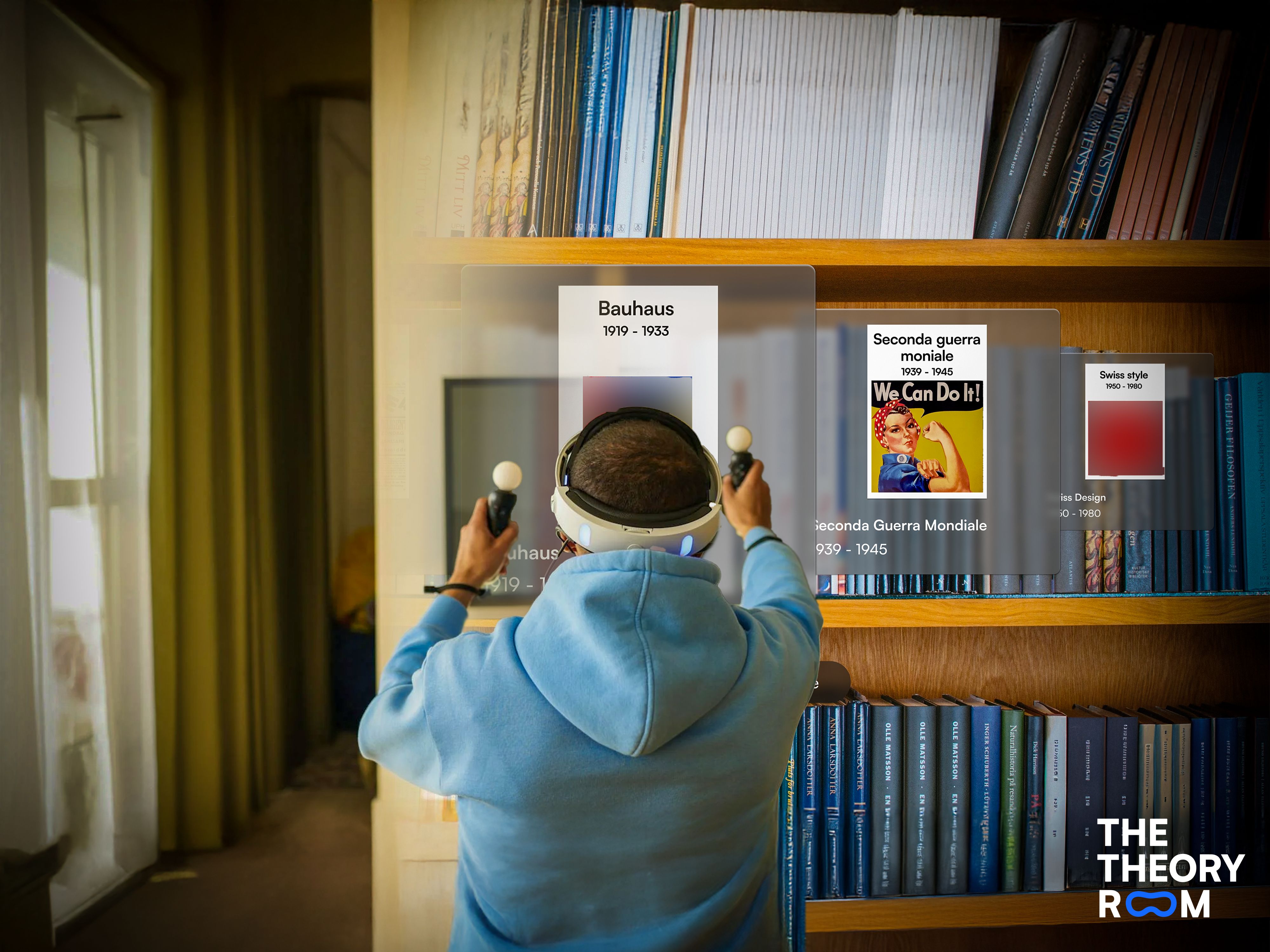
The Theory Room is designed to be integrated into university classrooms as a supplementary learning tool, complementing traditional teaching methods with immersive experiences. Over time, the project could be expanded in terms of both content and functionality, and adapted for use in other settings, such as museums and cultural institutions. Thanks to its modular structure, the experience can evolve by exploring how virtual environments can make complex theoretical knowledge more accessible and engaging.