Designers
Francesca Abbatantuono
Year
2026
Category
Product
Country
Italy
Design Studio / Department
Digital Reality
Three questions to the project team
What was the particular challenge of the project from a UX point of view?
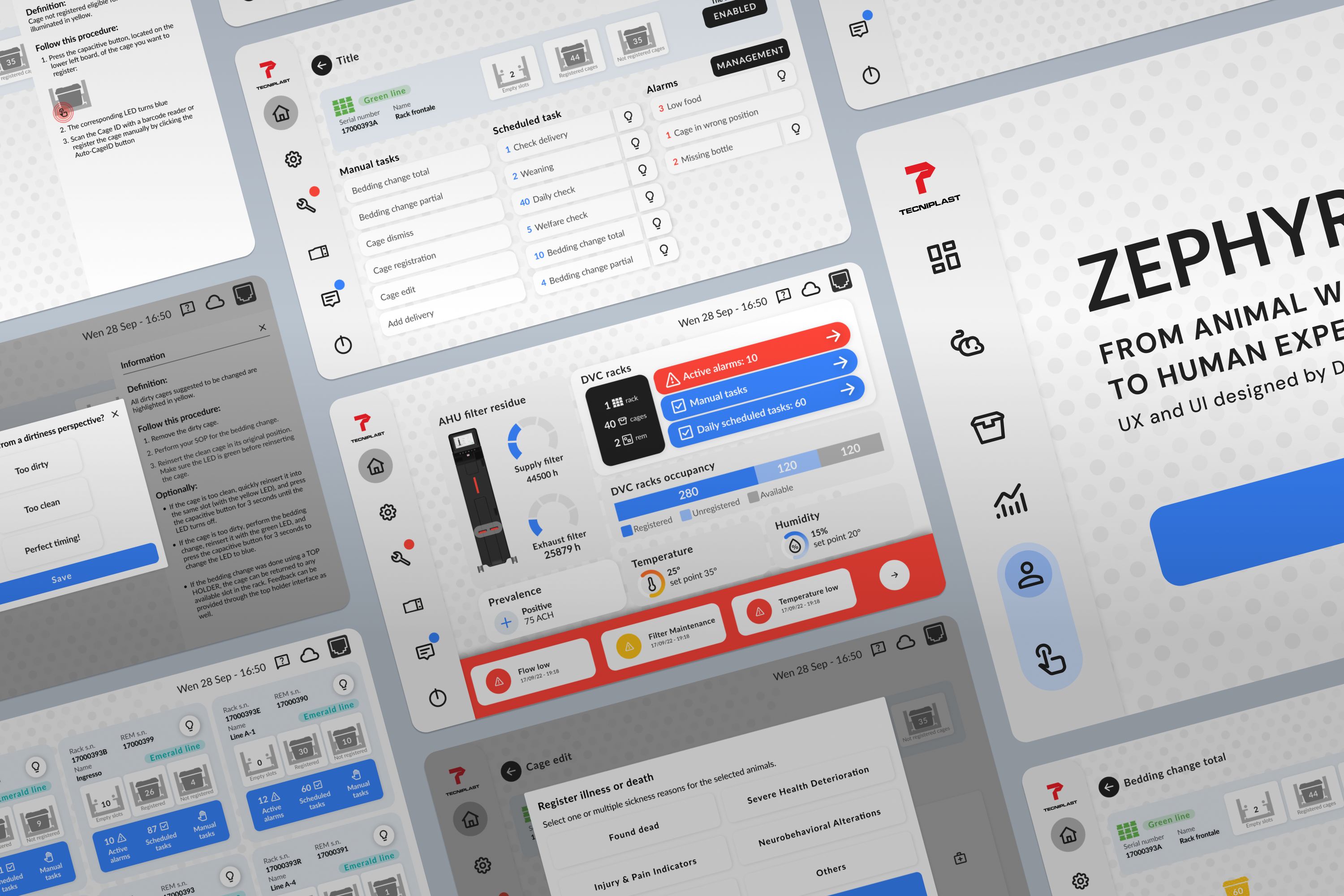
The main UX challenge was managing the complexity of the DVC® system and bringing innovation into a highly sensored platform with a strong engineering legacy. When Digital Reality joined Tecniplast, designer role focused on UI: standardizing iconography, typography, and microinteractions to create consistency across the DVC® ecosystem. Gradually, we shifted toward pure UX, mapping flows, identifying usability gaps, and helping a development-driven team embrace a user-centered mindset. Over time, the transition from standalone screens to a unified experience revealed how thoughtful design can improve usability, boost efficiency, and maximize the potential of onboard technology, starting from the operator’s gesture.
What was your personal highlight in the development process? Was there an aha!-moment, was there a low point?
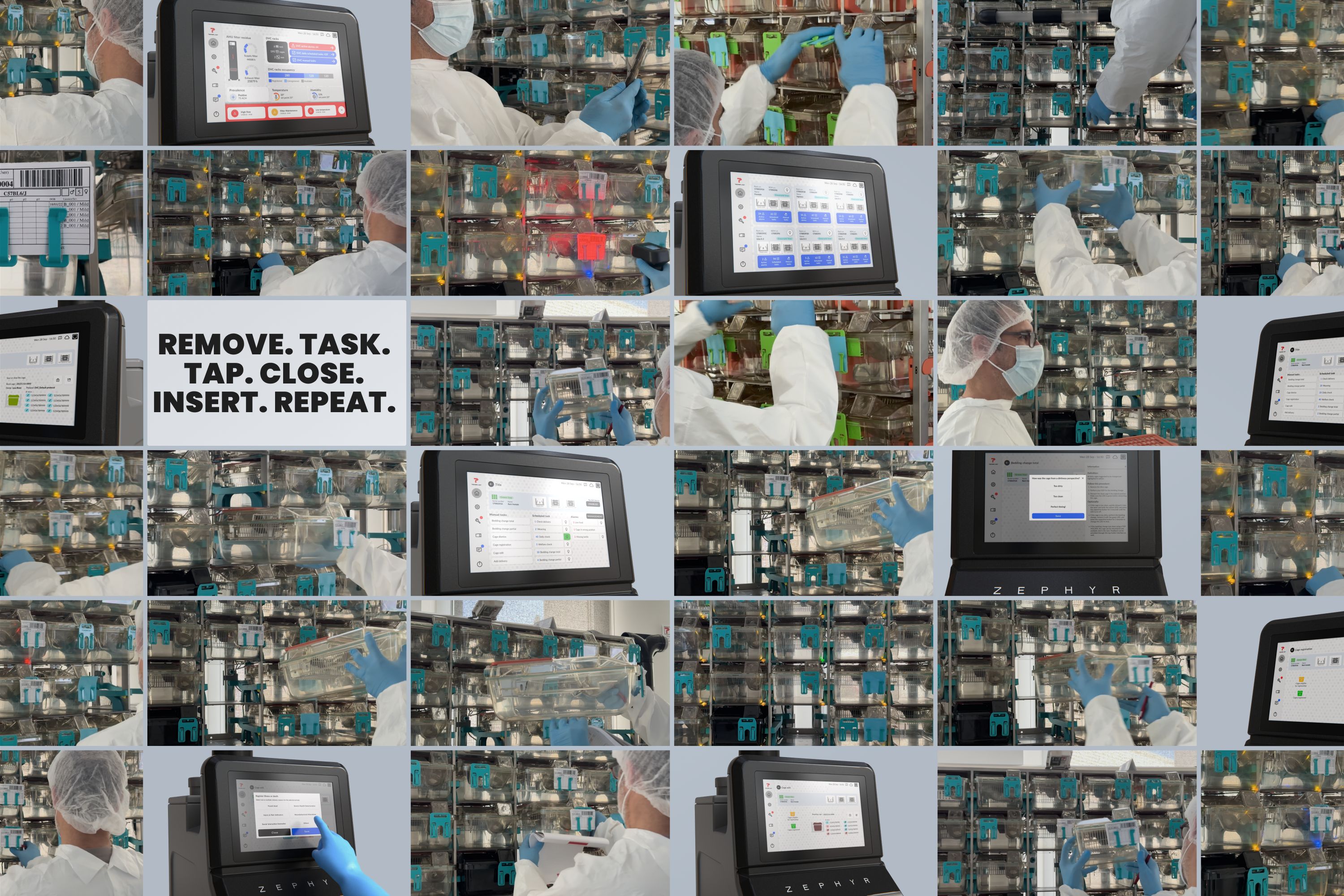
Having designed for contamination-controlled environments, I knew bringing a PC into a sterile area is a major constraint. From the start, I assumed PC use for ACTs should be minimal, not an easy task when you manage the workflows of 500 cages. While working on Top Holder's UI, a developer asked: “If the display is still 7'', how are you fitting more content? It feels like your UI has twice the space.” We realized that was precisely the constraint we had missed. The intuition was confirmed in Groningen: an operator was collecting cages' tags to speed up data entry. That defined Zephyr's vision: a phygital experience merging GUI and TUI. It challenged the team, but paid off: Zephyr was showcased at AALAS in November.
Where do you see yourself and the project in the next five years?
2025 marked a milestone for the DVC® system, reaching its highest revenue since Tecniplast patented DVC® (Digital Ventilated Cages) ten years ago. The system keeps evolving, and a design-driven mindset is opening new scenarios.
For Digital Reality, being part of this journey is both an honor and a strong motivator. Working on such a dynamic project, where technology has always driven innovation, is truly rewarding.
In a world where innovation often moves “from real to digital,” Zephyr took the reverse path: from digital back to real, by focusing on human gestures and user experience.