Designers
Moritz Malik, Jonah Jacobsen
Year
2026
Category
New Talent
Country
Germany
School
HTW Berlin – University of Applied Sciences
Teacher
Birgit Bauer
Three questions to the project team
What was the particular challenge of the project from a UX point of view?
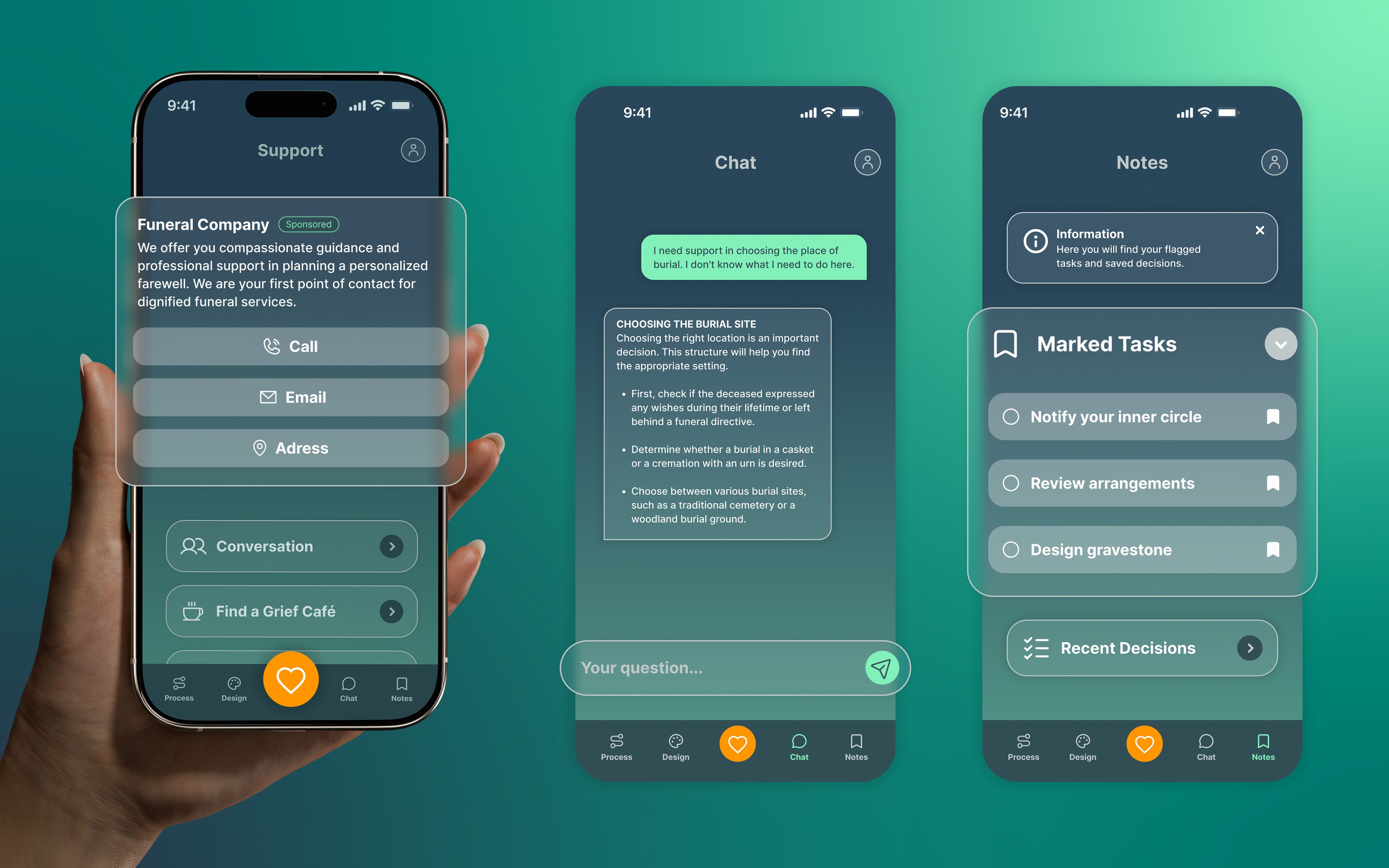
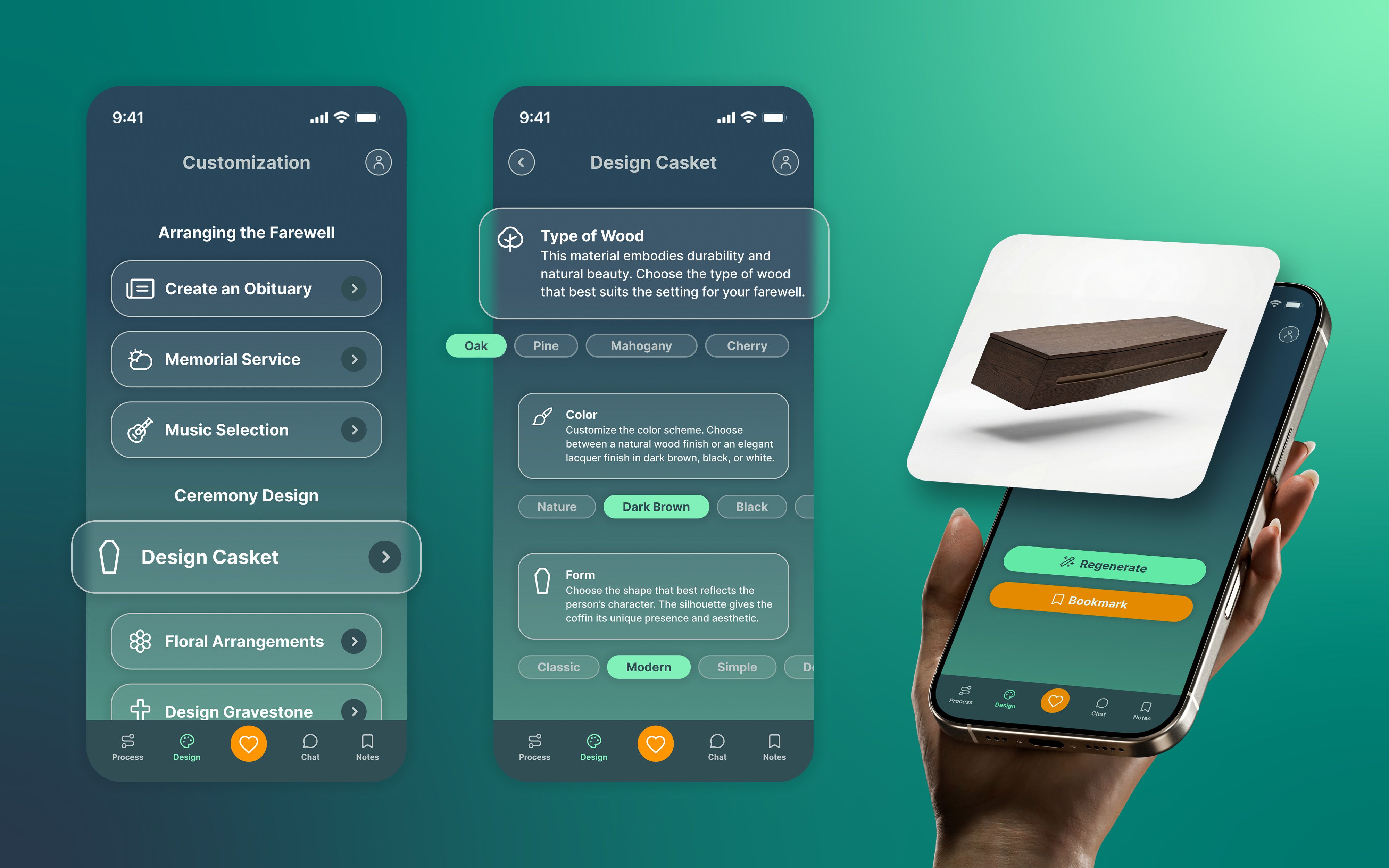
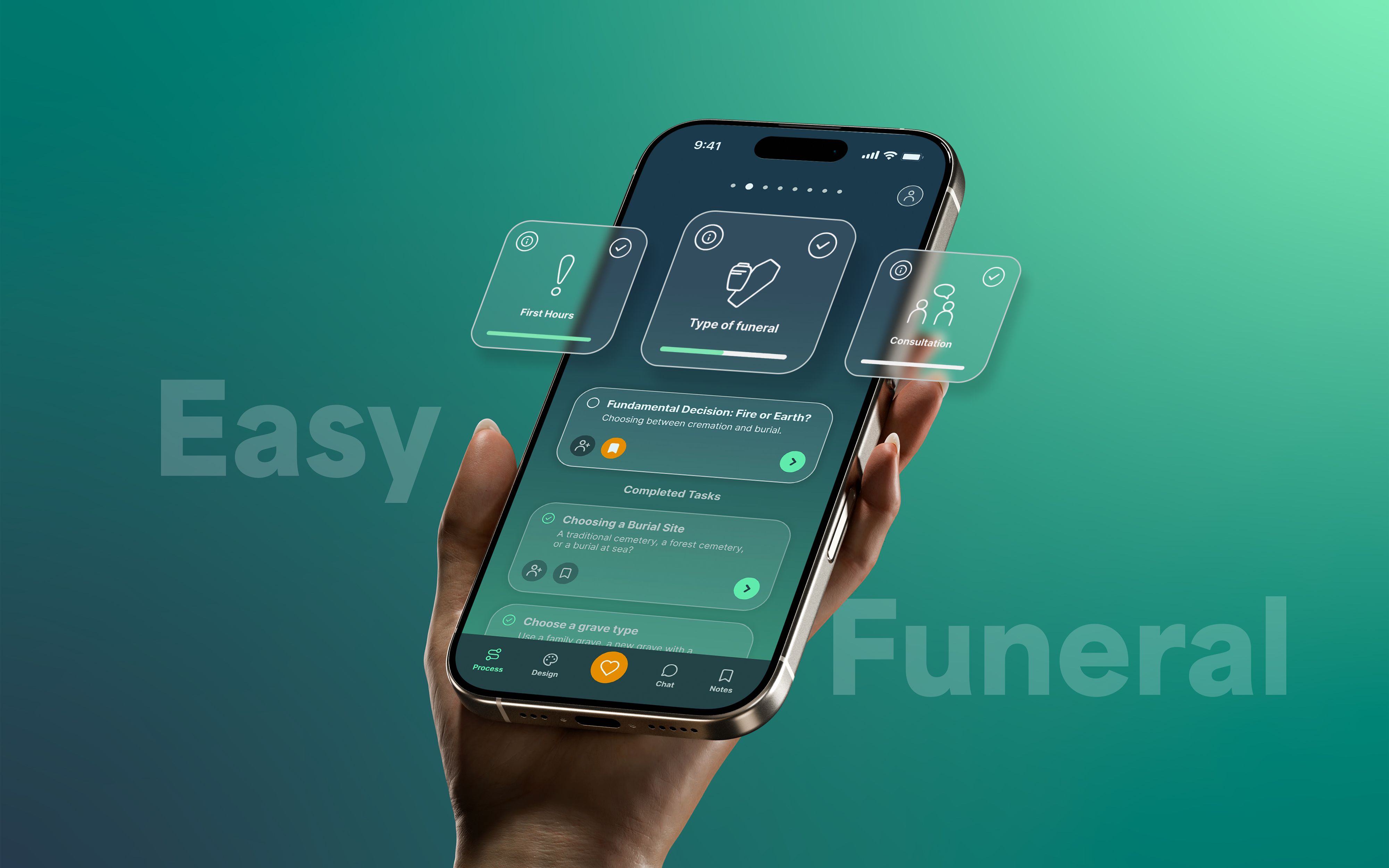
The particular UX challenge lay in designing for emergency cognition, a state of acute grief and cognitive overload where users must make complex legal, financial, and logistical decisions under immense time pressure. Traditional, cold administrative forms cause user paralysis in this vulnerable phase. Easy Funeral solves this by transforming a fragmented, paper-heavy process into a collaborative, stress-resistant workspace. The core challenge was balancing progressive disclosure to reduce decision fatigue with immediate data transparency. By merging an empathetic interface, AI-driven creative assistance, and absolute user autonomy, the UX restores a sense of control when life feels entirely uncontrollable
What was your personal highlight in the development process? Was there an aha!-moment, was there a low point?
Our personal highlight was developing the extensive Service Blueprint. Deconstructing the overwhelming funeral journey into a logical system as a team was incredibly rewarding. The aha moment occurred during the low-fidelity wireframing stage. Stripping away aesthetics revealed that the key to reducing cognitive load wasn't just giving information, but progressive disclosure, revealing details only upon interaction to prevent user paralysis. The low point was balancing emotional empathy with AI integration. Initially, the AI felt too automated and cold for a state of grief. It took intense iteration and guidance to redefine the AI strictly as a low-threshold creative catalyst, ensuring that full autonomy always remains in human hands.
Where do you see yourself and the project in the next five years?
In the next five years, we see ourselves keeping momentum with Easy Funeral while remaining highly open to the right opportunities. If the possibility arises, our goal is to collaborate with strategic partners—such as progressive funeral directors or tech innovators—to transition this concept into a real-world application. We want Easy Funeral to serve as a proof of concept that establishes a new standard for empathetic, inclusive UX design in bereavement care. Whether as an active venture or an open-source framework, this project will continue to guide our journey as designers, demonstrating how thoughtful technology can meaningfully support people in vulnerable states.