Designers
Tom Rundle
Year
2026
Category
Product
Country
Australia
Design Studio / Department
Product
Three questions to the project team
What was the particular challenge of the project from a UX point of view?
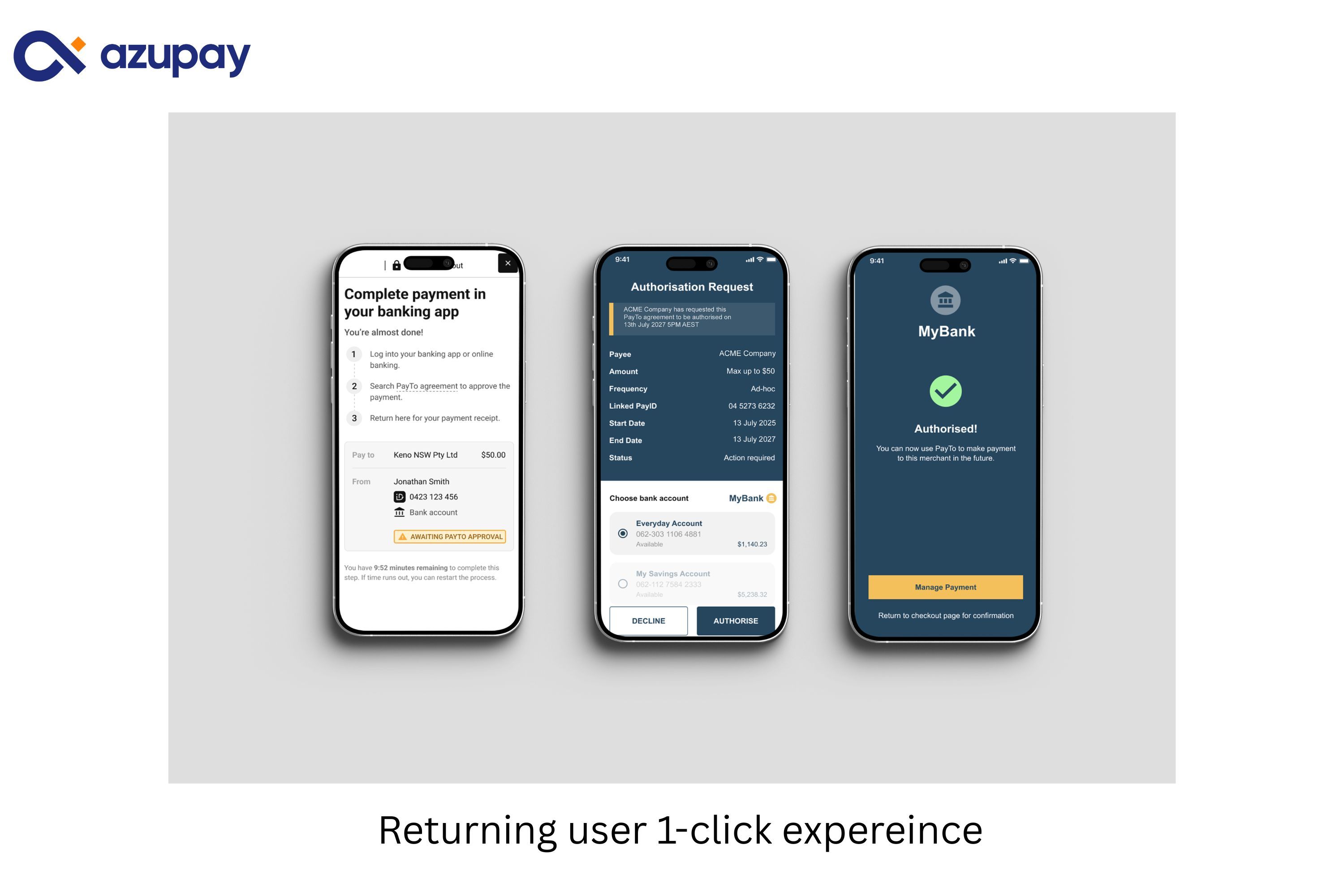
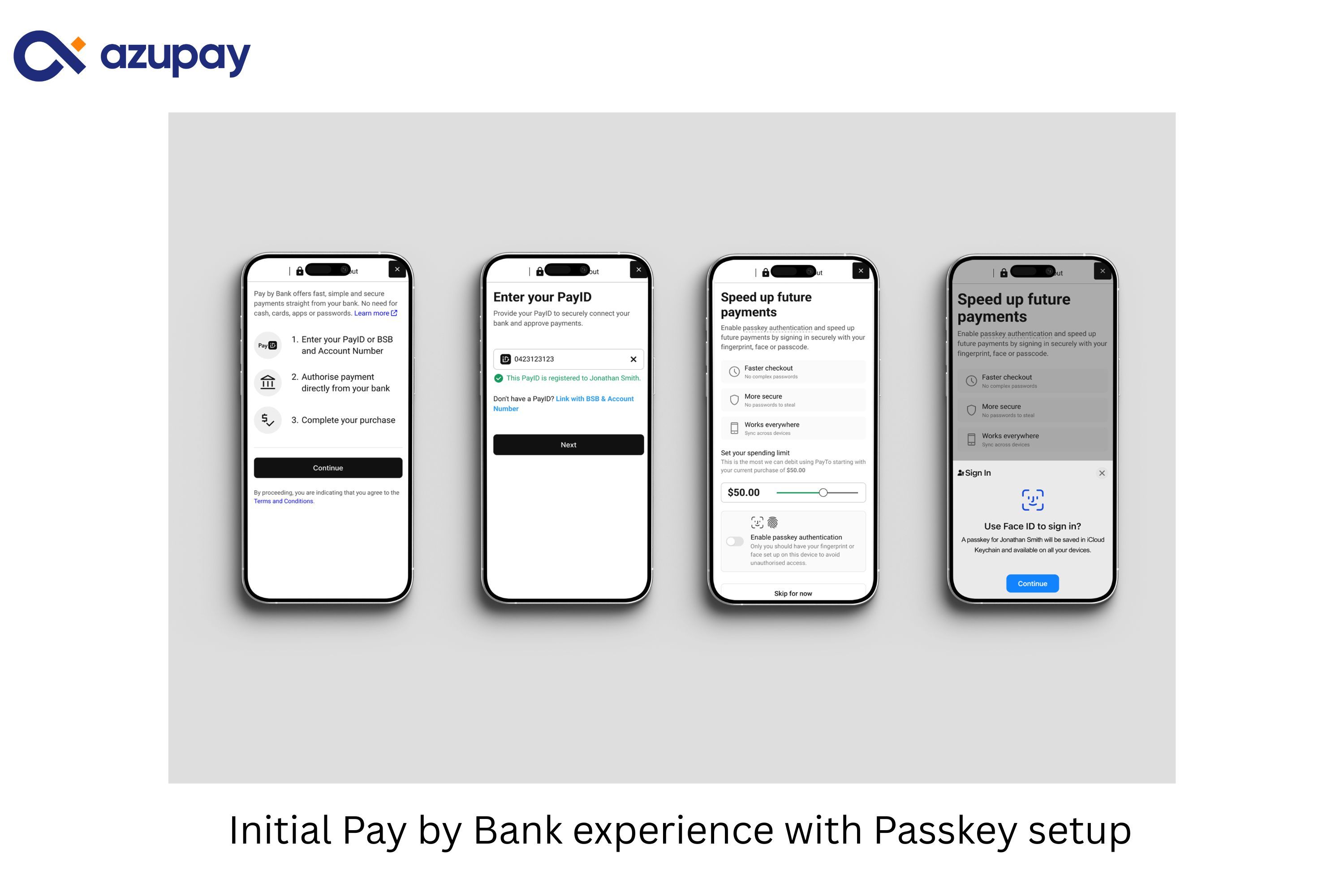
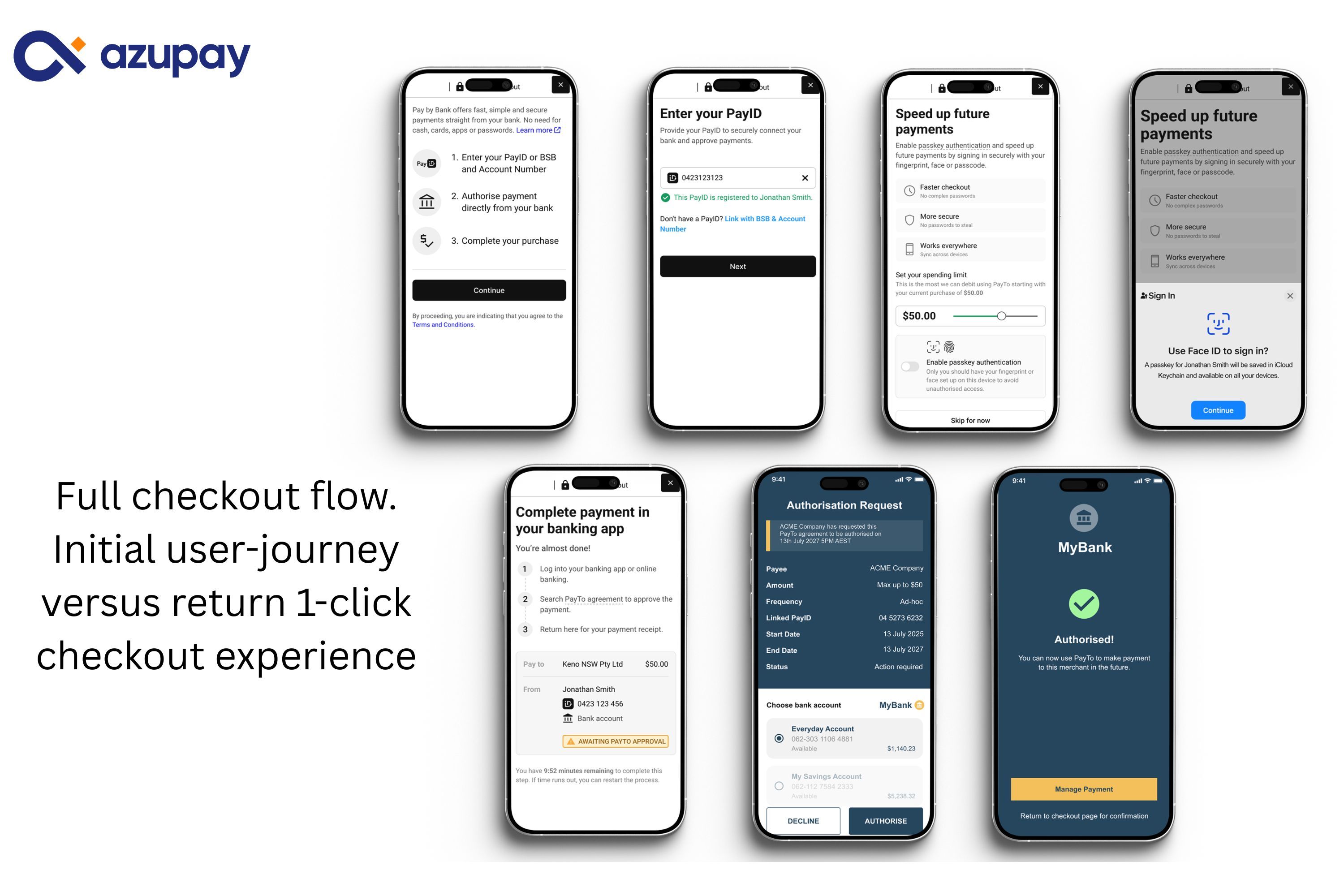
The core UX challenge was asking people to choose a newer, less familiar payment rail in a moment where they are usually conditioned to default to cards, while reconciling two things that often work against each other: bank-grade trust and consumer-grade simplicity. We had to build trust quickly, explain the value of PayTo without slowing checkout down, and influence payment choice in a space where cards and digital wallets already feel effortless. The hardest part was that the first-time setup required users to leave the merchant journey and approve a PayTo agreement inside their banking app. We knew that any break in the checkout flow creates friction, but this approval step was essential for user consent and payment security. Adding to the complexity, each bank presented PayTo agreements differently, so we could not rely on one consistent user experience once the customer moved into their bank environment. That meant our UX work became less about controlling every screen and more about creating confidence, continuity and clarity across a journey we only partially owned. We had to prepare users for what was coming, reassure them that the bank approval was expected, and make the return experience feel valuable enough to justify that first setup moment.
What was your personal highlight in the development process? Was there an aha!-moment, was there a low point?
The aha moment was definitely the introduction of passkeys. More specifically, it was realising that a passkey did not have to be treated like another login method; it could become a trusted permission mechanism for payments. We could see that the biggest drop-off happened when users had to go to their bank to approve the PayTo agreement. But we also saw something encouraging: once the agreement was set up correctly, users were willing to come back and use the same payment method again. The problem was that the repeat experience still had friction, whether through SMS, 2FA or other verification steps. That led to the real breakthrough: if the first-time setup was necessarily more involved, then the returning experience had to be radically simple. Passkeys gave us a way to recognise the customer securely, use the biometric behaviour they already understood from their device, and bind that authentication back to the PayTo agreement. The experience shifted from “set up and authenticate again” to “arrive, scan, pay.” That was the moment the product started to feel like a genuine challenger to cards, not just a cheaper alternative.
Where do you see yourself and the project in the next five years?
Over the next five years, we see this moving beyond a single online checkout experience into a truly omnichannel payment experience. Whether a customer first sets it up online and later pays in store, or starts in store and returns online, the goal is for the payment relationship to follow them securely and seamlessly. Our ambition is to help make account-to-account payments mainstream across both eCommerce and physical retail. PayID and PayTo have the potential to become not just alternative payment methods, but smarter, lower-cost and more direct ways to pay. More broadly, we think the opportunity is bigger than passkeys alone. The enduring idea is creating a trusted authentication layer that can securely connect a person to their payment authority, whether that is through passkeys today or other trusted digital identity methods in future. This becomes even more important as merchants look for cost-effective payment options in the wake of card surcharge reforms from 1 October 2026. As the economics of payments change, we believe experiences like one-click checkout with passkeys can help merchants offer customers a faster, more secure and more efficient way to pay, while reducing reliance on traditional card rails.