Designers
Hanyin Zheng
Year
2026
Category
New Talent
Country
China
School
Beijing Institute of Technology
Teacher
Xuan Zhang
Three questions to the project team
What was the particular challenge of the project from a UX point of view?
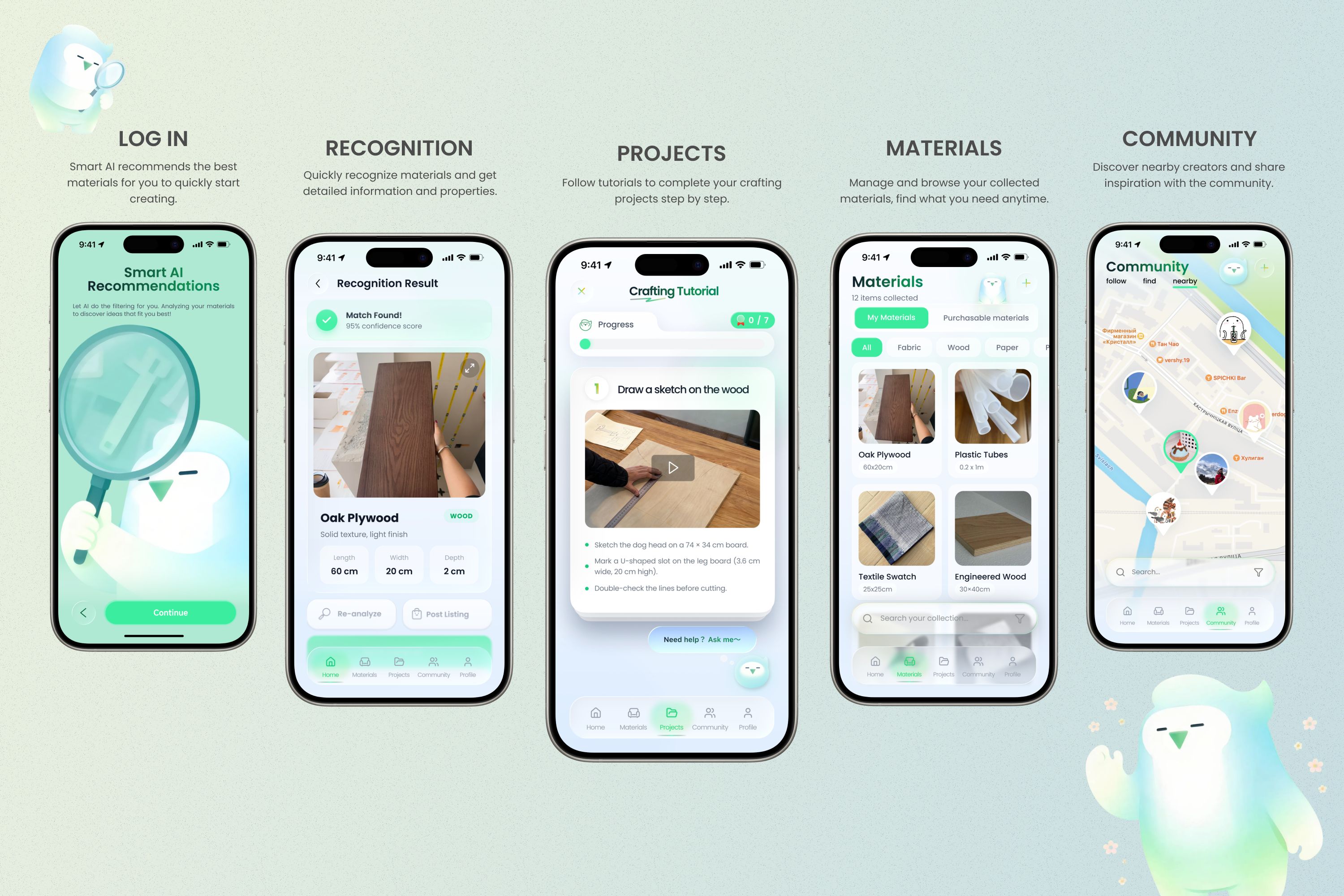
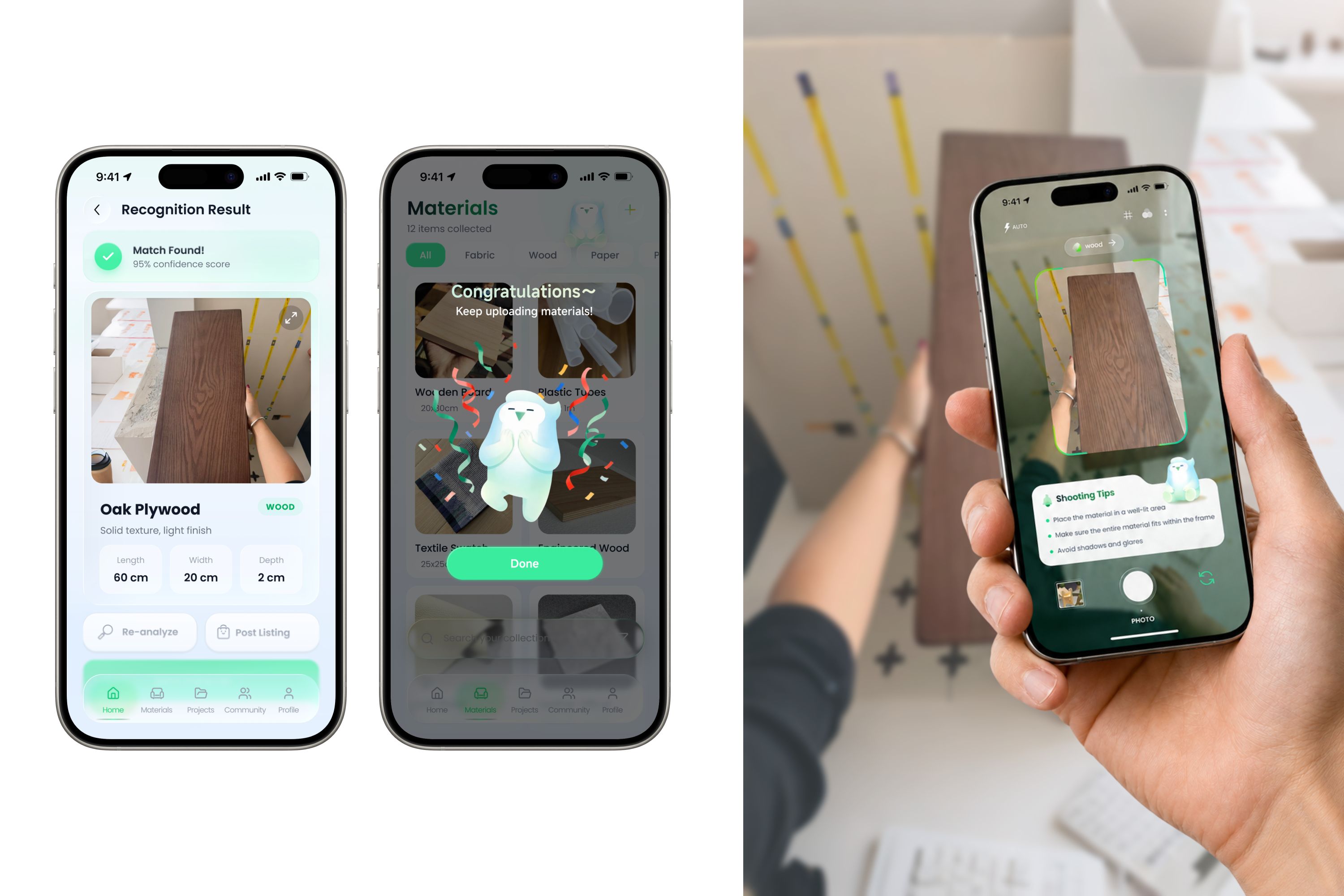
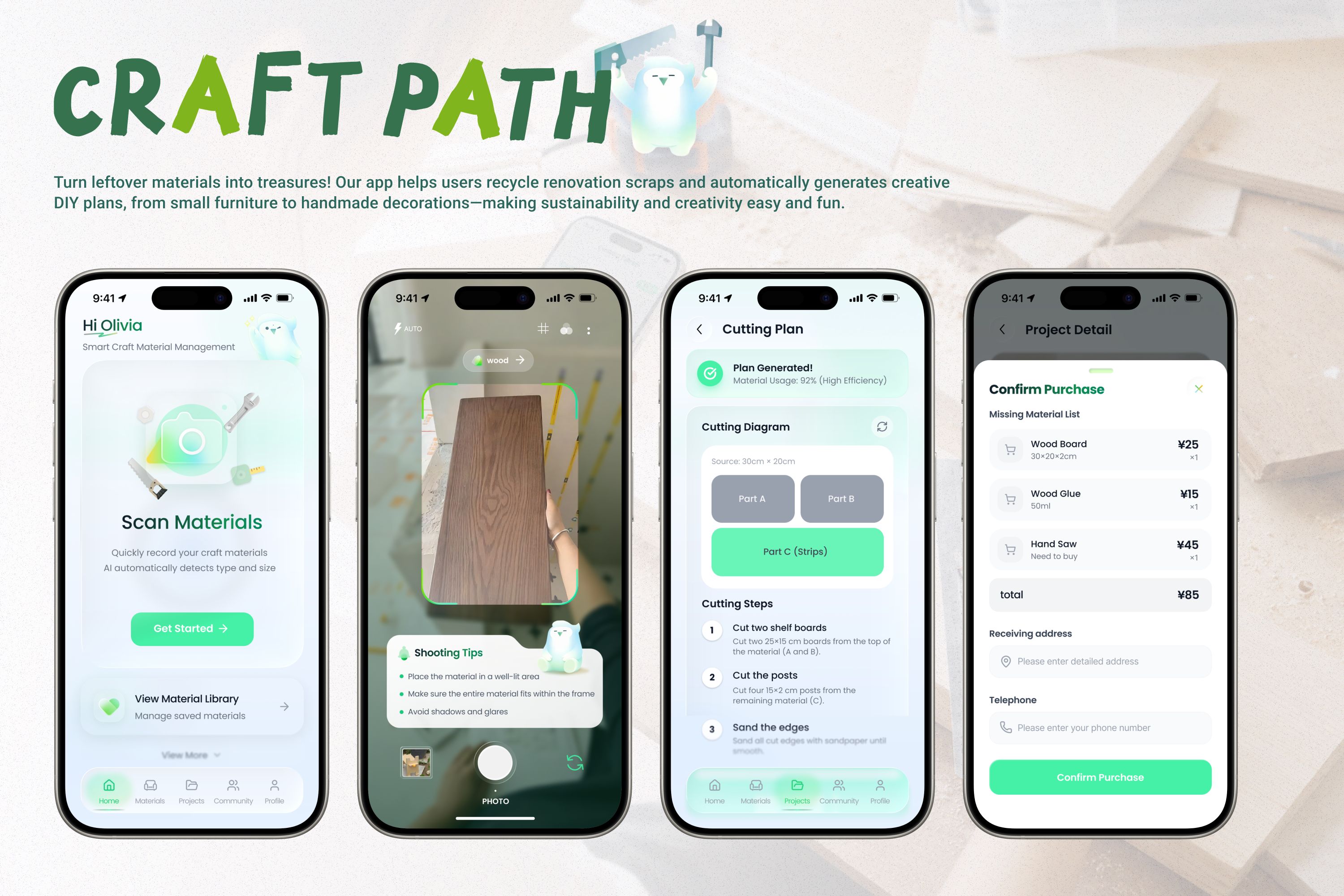
The main UX challenge was turning “leftover materials” from an unclear household problem into a simple, actionable reuse journey. Users often do not know what materials are still usable, what they can make, or whether a DIY project is safe and feasible. Therefore, CraftPath needed to reduce cognitive load across the whole process: recognizing materials, saving them in a personal library, matching them with suitable projects, and guiding users step by step. The experience also had to balance sustainability, creativity, safety, and motivation, so users would feel confident enough to actually complete a project rather than only browse ideas.
What was your personal highlight in the development process? Was there an aha!-moment, was there a low point?
My personal highlight was the moment I realized CraftPath should not be just a tutorial app, but a confidence-building tool. At first, the idea was too broad and focused mainly on sustainability and DIY inspiration. The low point came when research showed that users were interested in reuse, but still hesitated because they were unsure about material quality, tools, safety, and project difficulty. The aha moment was understanding that AI should not replace creativity, but translate messy leftover materials into clear, feasible next steps. This changed the design from passive inspiration to an active guided workflow.
Where do you see yourself and the project in the next five years?
In the next five years, I see myself continuing to explore UX design at the intersection of AI, sustainability, and everyday living. I hope CraftPath can grow from a prototype into a validated circular-living platform. The project could expand its material image dataset, improve safety checks, and build partnerships with local recovery centers, maker communities, schools, and renovation services. It could also track measurable impact, such as materials reused, projects completed, and estimated waste avoided. Personally, I want to keep designing systems that make sustainable behavior easier, more emotional, and more practical for ordinary users.