Designers
Aditi Singh, Moritz Nussbaumer, Liu Hu
Year
2026
Category
New Talent
Country
Sweden
School
Umeå Institute of Design
Teacher
Karey Helms, Brendon Clark
Three questions to the project team
What was the particular challenge of the project from a UX point of view?
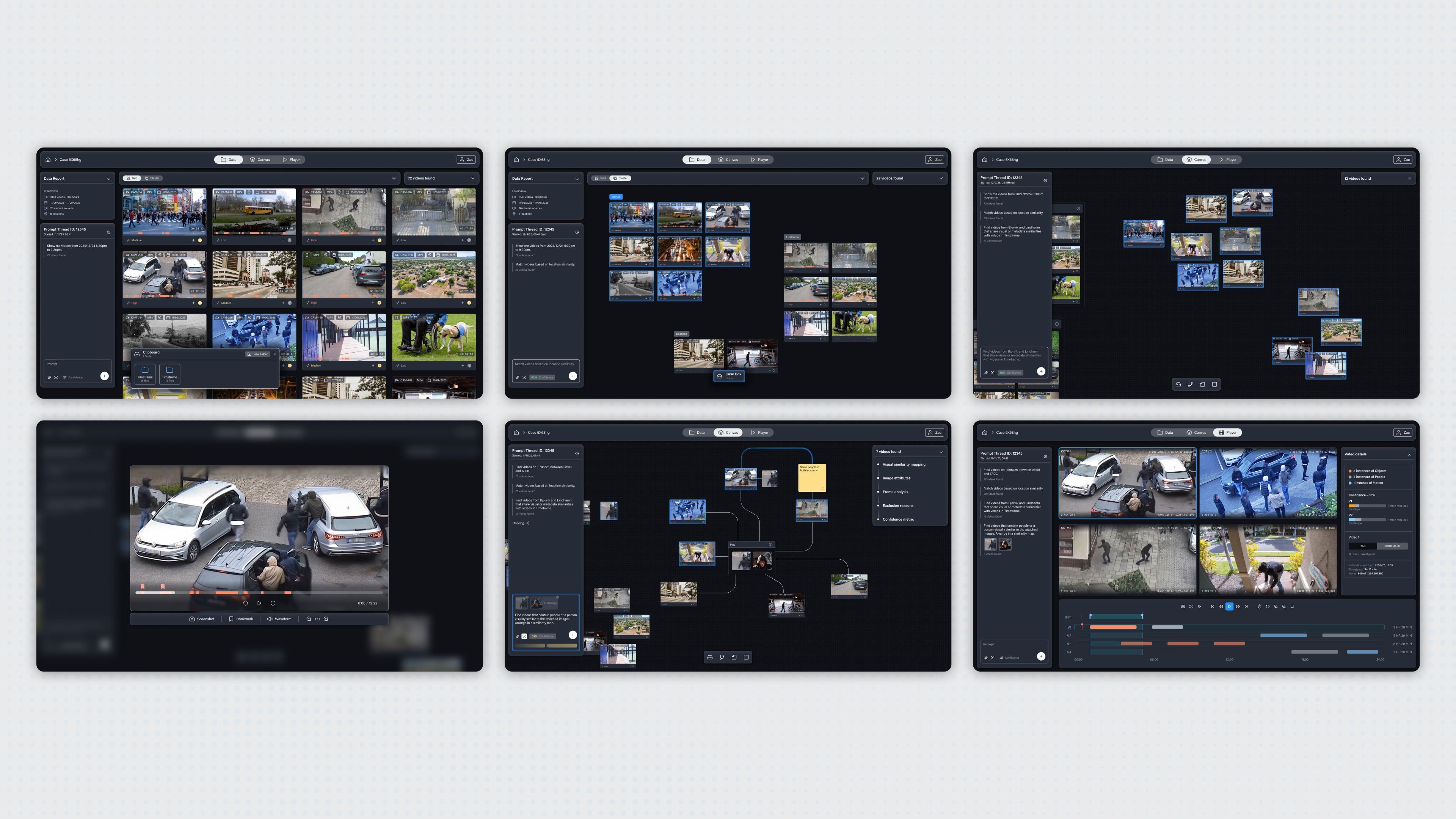
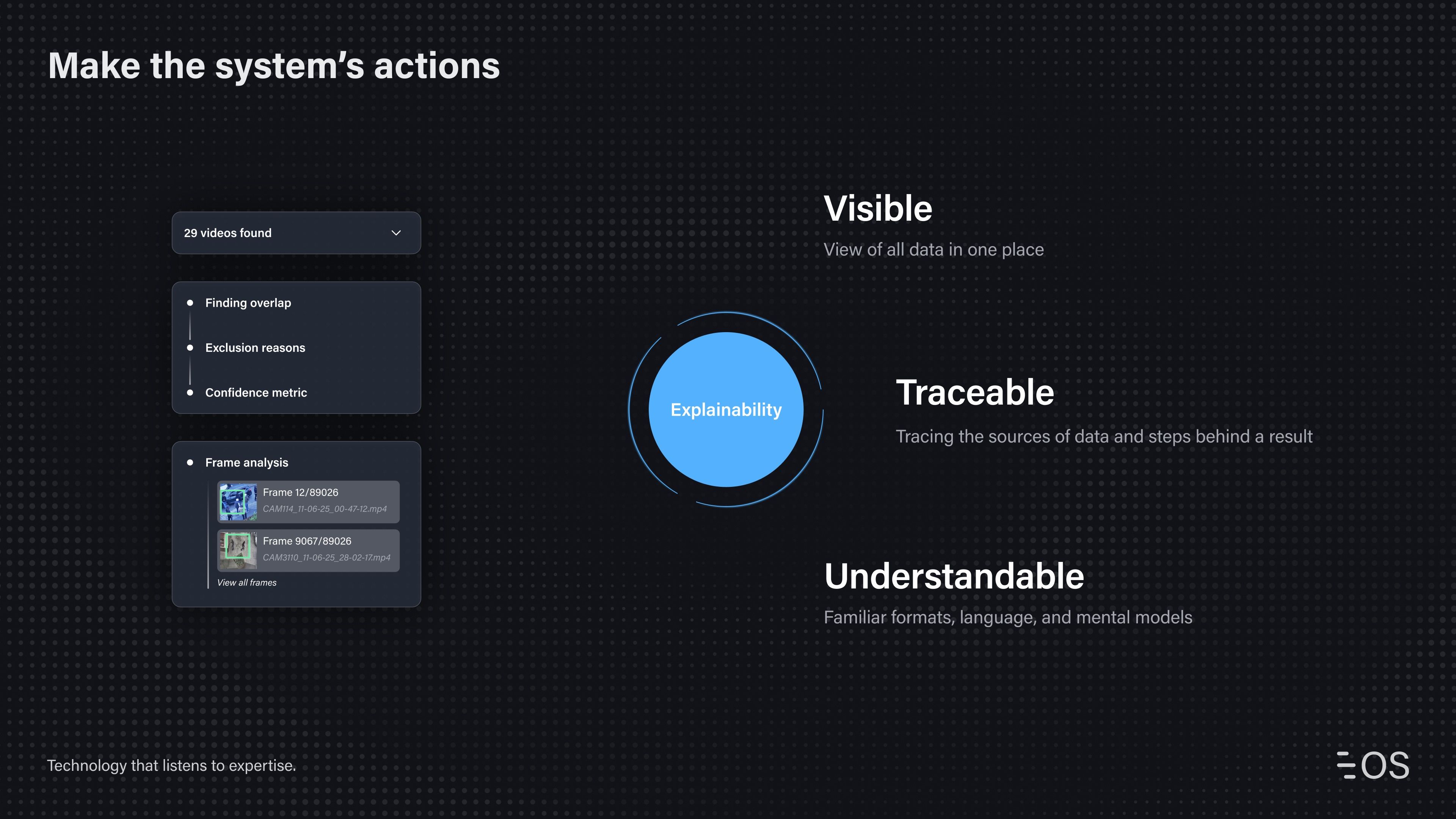
From a UX perspective, the challenge was to design an AI-supported system that could handle the complexity of large-scale video investigations without increasing cognitive load. The interface needed to be intuitive enough for investigators with varying levels of technical expertise, while remaining powerful enough to support advanced analytical work. Another challenge was avoiding information overload when working with hundreds of hours of video, metadata, and AI-generated insights. Through field research with investigators, we focused on creating an experience that reflects real investigative workflows, terminology, and decision-making practices rather than requiring users to adapt to generic surveillance tools.
What was your personal highlight in the development process? Was there an aha!-moment, was there a low point?
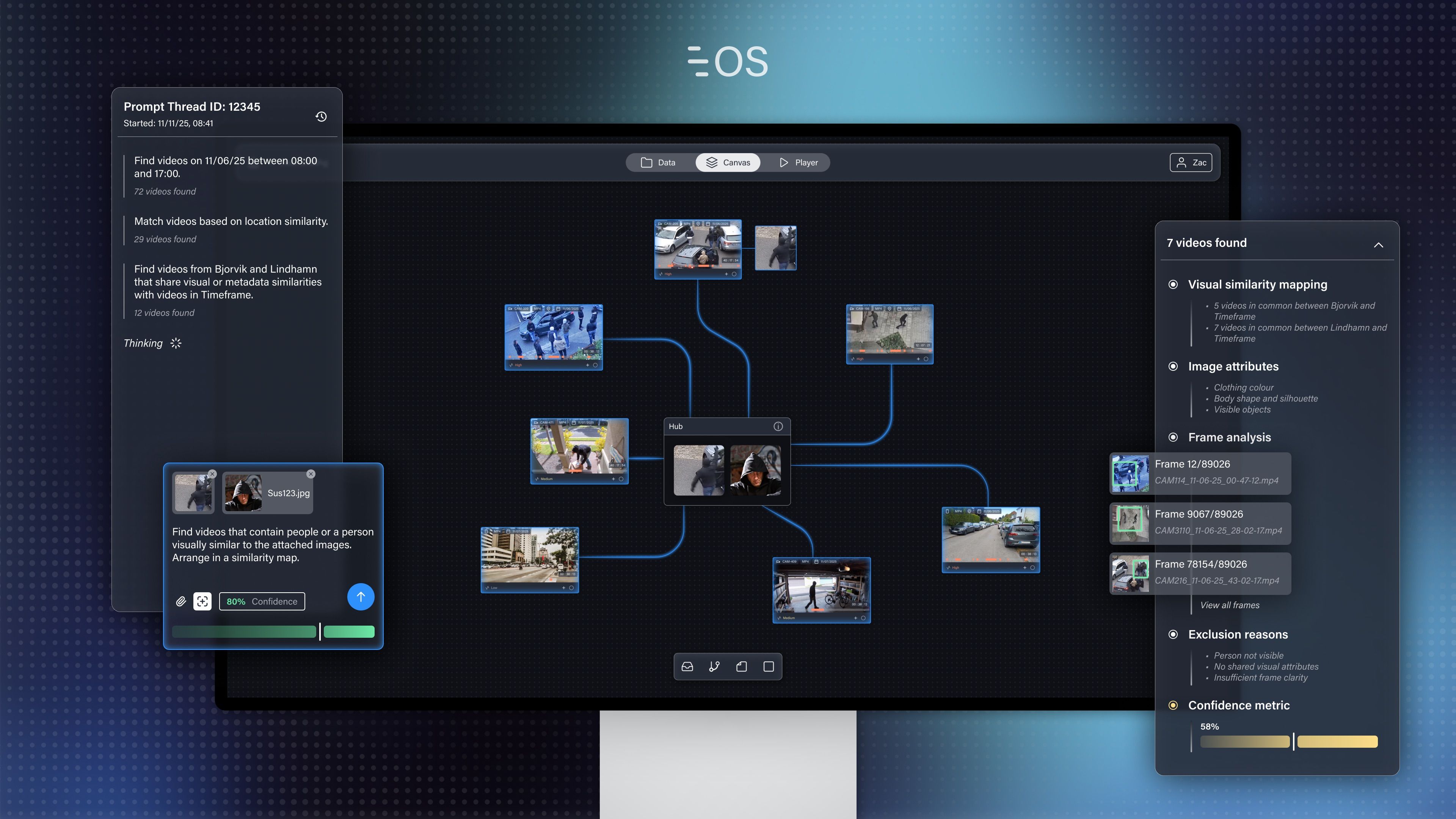
The biggest aha moment came during interviews with investigators. We learned that investigation is an iterative problem-solving process, much like design work itself. This led to the Canvas workspace, which pays homage both to investigative practice (think bulletin boards and red threads) and to design practice through the open canvas. Recognizing these parallels helped us see how spatial reasoning and externalized thinking could naturally support evidence analysis. A more difficult moment was understanding the emotional toll of investigative work, particularly when reviewing disturbing footage. While supporting investigator wellbeing was beyond this project's scope.
Where do you see yourself and the project in the next five years?
After being presented to EU law enforcement representatives and software companies at a conference, the concept received encouraging feedback that reinforced our belief that it addresses a real need. In the near term, we aim to further explore its technical feasibility and implementation, while considering intellectual property protection. As the project was developed with an industry collaborator, we also hope to see elements of the concept adopted in real investigative workflows. Looking five years ahead, we expect crime and digital evidence to evolve significantly. We would like to expand Eos to address emerging challenges such as deepfake-related crime and better support investigators’ mental wellbeing.