Designers
Jens Riesenberg, Kilian Köble
Year
2026
Category
New Talent
Country
Germany
School
University of Design Schwäbisch Gmünd
Teacher
Michael Schuster, Marc Guntow
Three questions to the project team
What was the particular challenge of the project from a UX point of view?
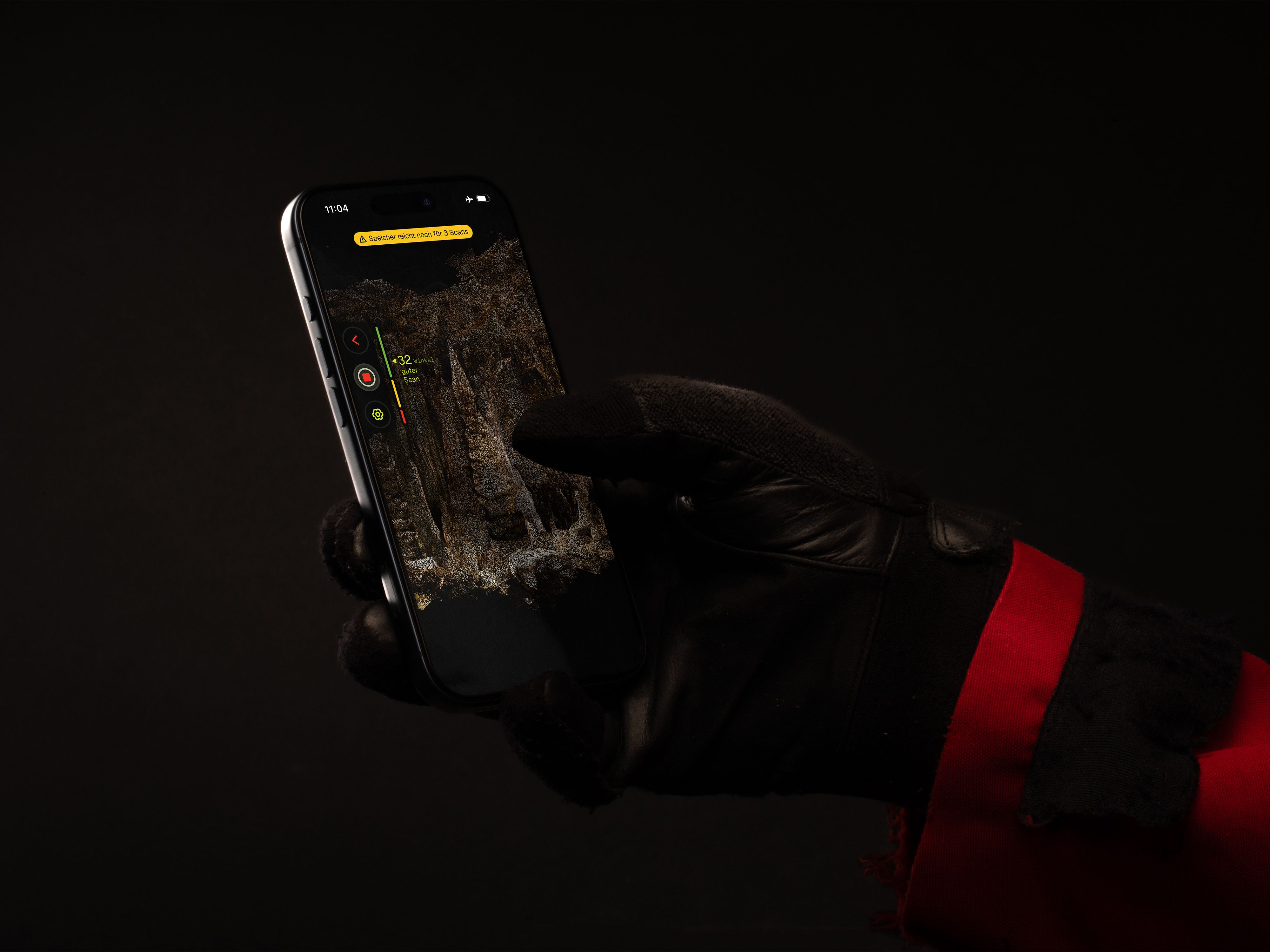
Designing for wet environments was our greatest challenge. Touchscreens and conventional UX patterns simply fail when hands are wet, muddy, and cold. Our solution was a system of custom assignable inputs through the physical buttons on the device, giving users reliable input regardless of conditions. Beyond interaction, we also explored energy-efficient UI design, discovering that constraints like reduced motion and reduced visual effects don't just save battery. They produce a calmer, more focused user experience, which helps lower mental strain. This plays a huge role especially on long expeditions, where speleologists don't see daylight for up to a week or more, making every reduction in cognitive load count.
What was your personal highlight in the development process? Was there an aha!-moment, was there a low point?
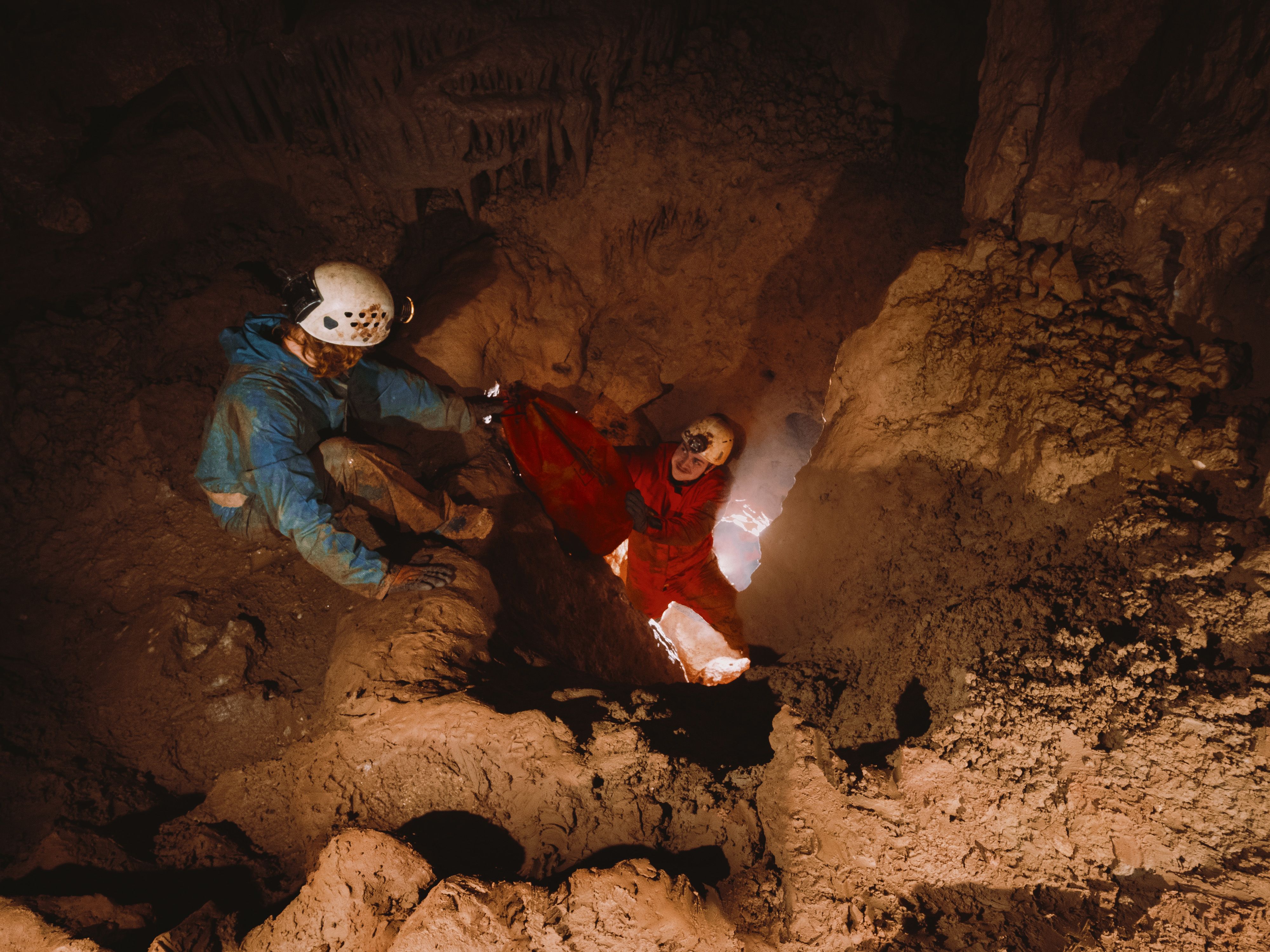
Our absolute highlight was live-testing HADES inside an actual cave. Having visited caves with speleologists multiple times during our research, this felt like a true step up, as it was the muddiest cave in the Swabian Alps. Watching an experienced speleologist pick up his phone, with the prototype installed, and navigate it confidently within minutes made it clear that the interface had achieved what we set out to do.
Where do you see yourself and the project in the next five years?
We will be presenting HADES at the German Assembly of Speleologists, where we hope to connect with motivated developers and secure the funding needed to push the project further. The speleology community is deeply passionate and engaged, and we would love to see HADES one day contributing to real scientific results in the field.
As for ourselves, we're just hoping to land a stable job after finishing our Master's.