Designers
Whelyda Thaiany Meira Magalhaes
Year
2026
Category
New Talent
Country
Brazil
School
Pontifical Catholic University of Rio de Janeiro
Teacher
Simone Diniz Junqueira Barbosa
Three questions to the project team
What was the particular challenge of the project from a UX point of view?
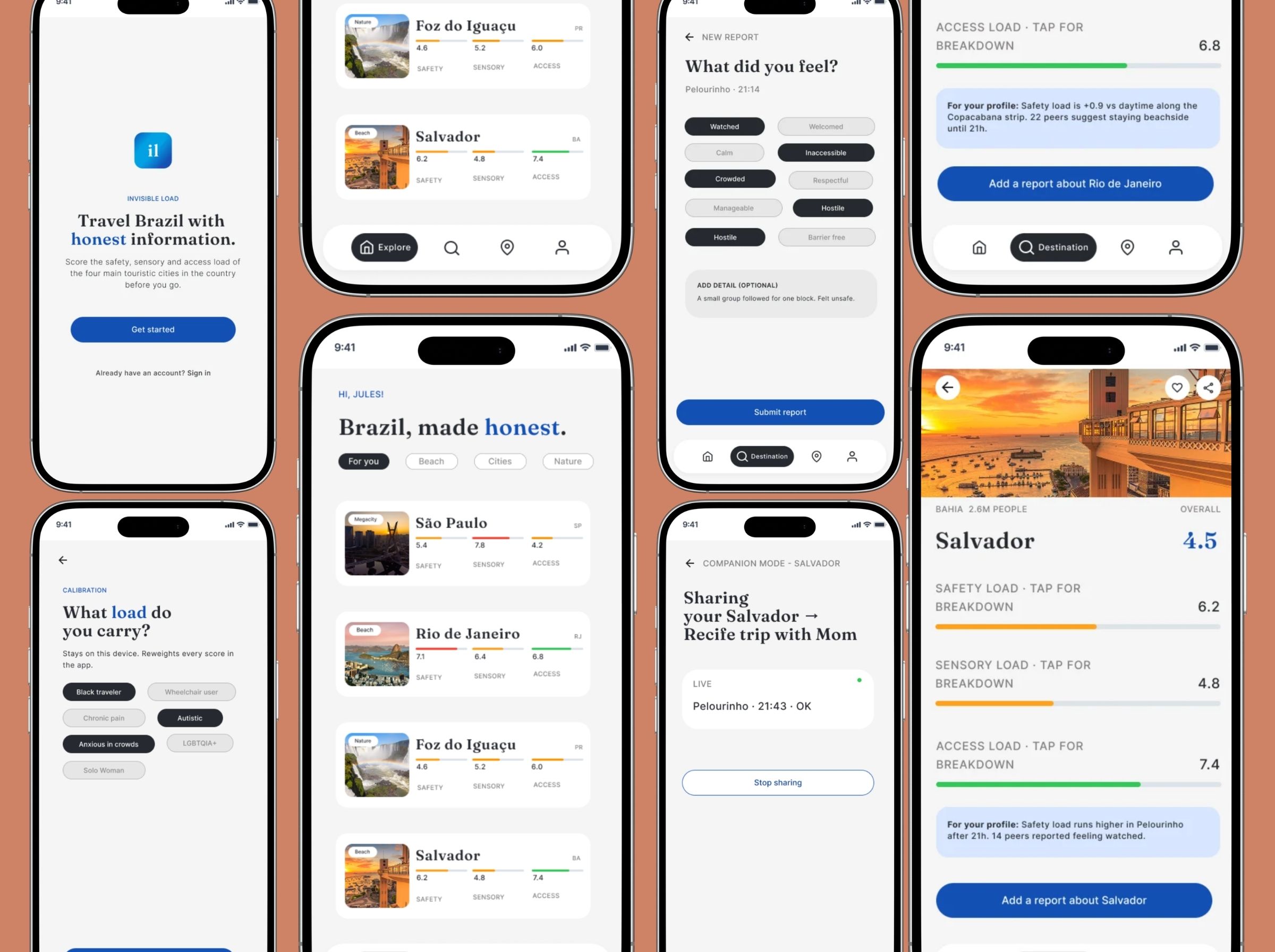
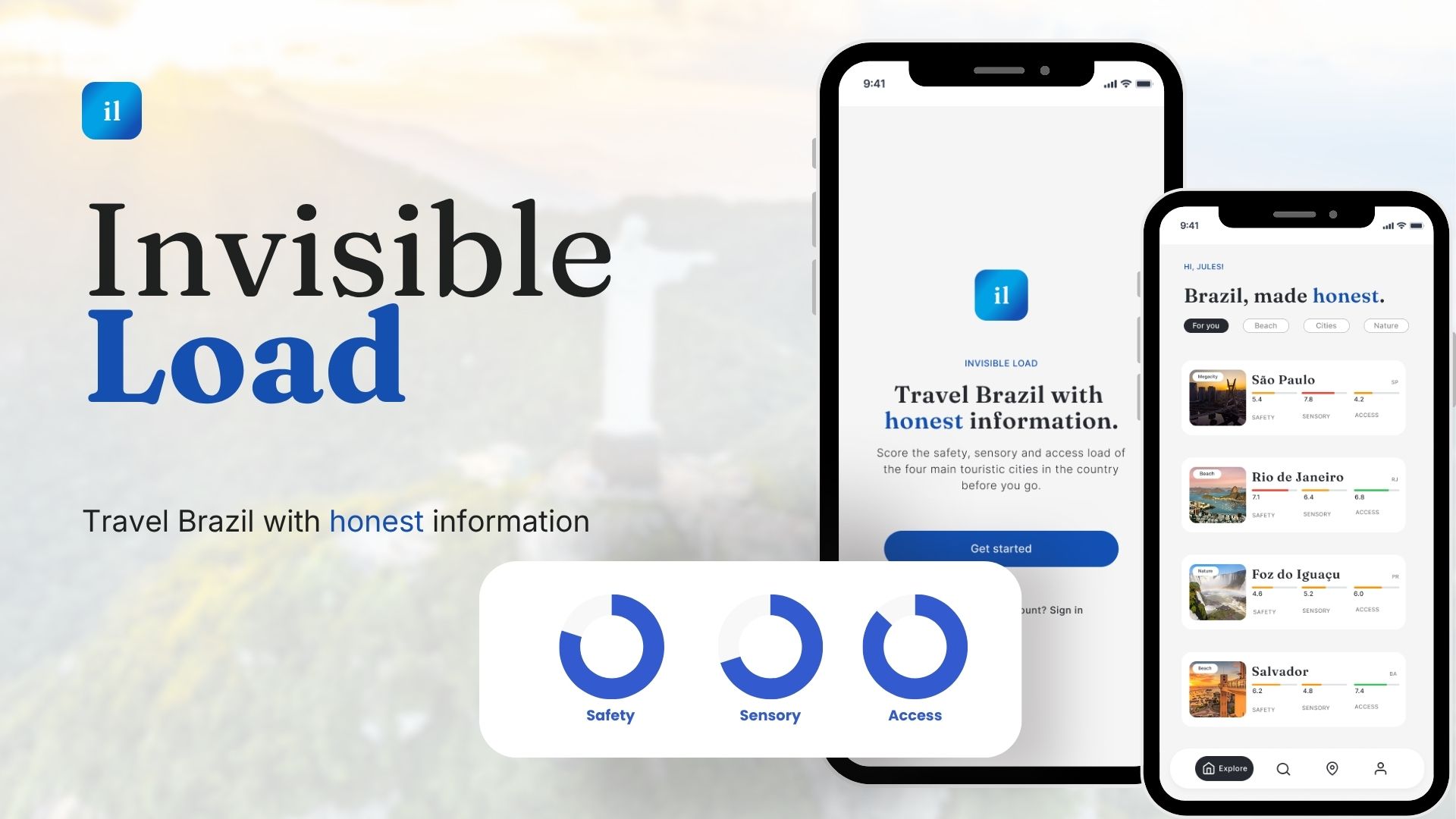
The hardest part was making invisible issues visible without flattening them. Most travelers don't write reviews about the mental tax of being watched, the noise that drains them by 2pm, or the curb that ended their day, they just absorb it and move on. The team had to find a way to show that load on screen so a black solo traveler, a wheelchair user and a neurodivergent visitor could each look at the same destination and recognize their own version of 'heavy'. Fast to read, honest about trade-offs, and never reducing a city to a single number. Threading that needle is what the whole product is built around.
What was your personal highlight in the development process? Was there an aha!-moment, was there a low point?
The highlight came during interviews. Three personas, very different lives, described the same exhaustion in completely different words: one scanning streets for stares, one scanning for curbs, one scanning for noise. That's the moment Load stopped being a metaphor and became a model. Also, discovering that users didn't fully trust the official channels because of possible bias was definitely an aha moment that reshaped how Invisible Load was being idealized so far
Where do you see yourself and the project in the next five years?
In five years, Invisible Load should feel less like an app and more like infrastructure: something cities, operators and travelers quietly rely on, the way people rely on weather data. The pilot grows from four Brazilian capitals to a national index, then outward to other places in the Global South where official numbers don't tell the whole story. The team also sees the Load model traveling: urban planning, event accessibility, women's mobility research. The bigger hope is cultural: that asking 'how heavy is this place for me?' becomes a normal question, answered by the people who actually carry the weight.