Designers
Lea Sophie Krempin
Year
2026
Category
New Talent
Country
Germany
School
Offenbach University of Art and Design
Teacher
Janina Anjuli Schmidt
Three questions to the project team
What was the particular challenge of the project from a UX point of view?
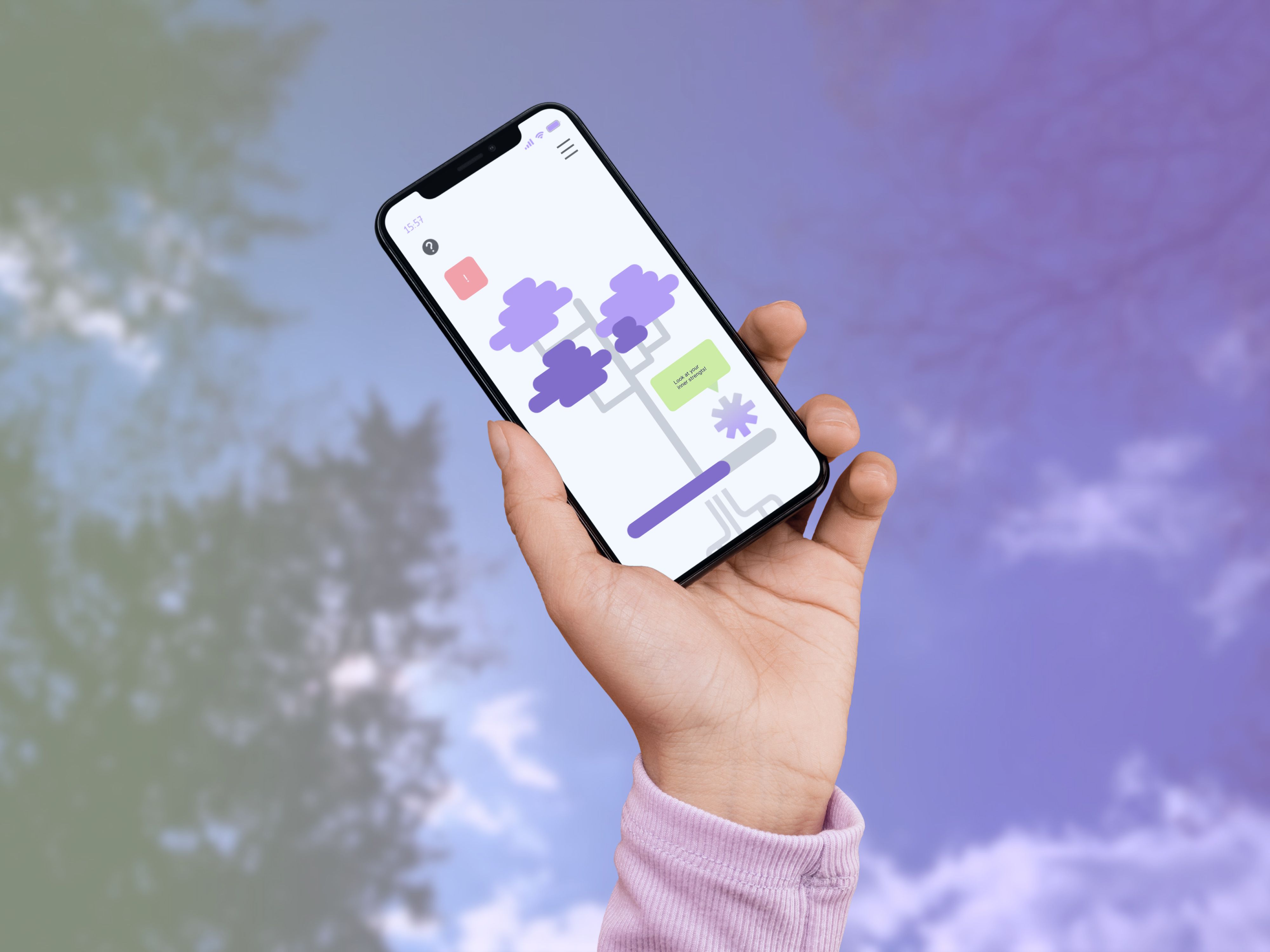
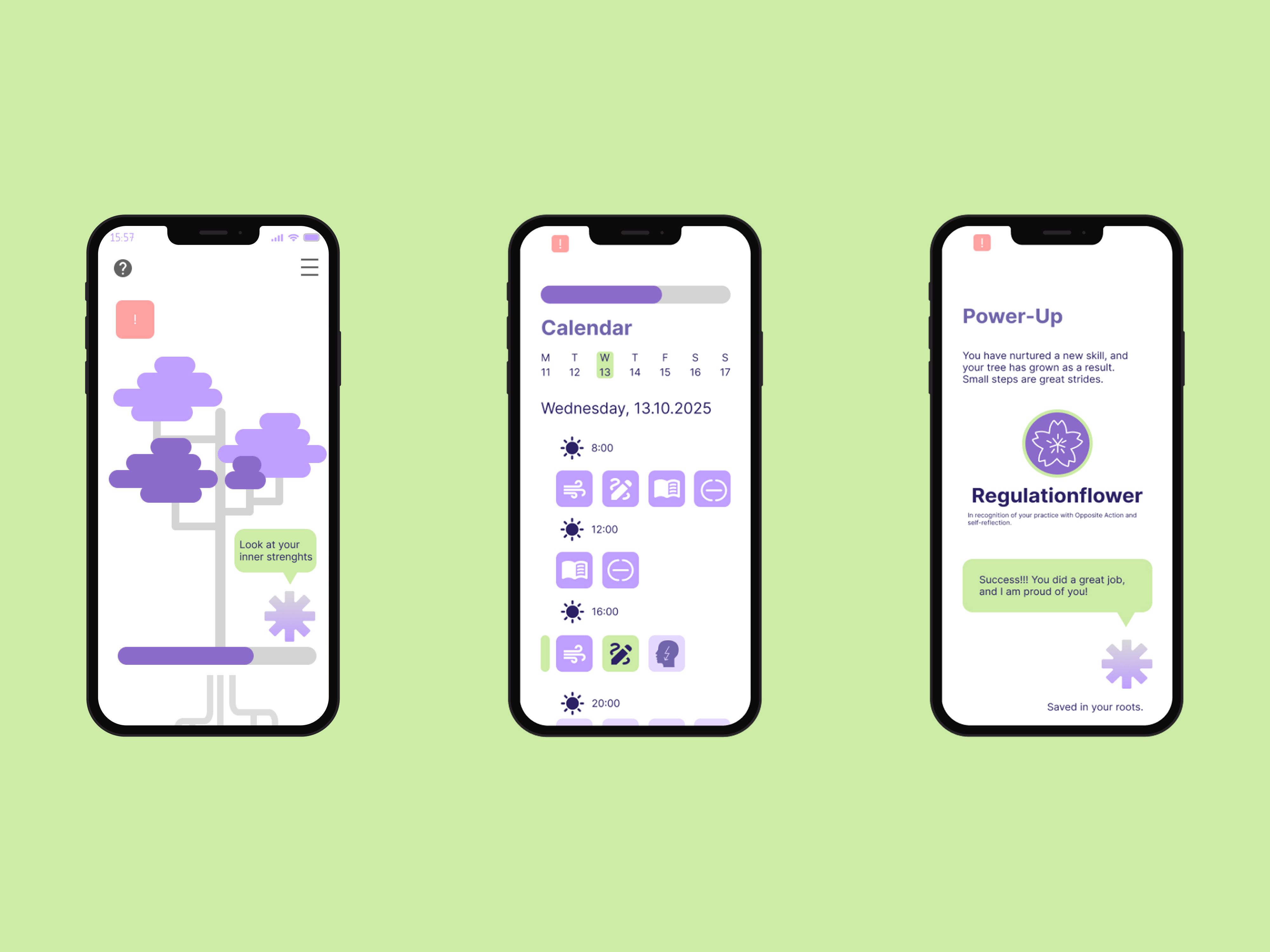
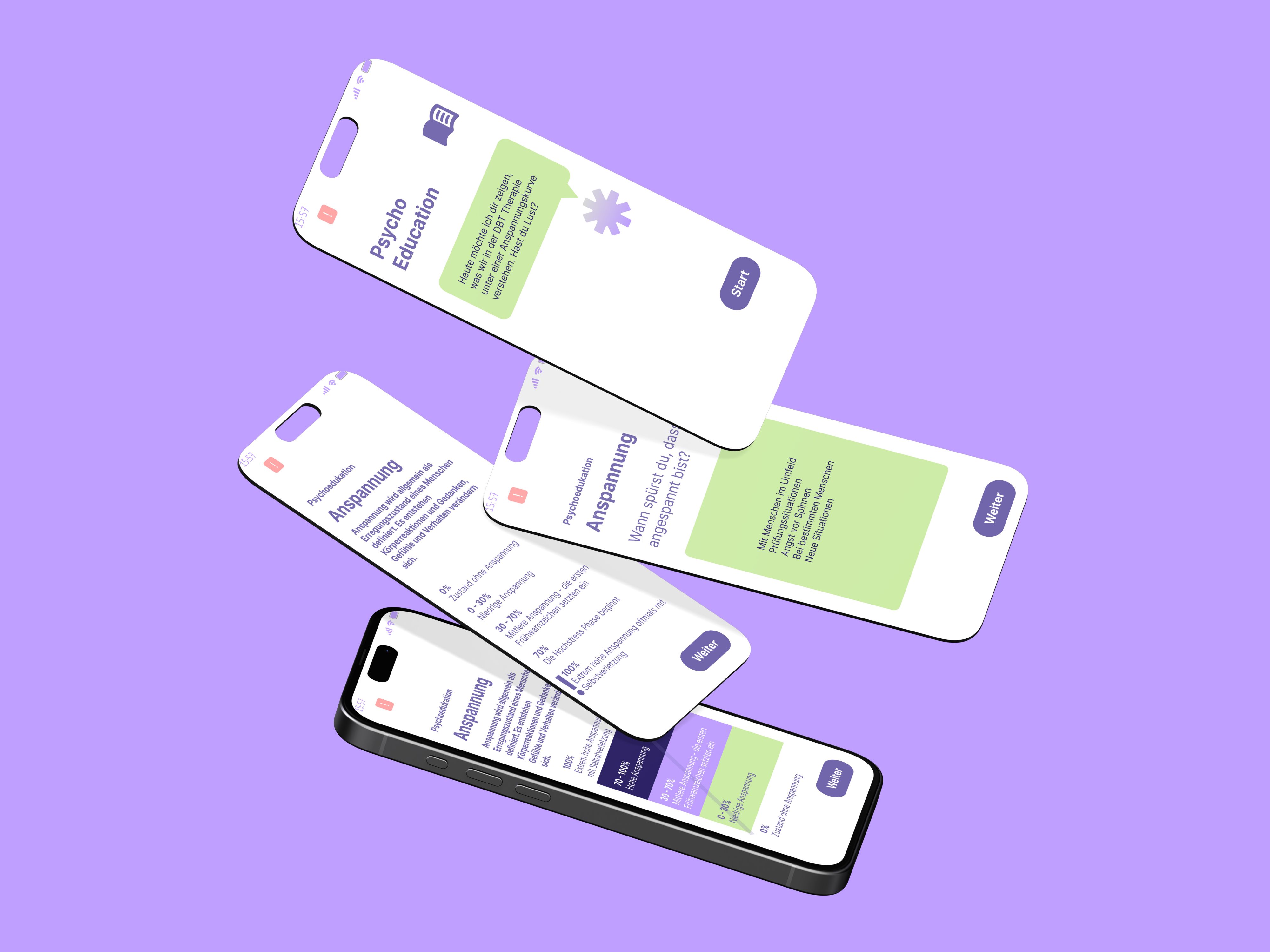
The main User Experience challenge lay in designing for individuals experiencing extreme emotional arousal, where cognitive processing is severely compromised. Translating Dialectical Behavior Therapy protocols into low-threshold micro-interactions required a radical reduction of cognitive load. I had to build an aesthetic sanctuary that calms the nervous system rather than demanding performance, replacing stress with metrics like numerical scores and streaks with life-affirming, symbolic growth. Every detail, from the validating voice of the digital companion to the slow, predictable transitions, was calibrated to co-regulate high-stress states without triggering cognitive overload.
What was your personal highlight in the development process? Was there an aha!-moment, was there a low point?
My absolute 'aha!' moment was pivoting from an abstract cosmic metaphor to the grounding tree model. I initially explored vast galaxies, but testing showed that users experiencing dissociation needed immediate 'rootedness' and soil, not infinite space. The low point was realizing how clinical, sterile, and potentially triggering most existing mental health solutions are, this reinforced my immense responsibility. Balancing clinical safety protocols with a warm, non-judgmental user experience was a challenging tightrope, but it ultimately shaped MOYA into a sanctuary of predictability and genuine emotional co-regulation.
Where do you see yourself and the project in the next five years?
In five years, I envision the project evolving from a research prototype into a clinically certified digital health application, prescribed by therapists and fully reimbursed by healthcare systems. Technologically, I aim to integrate biometric wearable sensors to track heart rate variability, enabling the digital companion to transition from reactive support to proactive emotional co-regulation. Personally, I see myself advocating for compassionate, trauma-sensitive design standards within the medical industry. I want to prove that healthcare software can be warm, narrative-driven, and empowering, shifting the global industry standard away from cold, stress-inducing metrics.