Designers
Daniel Eberle, Danijela Filip, Eleana Fejzaj, Nang Kay Khaing Oo, Jonathan Geiss, Roshan Alexander, Sahil Singh, Johannes Eichmeier, Sarah Vatter, Allan Gillar, Max Streitel
Year
2026
Category
Product
Country
Germany
Design Studio / Department
Digital Products, Analytics, SW Development
Three questions to the project team
What was the particular challenge of the project from a UX point of view?
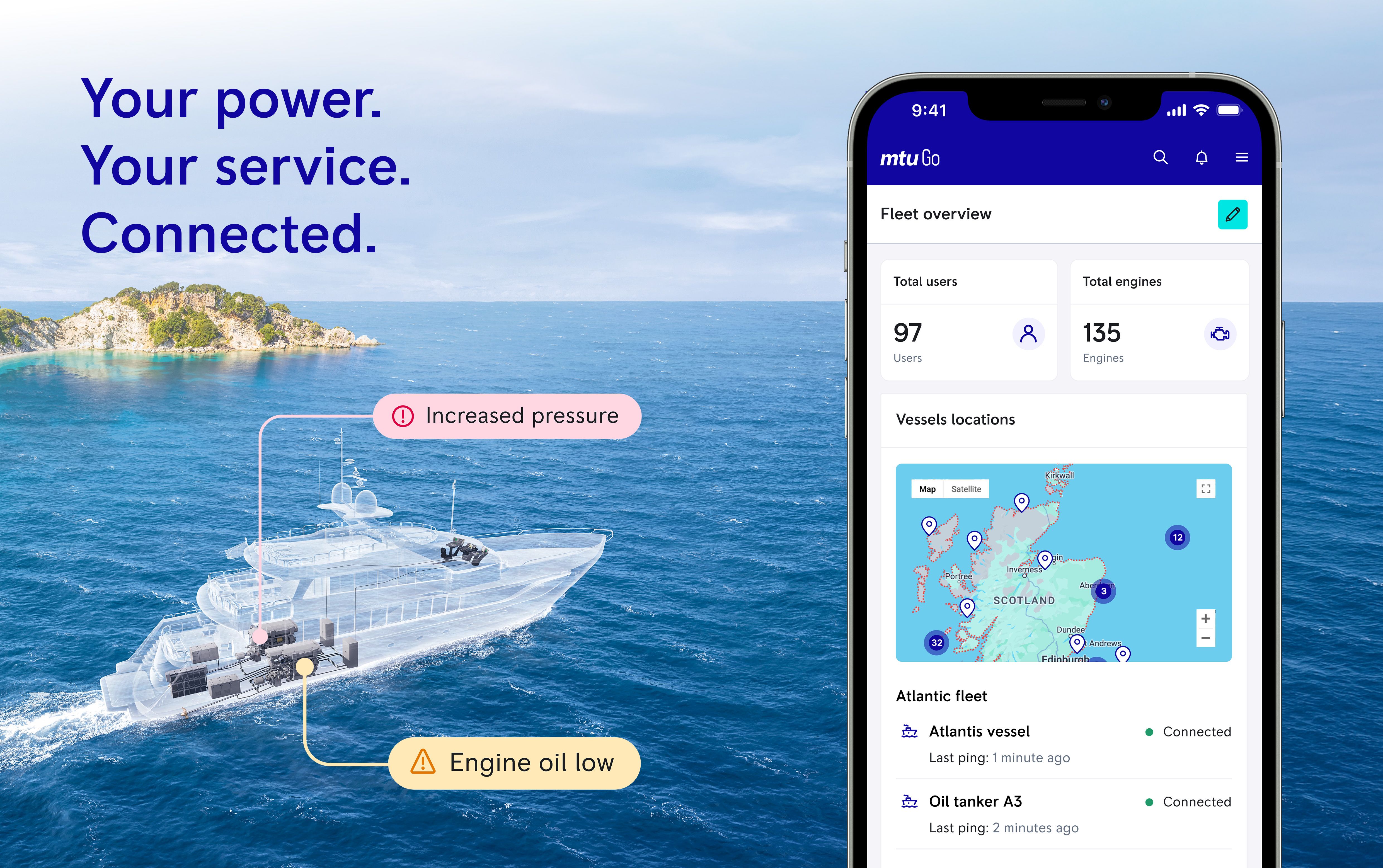
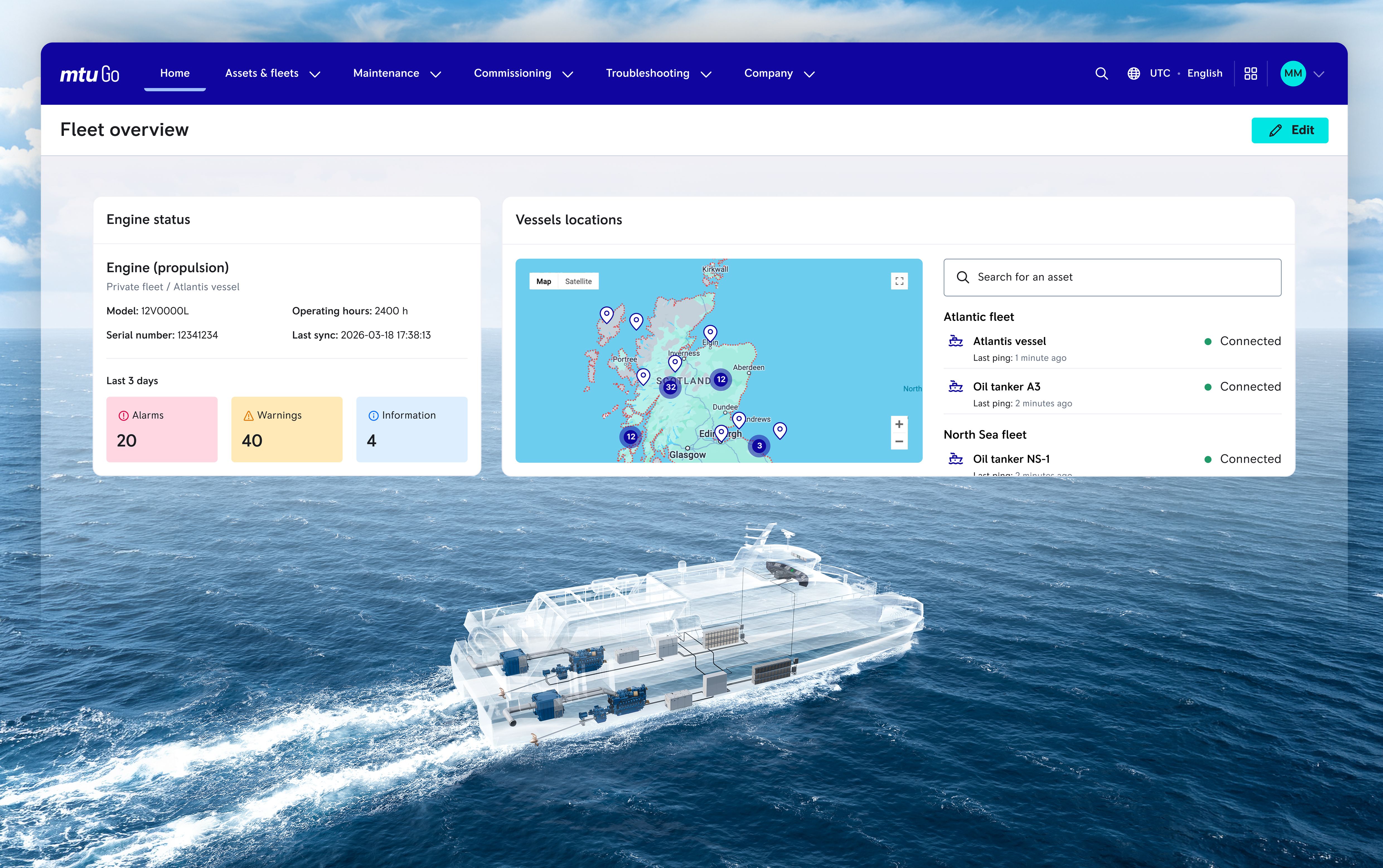
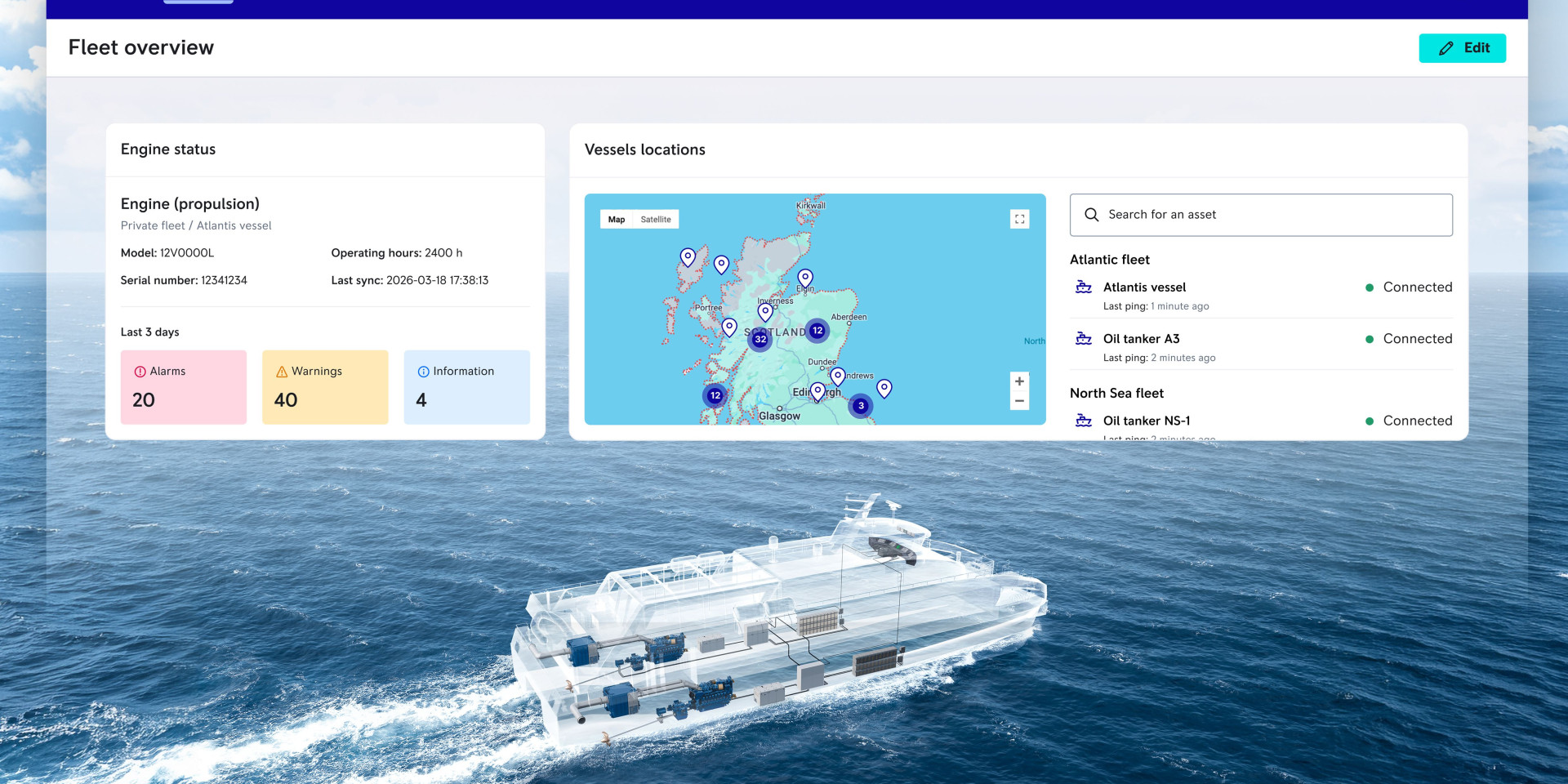
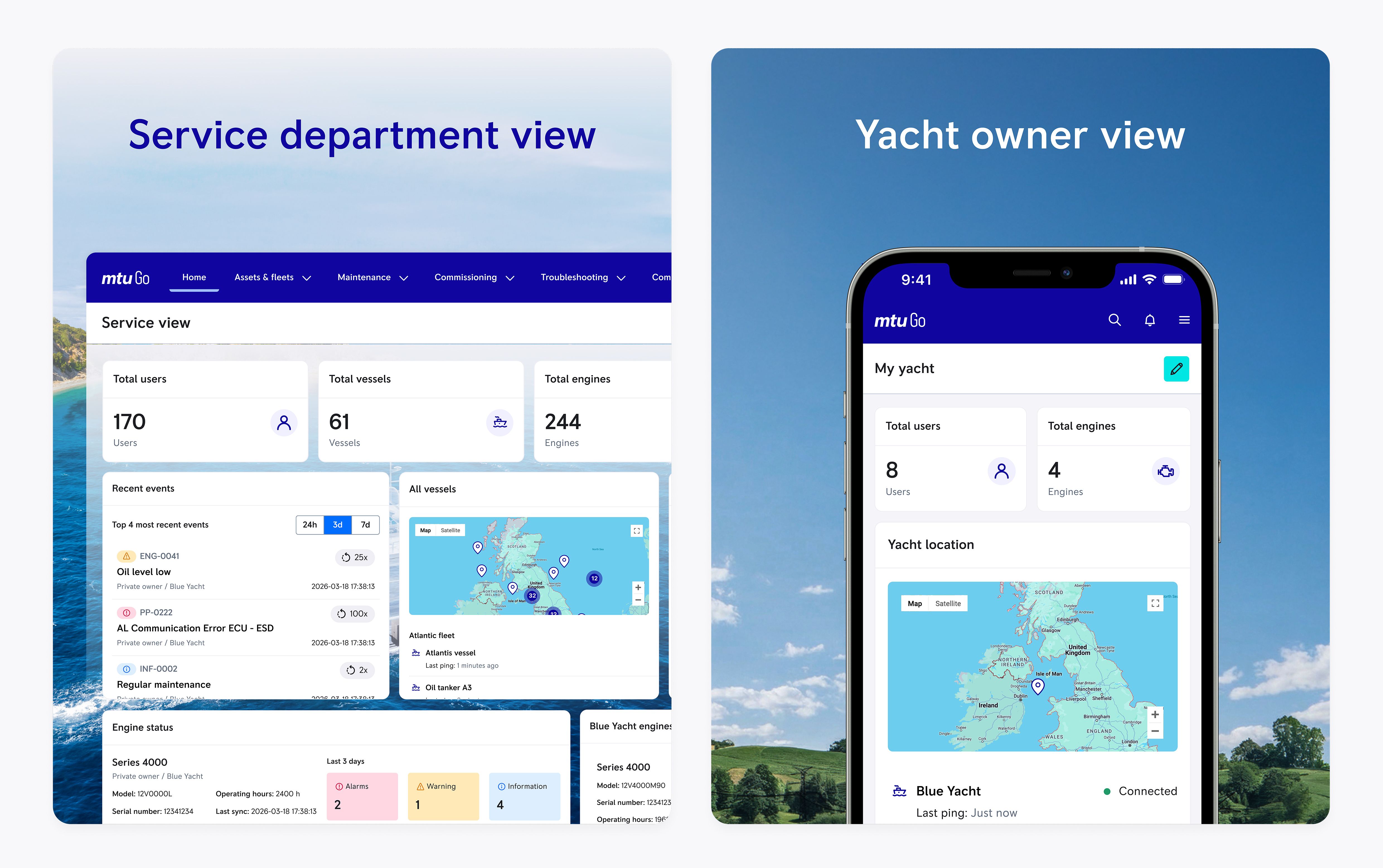
The main UX challenge was redesigning a rapidly growing industrial platform without oversimplifying the complexity expert users (internal service teams, service partners, distributors, and operators) depend on. Following the MVP release, mtu Go expanded quickly, resulting in fragmented navigation, inconsistent layouts, and varying interaction patterns. The challenge was not reducing complexity, but restructuring it into a scalable, role-aware experience that surfaces relevant information at the right moment while supporting different workflows and operational contexts across devices.
What was your personal highlight in the development process? Was there an aha!-moment, was there a low point?
One of the low points was realizing that the rapid growth of mtu Go had resulted in a "one-size-fits-all" experience shaped by many individual requirements, ultimately serving no user group particularly well. Adjusting a product already in active use required a different approach. The biggest aha! moment was recognizing that traditional industrial platforms expect users to adapt to the system. We challenged this assumption and reframed mtu Go as an adaptive decision partner instead. The challenge was balancing user expectations, technical feasibility, and engineering constraints within one coherent experience.
Where do you see yourself and the project in the next five years?
We see mtu Go evolving into an intelligent, adaptive platform that proactively supports the entire asset ecosystem — including owners, operators, service partners, distributors, customers, and internal teams. The system will increasingly surface relevant insights, risks, and recommendations based on operational context, asset health, and user role. AI-supported workflows could help predict issues, guide troubleshooting, and automate parts of service processes. The UX foundation established today enables mtu Go to scale into a more proactive, personalized, and connected experience.