Designers
Eunjin Hong
Year
2026
Category
Product
Country
United States
Design Studio / Department
Team proudP
Three questions to the project team
What was the particular challenge of the project from a UX point of view?
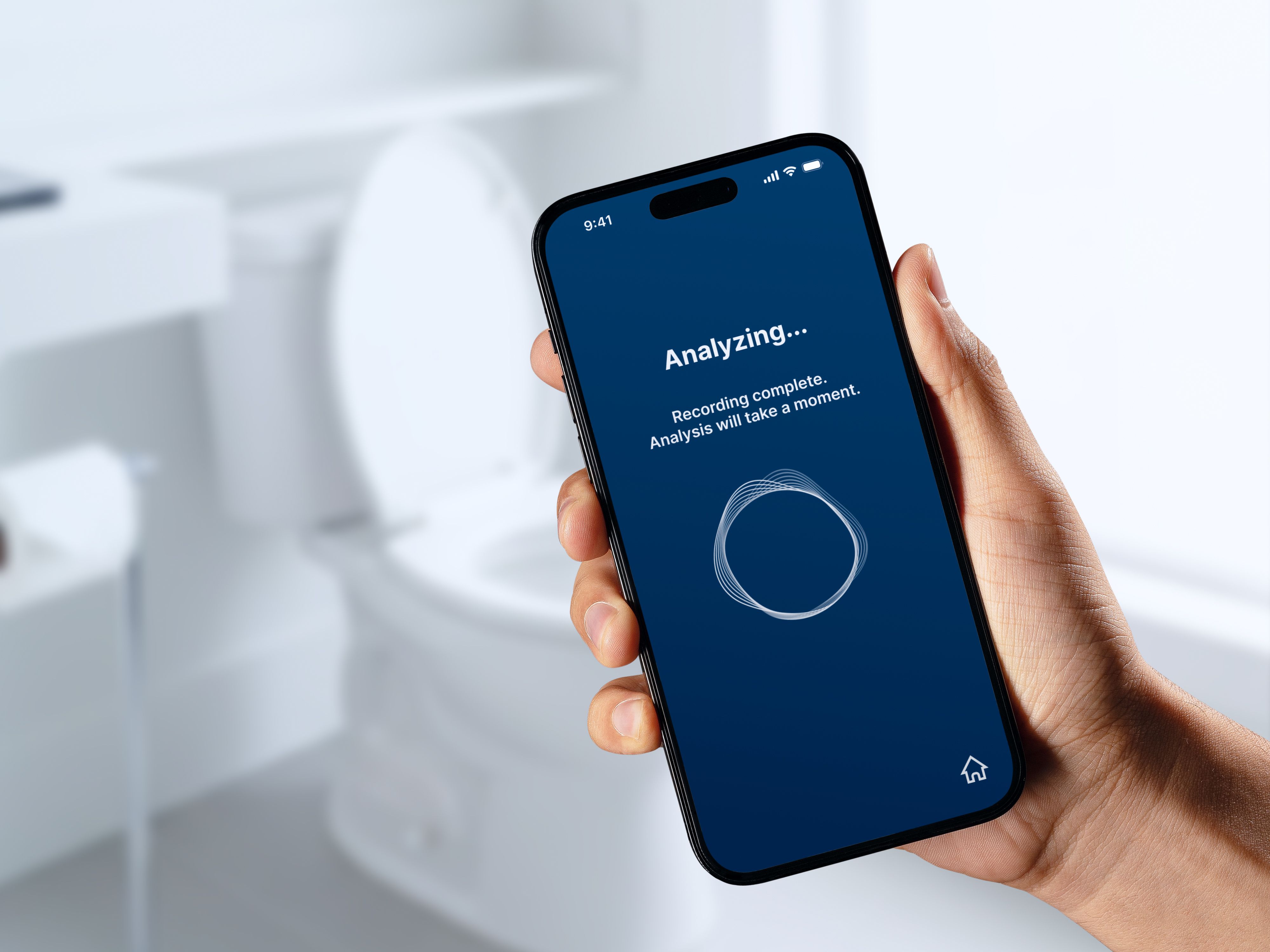
The most significant constraint was that we couldn't directly observe how users interacted with the product. Bathroom behavior is inherently private. We relied on simulated environment testing and in-depth interviews to gather insight without intruding on that privacy.
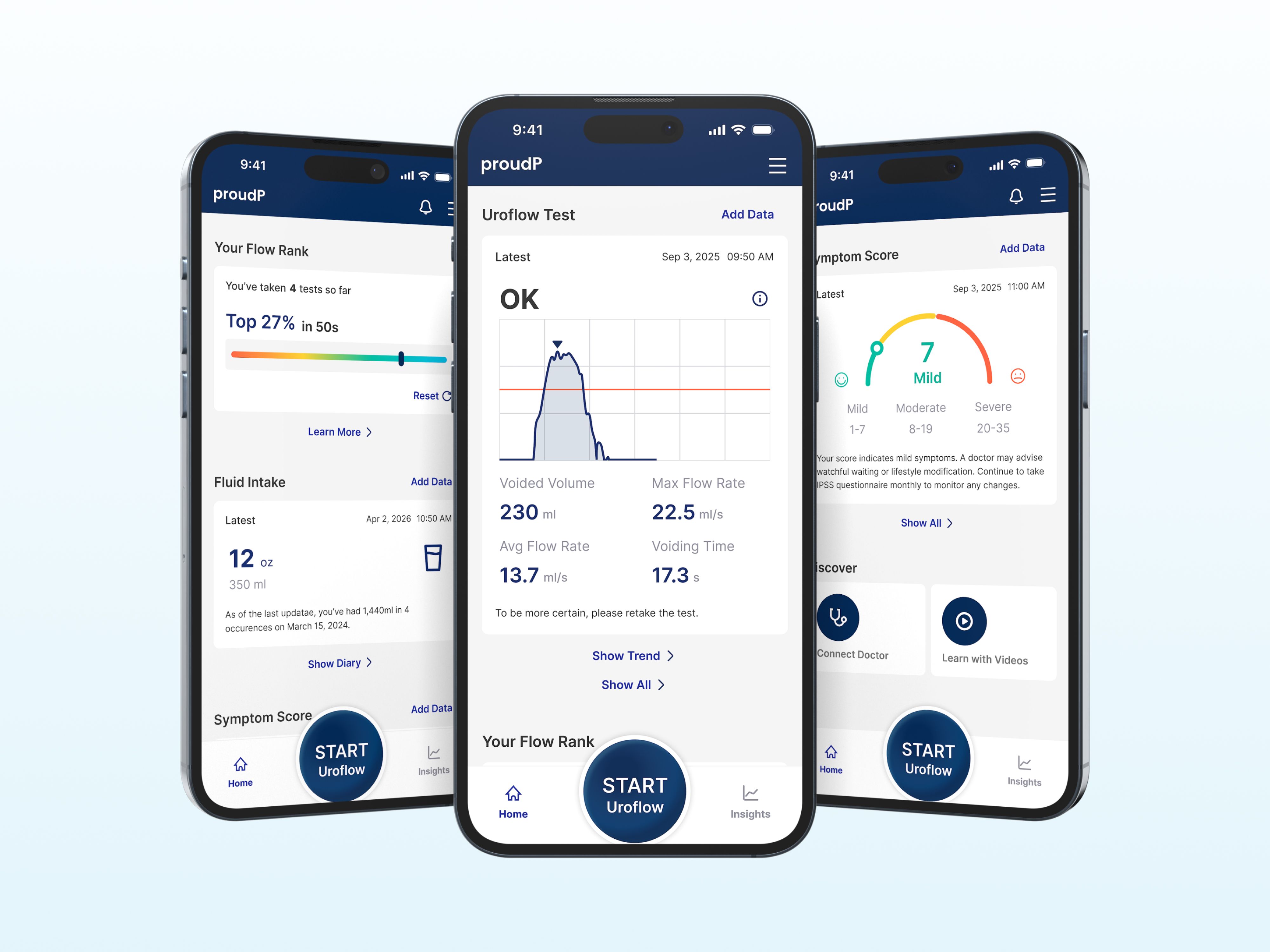
Our primary demographic skews older: users who may be less familiar with how a smartphone can capture meaningful health data through sound. Making that concept feel natural and trustworthy was a significant design problem in itself. We had to design guidance clear enough to follow confidently on the first attempt, while keeping the experience light enough not to feel intimidating. Every instruction, every visual cue, every moment of feedback had to earn its place.
What was your personal highlight in the development process? Was there an aha!-moment, was there a low point?
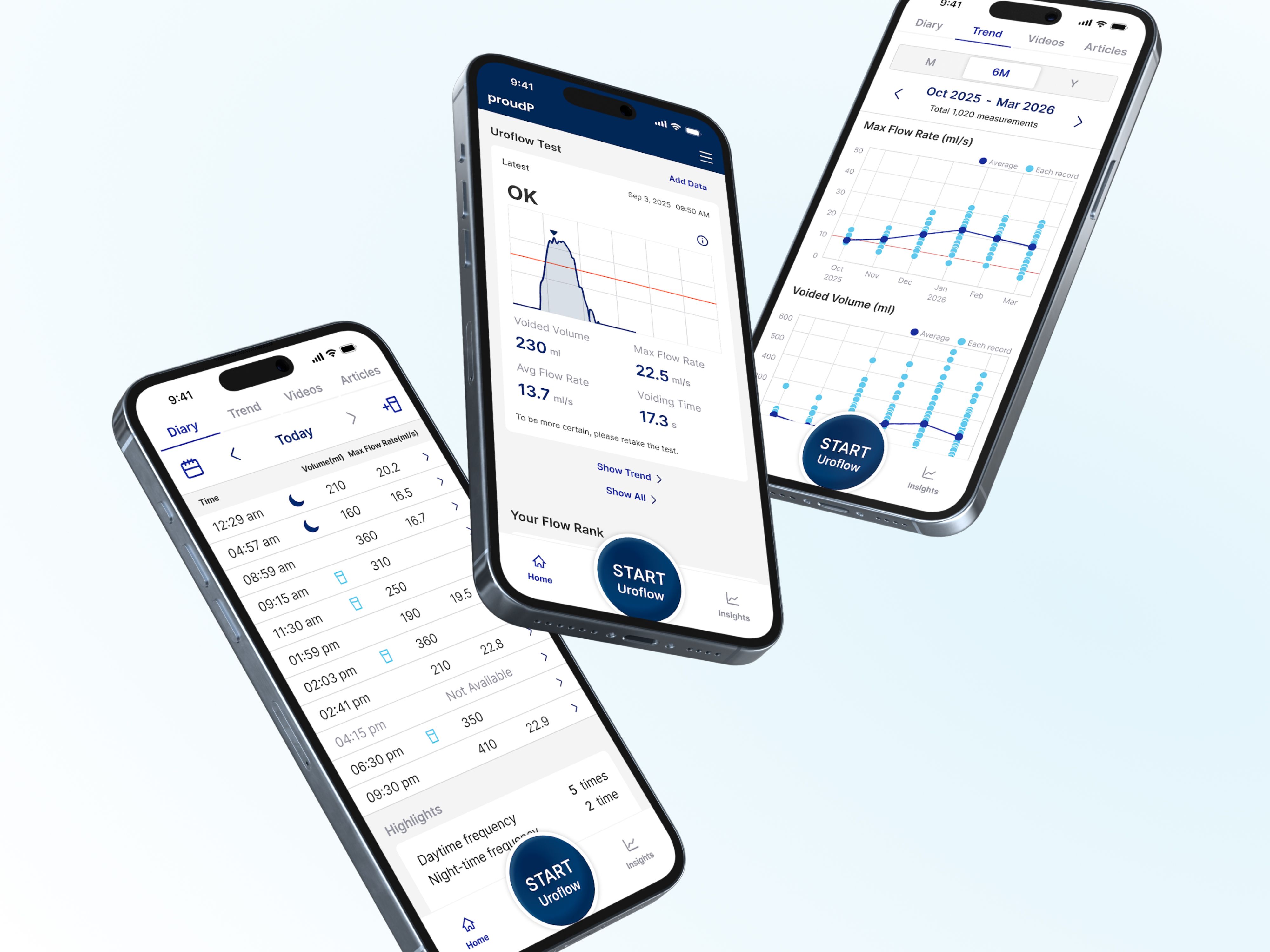
The low point came when I realized the challenge wasn't just designing a new app. It was building an entirely new habit for users who might rarely use their phone at home. Designing for someone who needs to remember to bring it to the bathroom, position it correctly, and trust it with personal health data is a different problem entirely. The aha! moment came when a user told us unprompted that they wanted to show their results to their doctor. That single comment reframed everything. The job wasn't just to make the test easy, it was to make the data feel worth sharing.
Where do you see yourself and the project in the next five years?
Urinary health is still a topic many people avoid. Not because they don't have symptoms, but because the stigma makes it easier to dismiss than to address. These symptoms aren't simply inevitable aging. The earlier you catch them, the more actionable they are.
Access is another barrier. Urology is a specialty that's genuinely hard to reach in many regions. proudP can close that gap by putting a clinical-grade tool in people's hands before they ever get to a specialist.
In five years, I hope we helped shift both. Lowering the psychological barrier and removing enough logistical friction that geography is no longer a reason to go unmonitored. Design helping people age better because they have access to the right information at the right time.