Designers
Sirinda (Kaew) Limsong, Meihan Liu
Year
2026
Category
New Talent
Country
United States
School
Harvard University
Teacher
Kathleen Brandenburg
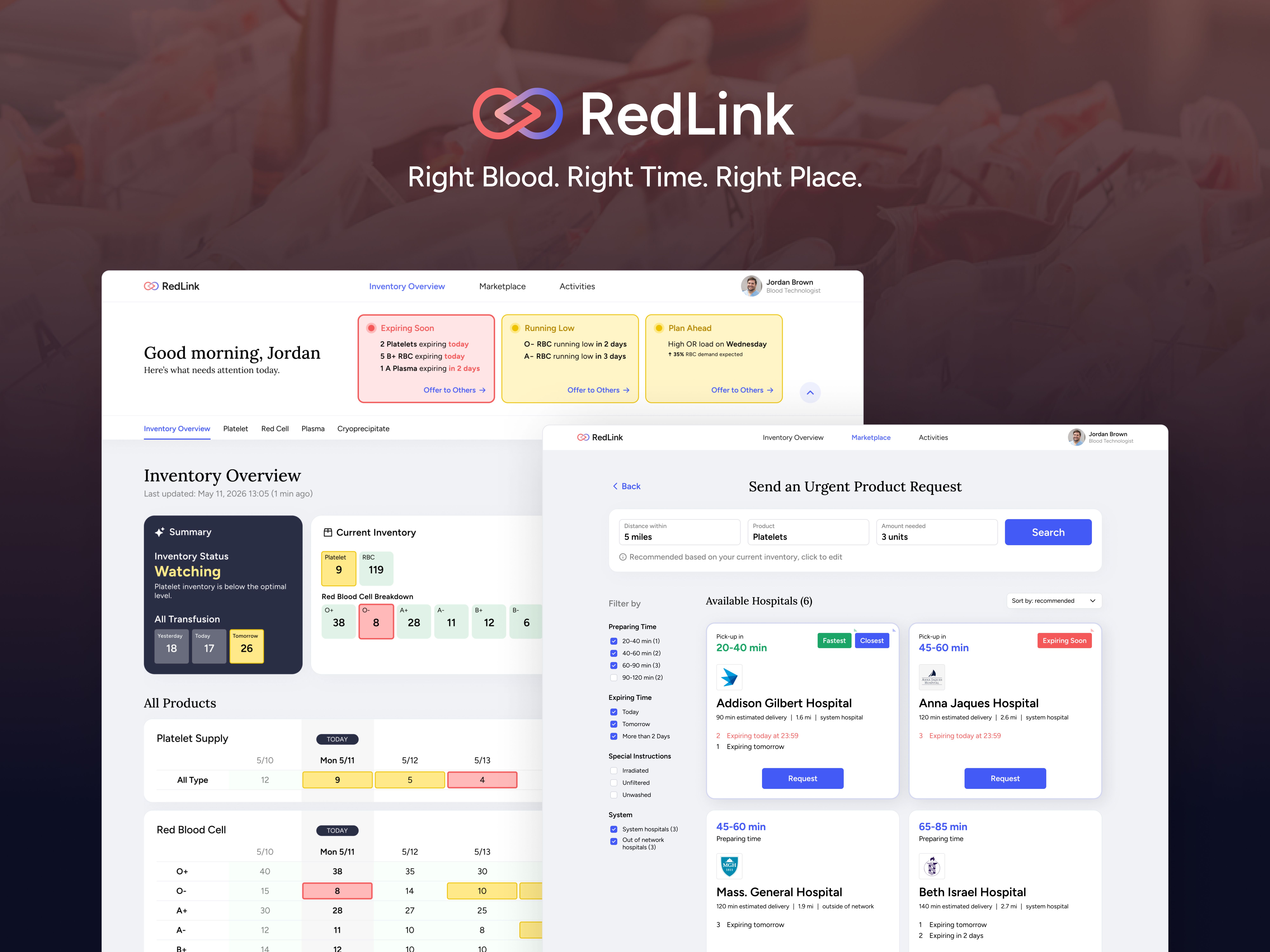
»RedLink convinced the jury by focusing on a critical yet often overlooked challenge: coordinating blood resources across the healthcare system. The significance of this matter is evident in view of the persistent challenges related to blood product shortages, expiration, and fragmented operational processes. Instead of optimizing individual touchpoints, RedLink addresses the entire network of hospitals, blood banks, laboratories, and logistics providers. This approach has the potential to reduce waste and costs, improve efficiency and transparency, and contribute to better patient care and outcomes.«
UX Design Awards Jury, Autumn 2026
And the award goes to…
Three questions to the project team
What was the particular challenge of the project from a UX point of view?
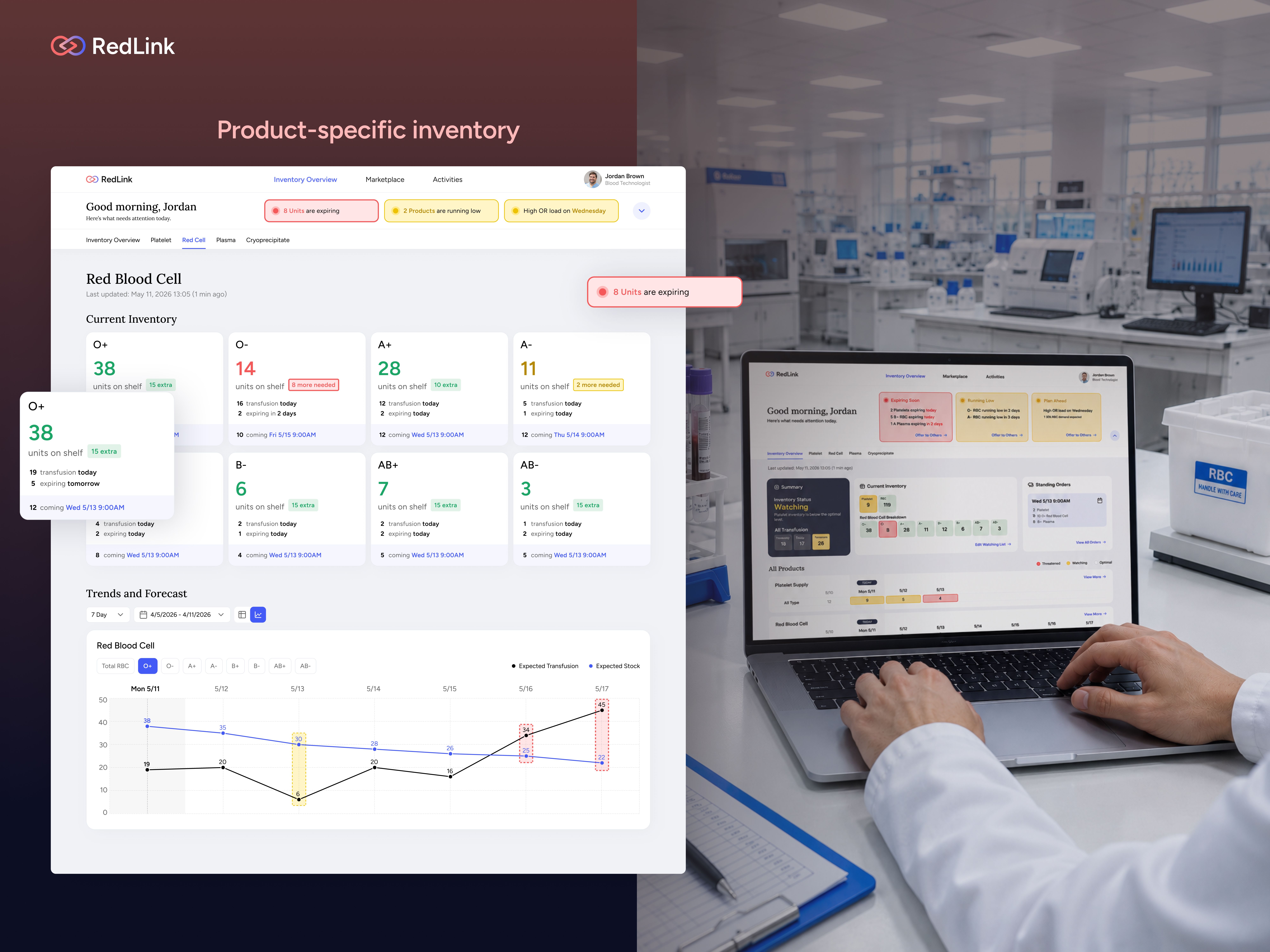
The most challenging aspect of this project was designing for decisions where there is no perfect answer. Every day, blood transfusion units must balance two competing risks: holding too much inventory and risking expiration, or holding too little and risking a shortage that could affect patient care. Through our research, we found that users weren't overwhelmed by a lack of data, they were overwhelmed by uncertainty. Our UX challenge became helping people understand what matters now, what might happen next, and what action to take. Rather than creating another dashboard, we designed an experience that transforms fragmented information into clear, actionable decisions in a high-stakes environment.
What was your personal highlight in the development process? Was there an aha!-moment, was there a low point?
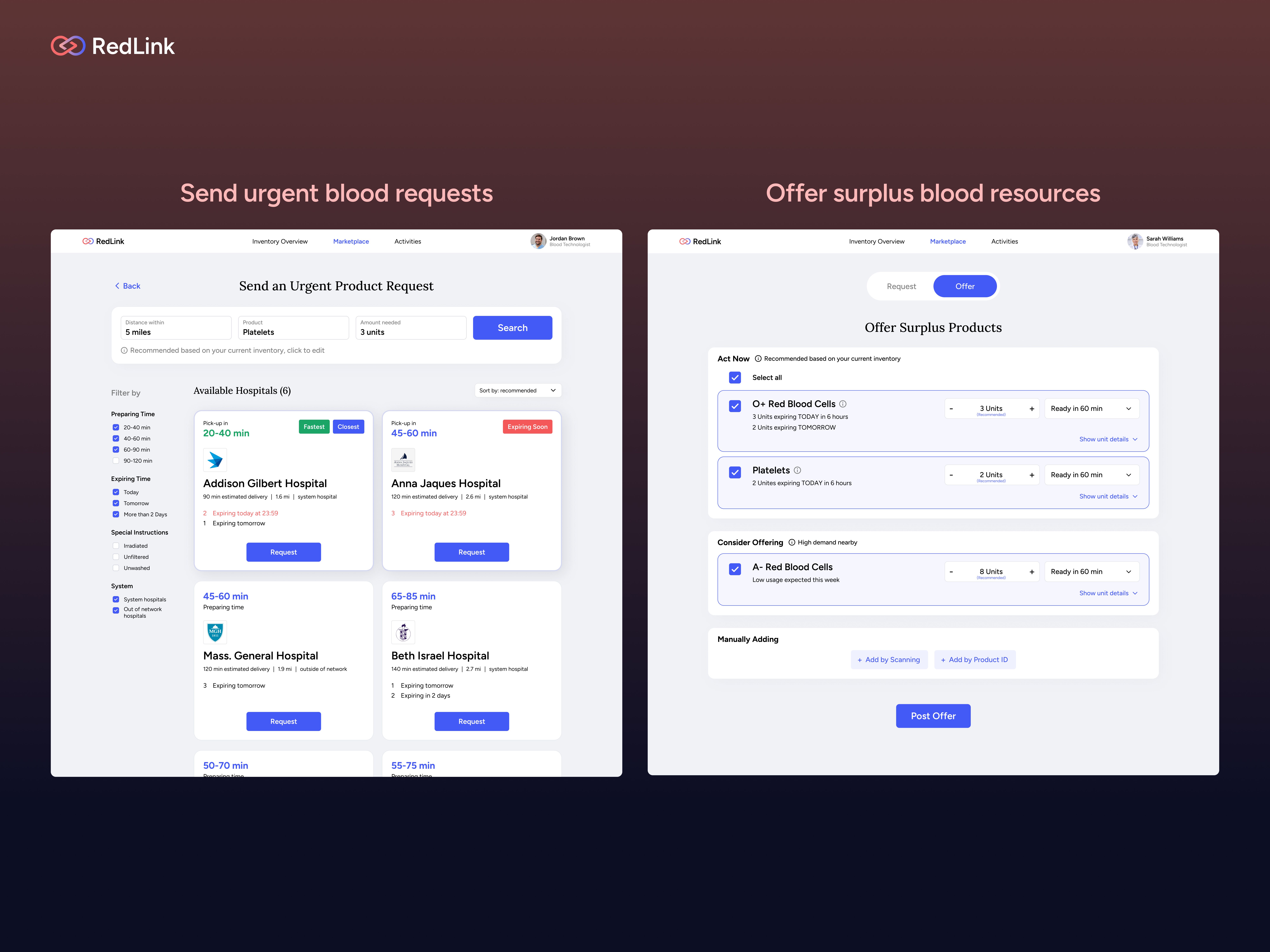
Sirinda - The aha moment for me was when a blood technologist told us that finding blood often meant a long list of unpredictable phone calls and emails. We realized the problem wasn't managing blood inventory, it was connecting the right people with the right information at the right time. That insight completely changed the direction of the project. Meihan - We learned that system-level design is ultimately about incentives. Our initial concept assumed open inventory sharing, but stakeholders raised concerns around privacy and autonomy. We redesigned the model so hospitals retain control of internal inventory and selectively share surplus products, balancing collaboration with trust.
Where do you see yourself and the project in the next five years?
We hope to continue deepening our partnerships with blood banks and validating RedLink through further testing and integration with hospital data systems. We envision starting with dense medical ecosystems such as Boston, where regional coordination is highly valuable, and gradually expanding to different geographies and hospital sizes while addressing local operational challenges. We also see opportunities to incorporate AI-driven insights for demand forecasting and decision support. Personally, we hope to continue working closely with users and applying a human-centered, systems-level approach to healthcare challenges where design can create meaningful impact.