Designers
Ray Tang
Year
2026
Category
New Talent
Country
United Kingdom
School
Loughborough University
Teacher
Cees de Bont
Three questions to the project team
What was the particular challenge of the project from a UX point of view?
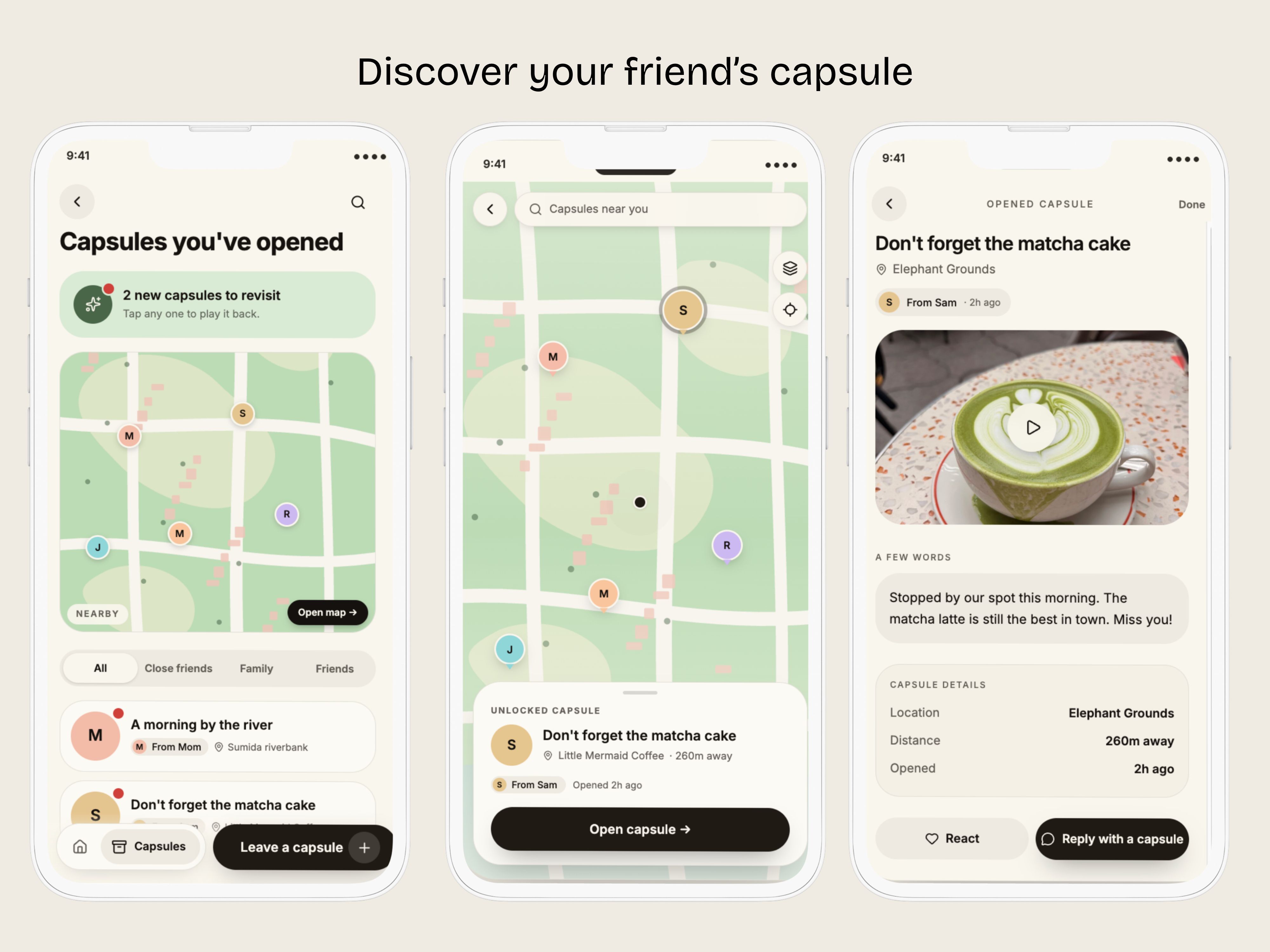
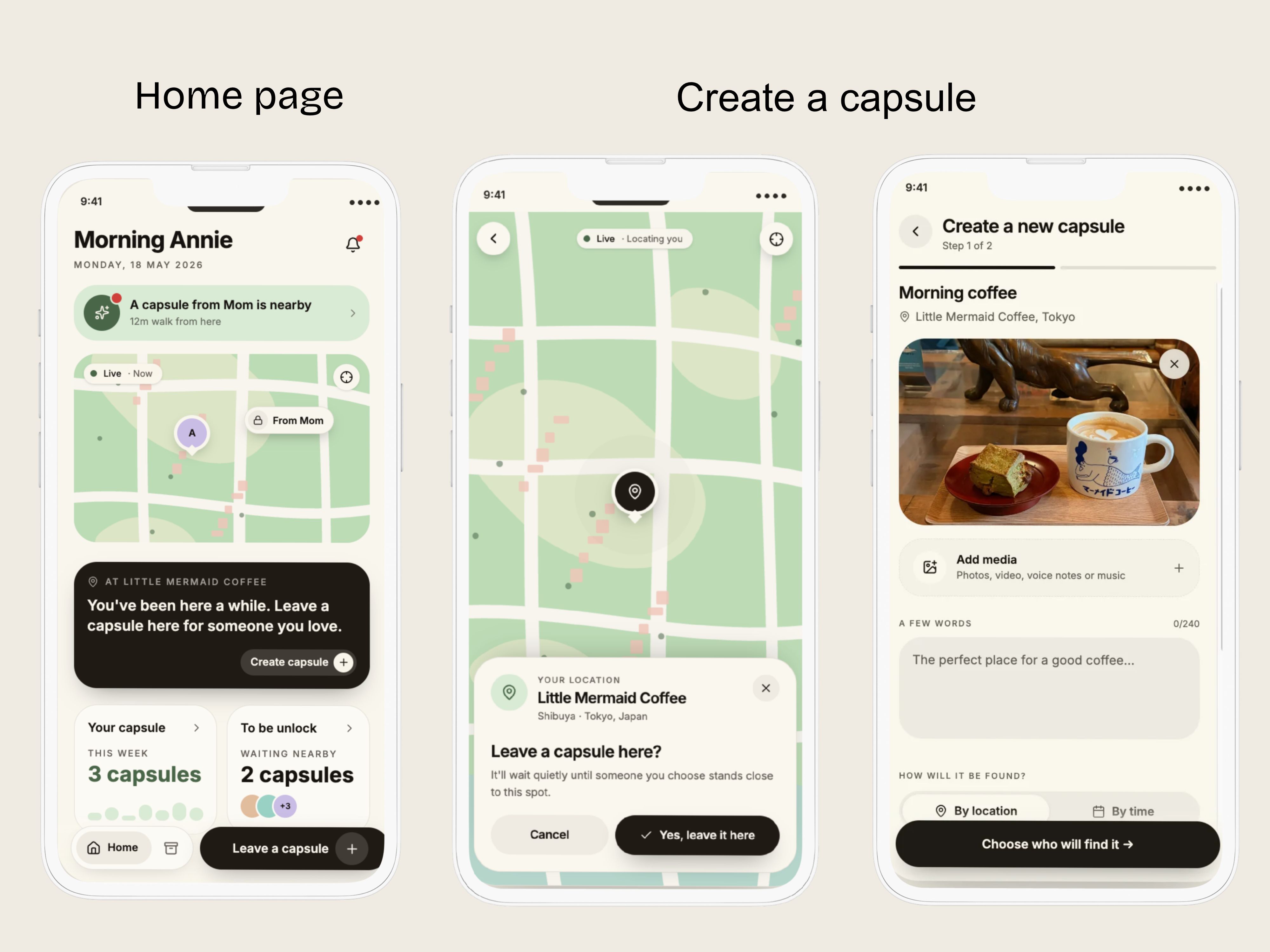
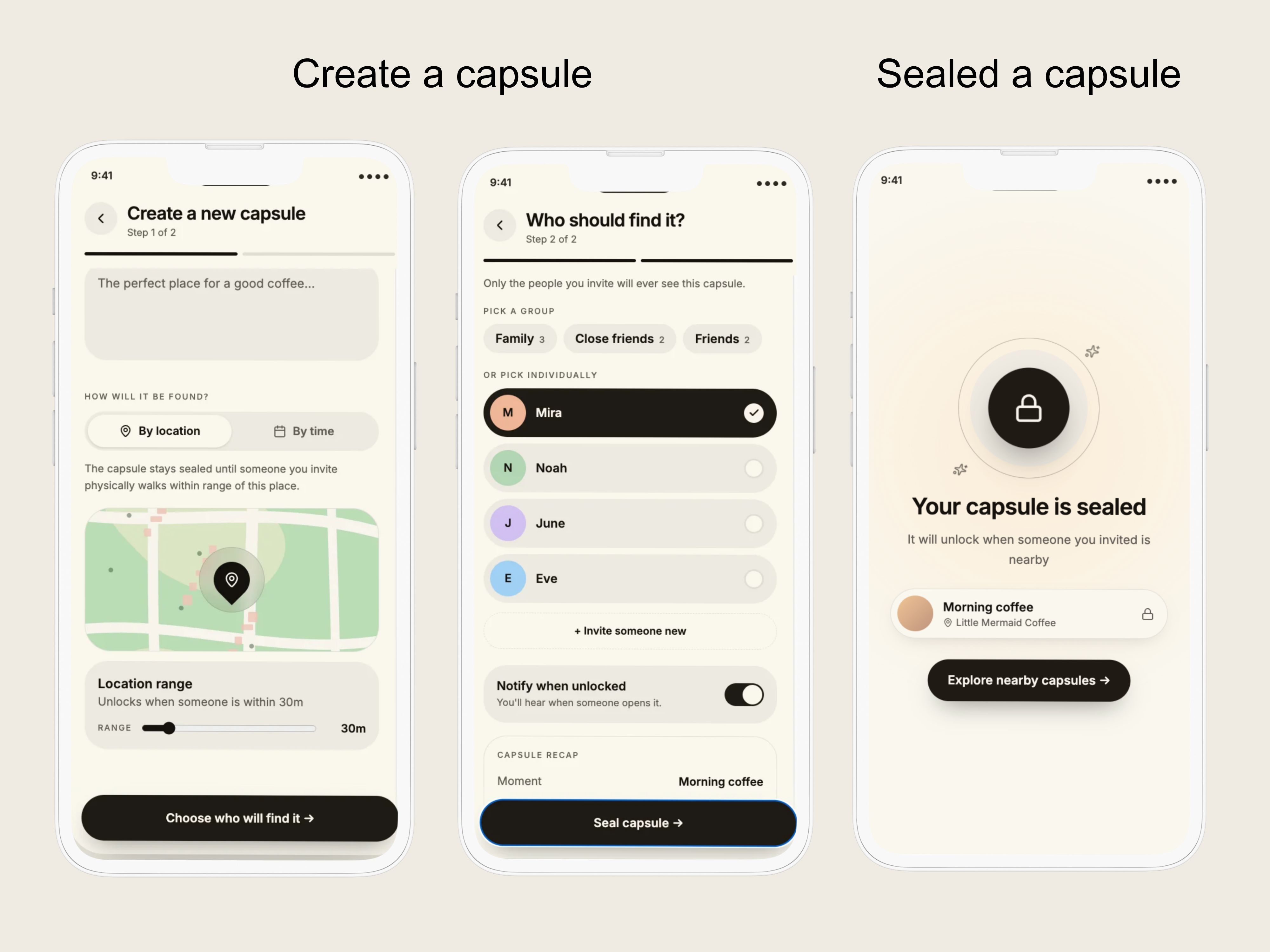
The main UX challenge was making a heavy topic approachable. Early research showed that people understood the importance of digital legacy, but they avoided engaging with it when the experience felt too closely tied to death or after-death planning. From a UX perspective, the task was not simply to design better storage for digital memories. It was to create an interaction that felt safe, light, and meaningful enough for people to use while they are still living. This led to the shift from “planning a legacy” to creating private time capsules that can be found later through people, place, and time.
What was your personal highlight in the development process? Was there an aha!-moment, was there a low point?
My personal highlight was the moment I realized the original framing was not working. I started with the idea of digital legacy management, but participants were not naturally drawn to it. That was also the low point, because the topic felt important, yet the product direction had low emotional pull. The aha moment came when participants spoke more openly about specific people, places, images, and small memories. It showed me that remembrance does not have to begin with death. It can begin with everyday moments. That insight helped me reframe TimeWalk into a gentler, more relationship-led experience.
Where do you see yourself and the project in the next five years?
In the next five years, I see myself becoming a product builder who creates work with more intention and courage. As AI becomes a default answer to many user problems, I want to stay critical about when technology should automate, assist, or simply step back. TimeWalk reflects this direction for me: it is not about using the most advanced technology, but about choosing the right interaction for a sensitive human need. TimeWalk may grow into a more complete prototype, and even if the project changes form, I will keep building on its core question: how can technology support connection without replacing the human part of it?