Designers
Siyuan Teng, Yiran Zheng, Zejun Wu
Year
2026
Category
Concept
Country
United States
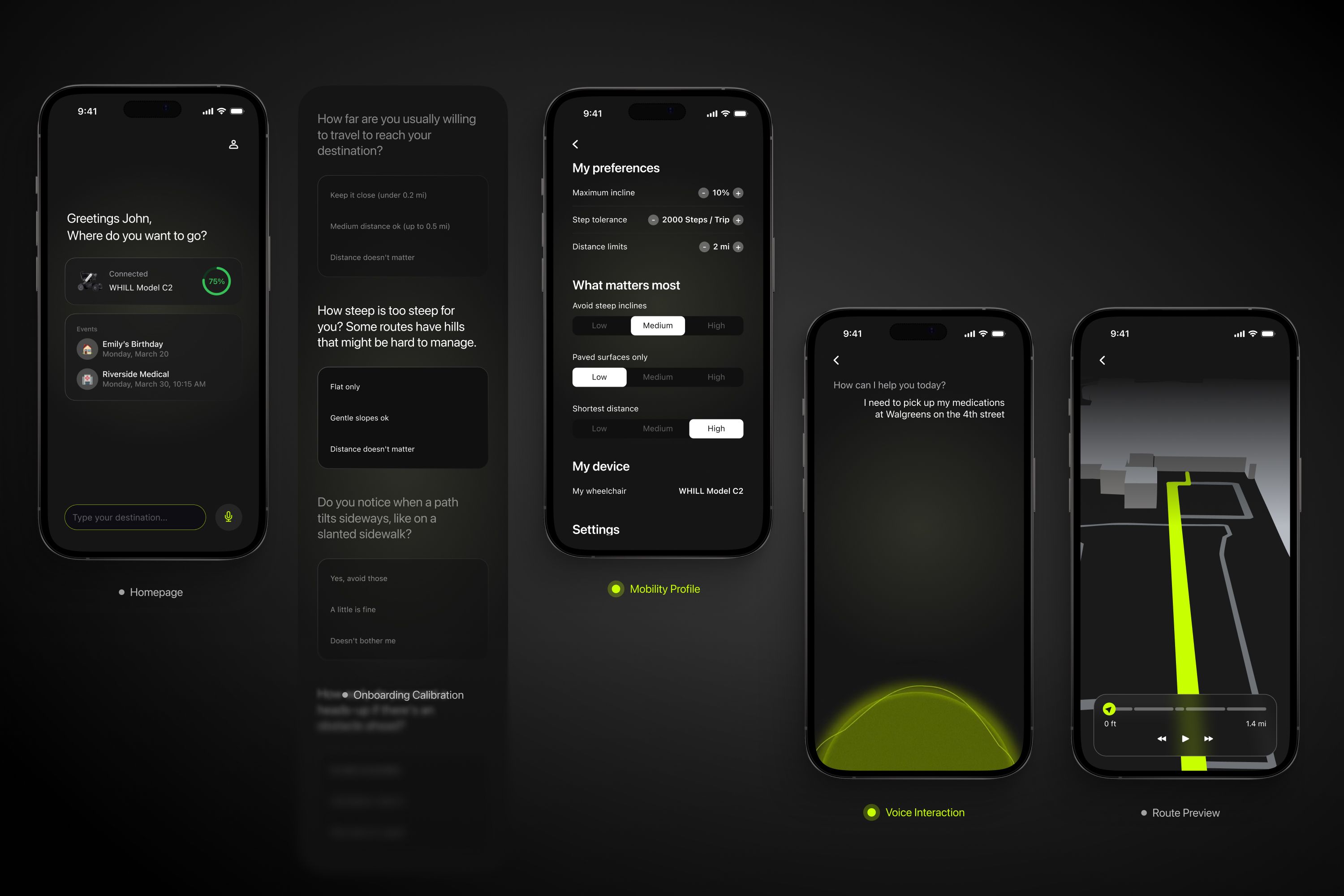
»Wayix impressed the jury by addressing a critical yet often overlooked mobility challenge for wheelchair users. Unlike conventional navigation systems, it provides personalized guidance based on the user’s condition, wheelchair type, and environment. Its multimodal approach supports the entire journey – from planning and navigation to route review – while maintaining user control through a human-in-the-loop AI model. This thoughtful balance of technology and user autonomy creates an empowering experience that enables more independent, confident, and safe travel, thereby enhancing quality of life. Additionally, its inclusive and appealing design promotes confidence, motivation, and a greater sense of empowerment.«
UX Design Awards Jury, Autumn 2026
And the award goes to...
Three questions to the project team
What was the particular challenge of the project from a UX point of view?
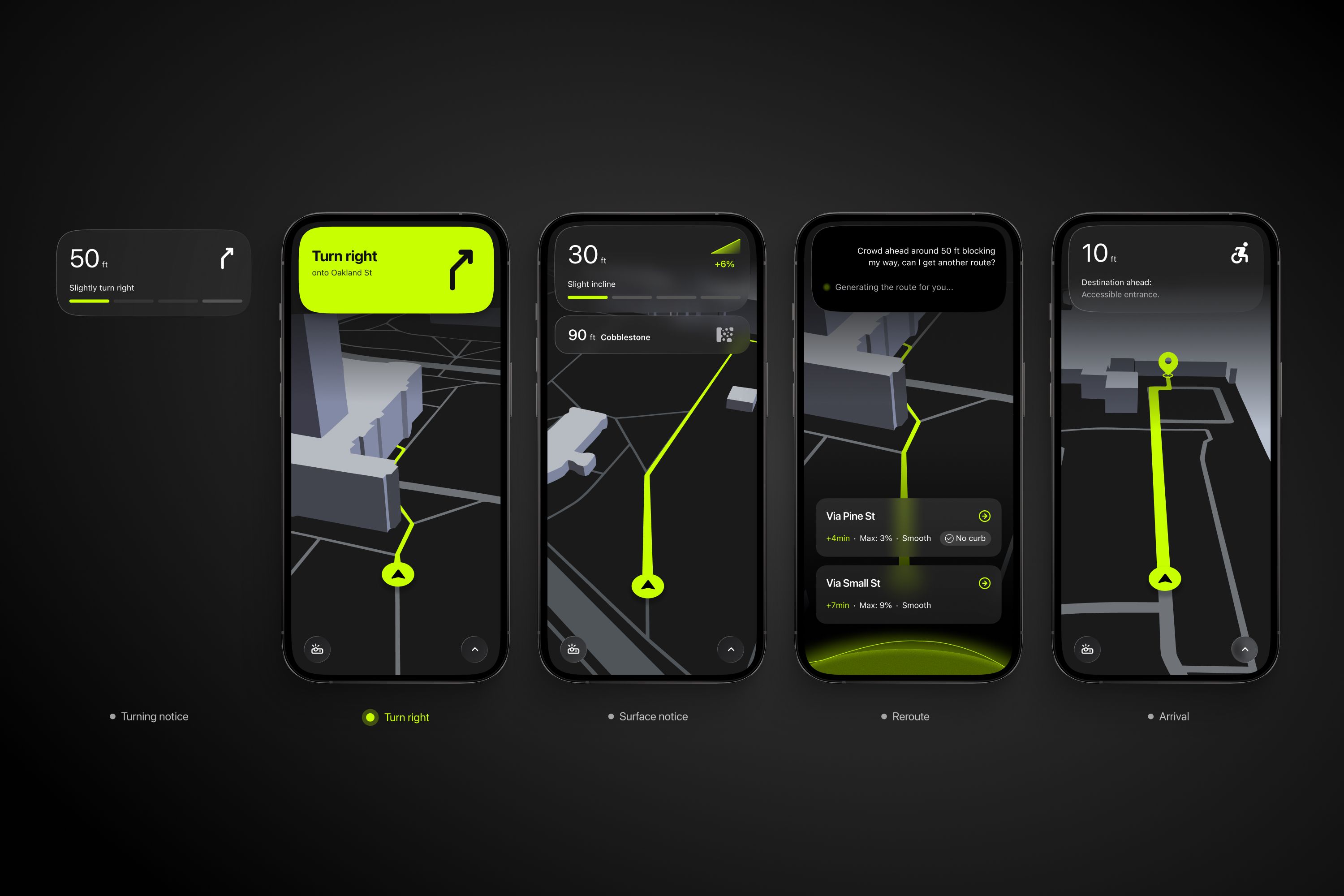
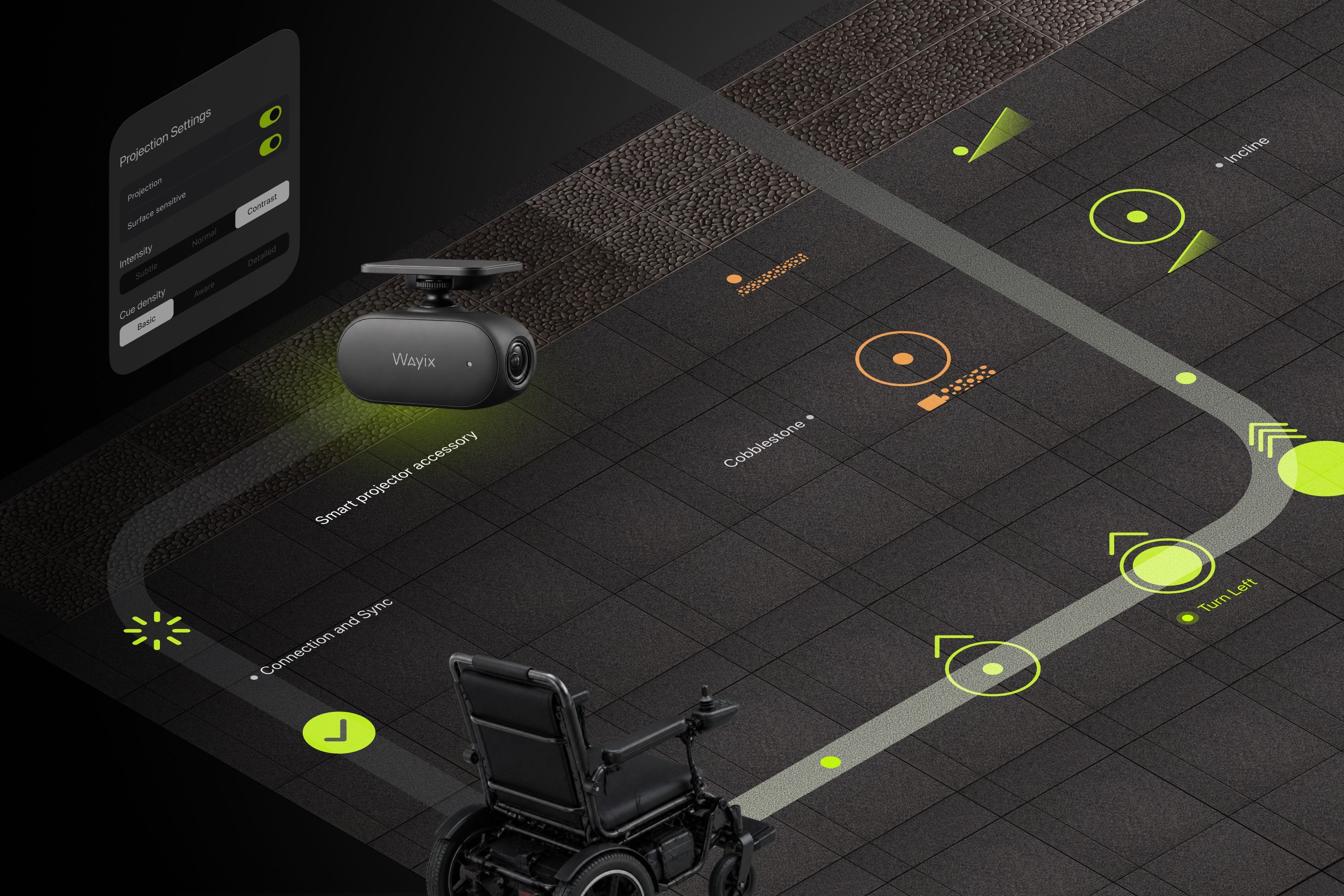
The particular UX challenge was deciding what information should appear when, where, and through which interaction layer. Before the trip, users need a whole-route overview to understand tradeoffs and make a confident decision. During the trip, they need only the next actionable cue, delivered close to the physical path without forcing them to look down. When something changes, they need fast fallback support through voice and the mobile interface. Wayix therefore layers information across timing, medium, and interaction mode to create a more hands-free, lower cognitive load decision system.
What was your personal highlight in the development process? Was there an aha!-moment, was there a low point?
Our biggest aha moment was realizing that the accessibility gap is also an attention gap: guidance often appears on a phone screen, while wheelchair users need to focus on the environment ahead. This led us to separate the roles of each touchpoint: the phone for planning and control, voice for quick adjustments, and ground-projected spatial cues for immediate movement guidance. A low point was confronting the limits of each medium. Voice depends on network reliability, and projection is affected by light and surface conditions. We responded by designing adaptive settings and fallback support, balancing technical ambition with accessibility and affordability.
Where do you see yourself and the project in the next five years?
In the next five years, we hope Wayix can contribute to a broader shift in mobility design: from static accessibility labels to adaptive, user-centered journey support. As designers, we want to keep exploring responsible AI, assistive technology, and multimodal interfaces that improve independence without hiding uncertainty or taking control away from users. For the project, the next step would be deeper collaboration with wheelchair users, accessibility advocates, campuses, healthcare facilities, and civic partners to test the concept in real environments and refine it into a safer, more practical system.