Designers
Xuejiao Liu, Qun Zhang, Ziyao Jiang, Shuyang (Andy) Ding
Year
2026
Category
Concept
Country
United States
Three questions to the project team
What was the particular challenge of the project from a UX point of view?
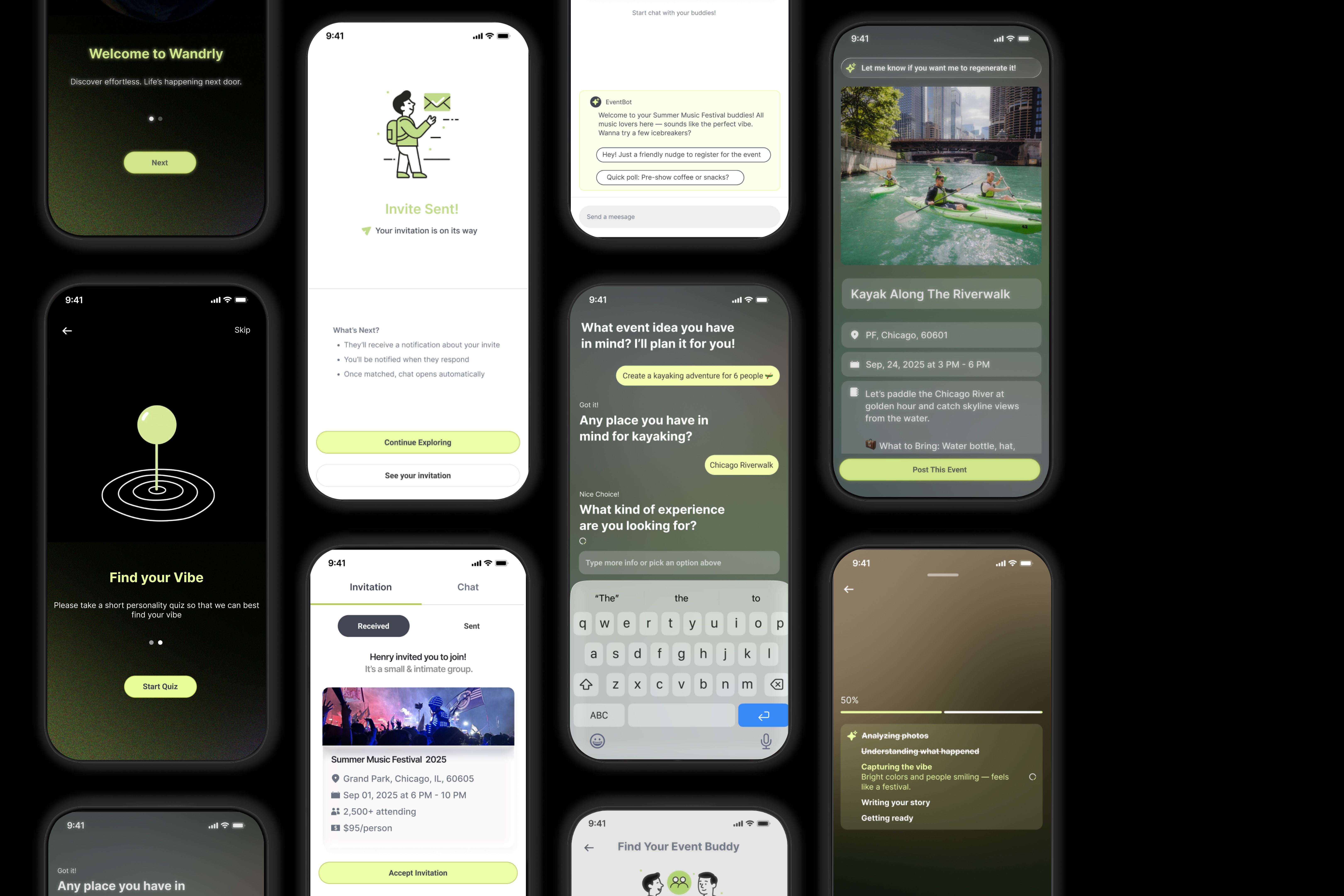
The core UX challenge of Wandrly was designing an AI-powered social platform that supports meaningful human connection without increasing cognitive load or replacing authentic interaction. Social planning involves emotional vulnerability, trust, and coordination across multiple people, contexts, and timeframes. From a UX perspective, the difficulty lay in balancing proactive AI assistance with user agency, reducing choice overload while preserving serendipity, and creating memory-aware experiences that evolve without feeling intrusive or repetitive. This required designing transparent, context-aware interaction flows where AI intent, timing, and influence were always understandable to users.
What was your personal highlight in the development process? Was there an aha!-moment, was there a low point?
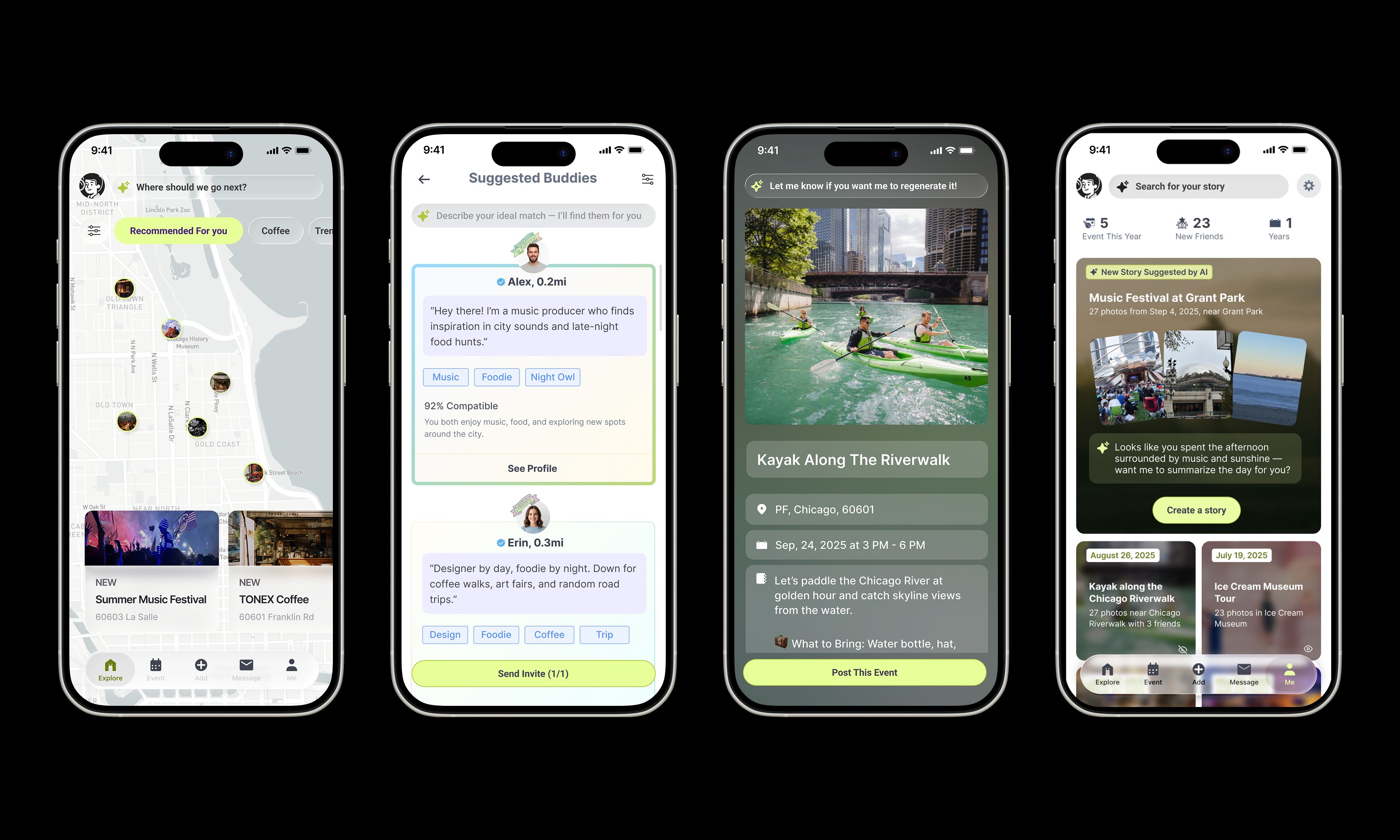
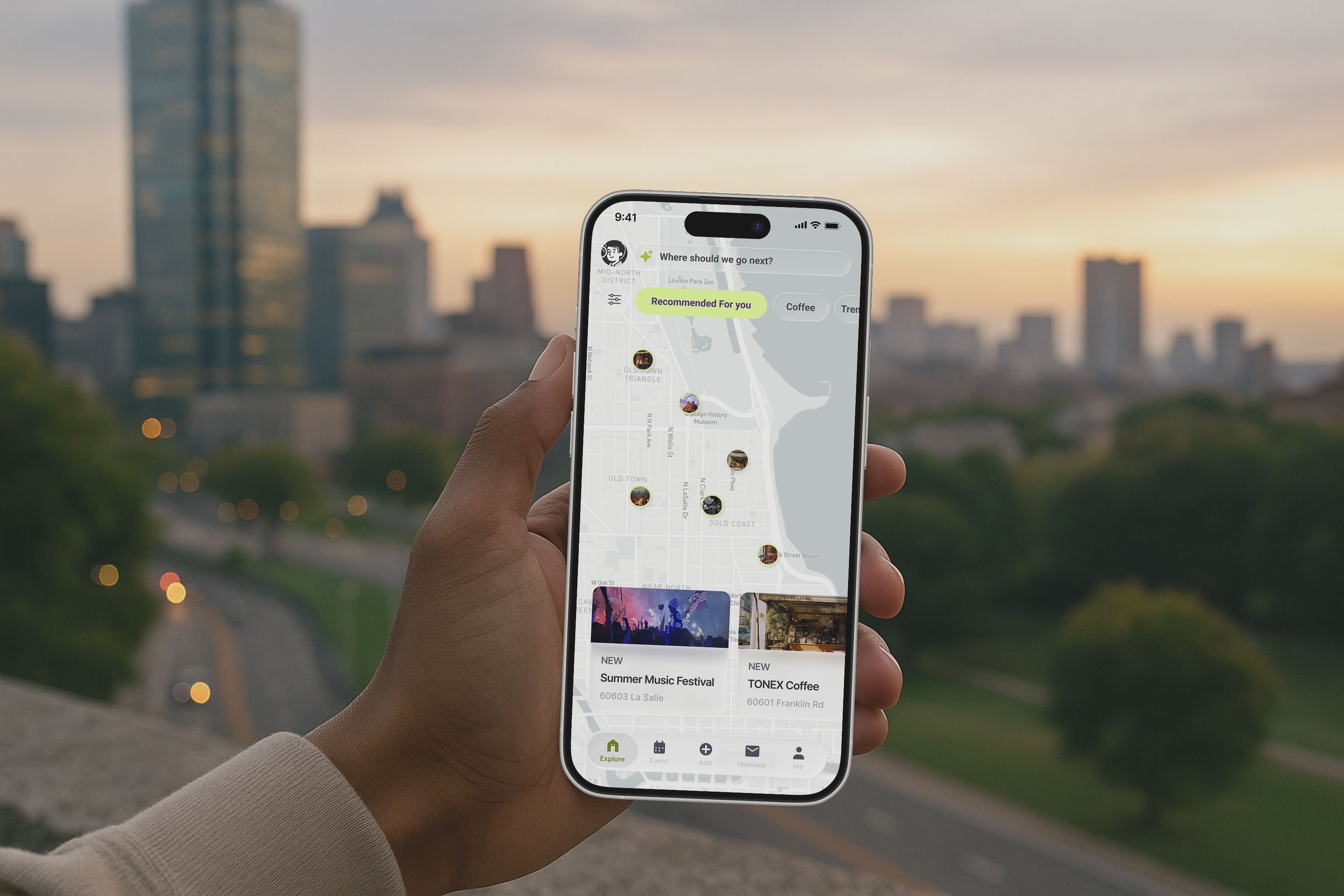
Early in Wandrly’s development, our team struggled to differentiate the product from existing social apps, reaching a low point where it felt functional but indistinct. The core challenge was moving beyond feature parity to address the deeper friction of social planning. The breakthrough came when we reframed the problem around the entire social journey. We realized AI’s value was not in replacing human interaction, but in orchestrating discovery, matching, planning, and engagement as a continuous flow. By connecting people through shared interests and surfacing relevant social activities on a dynamic, location-based map, we transformed fragmented coordination into an intuitive, low-friction experience that preserves user agency.
Where do you see yourself and the project in the next five years?
In next five-year, we see Wandrly evolving into a mature, relationship-centric platform that helps people sustain meaningful social connections across life stages, cities, and communities. The project aims to serve as a blueprint for human-centered, memory-aware AI systems—where technology quietly supports real-world relationships rather than replacing them. As a team, we aim to continue advancing this direction through responsible AI and systems-level UX design, shaping products that prioritize long-term human well-being over short-term engagement.