Designers
Long Chin, WenJun He, LiFang Wan
Year
2026
Category
Product
Country
Taiwan
Design Studio / Department
Central IT
Three questions to the project team
What was the particular challenge of the project from a UX point of view?
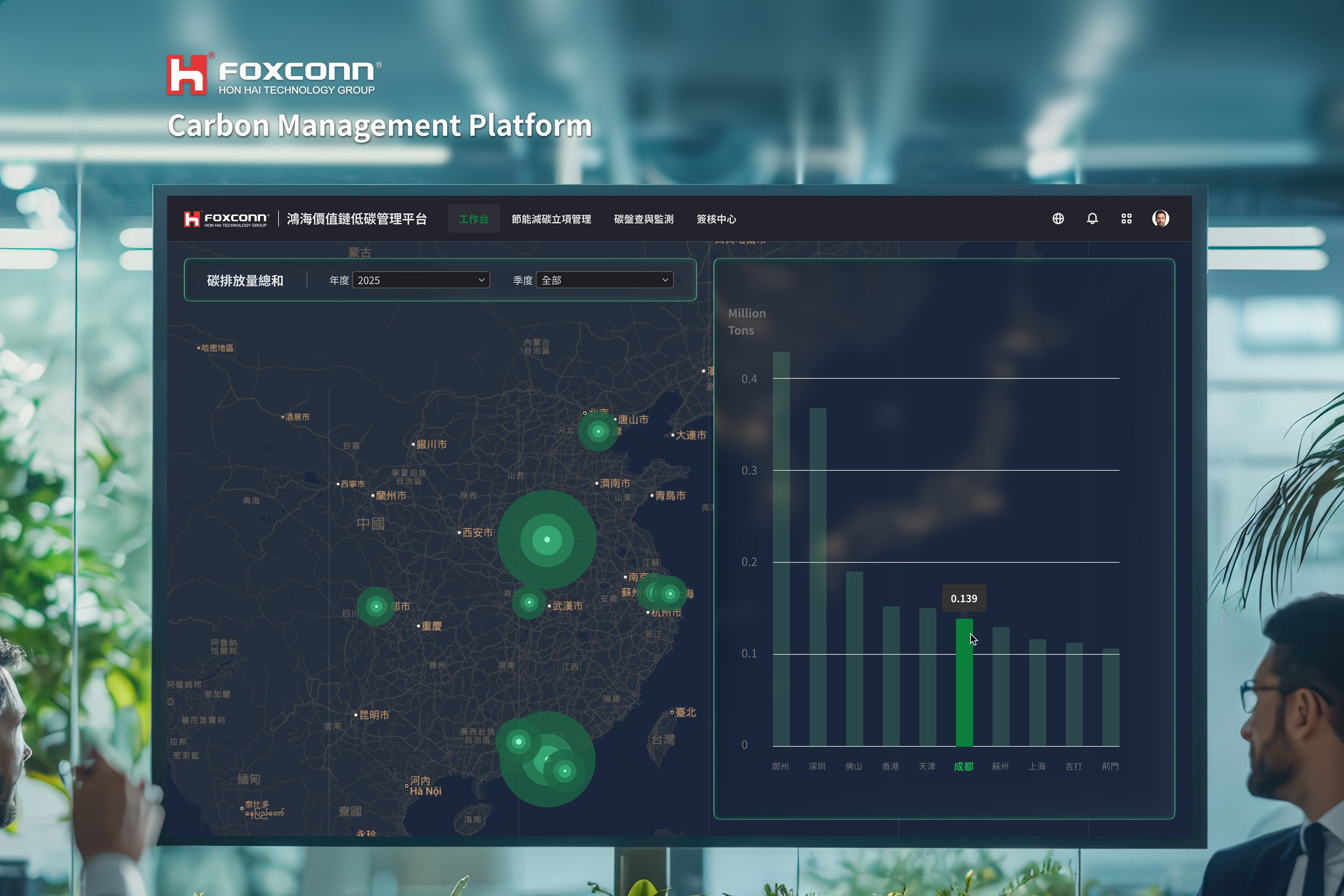
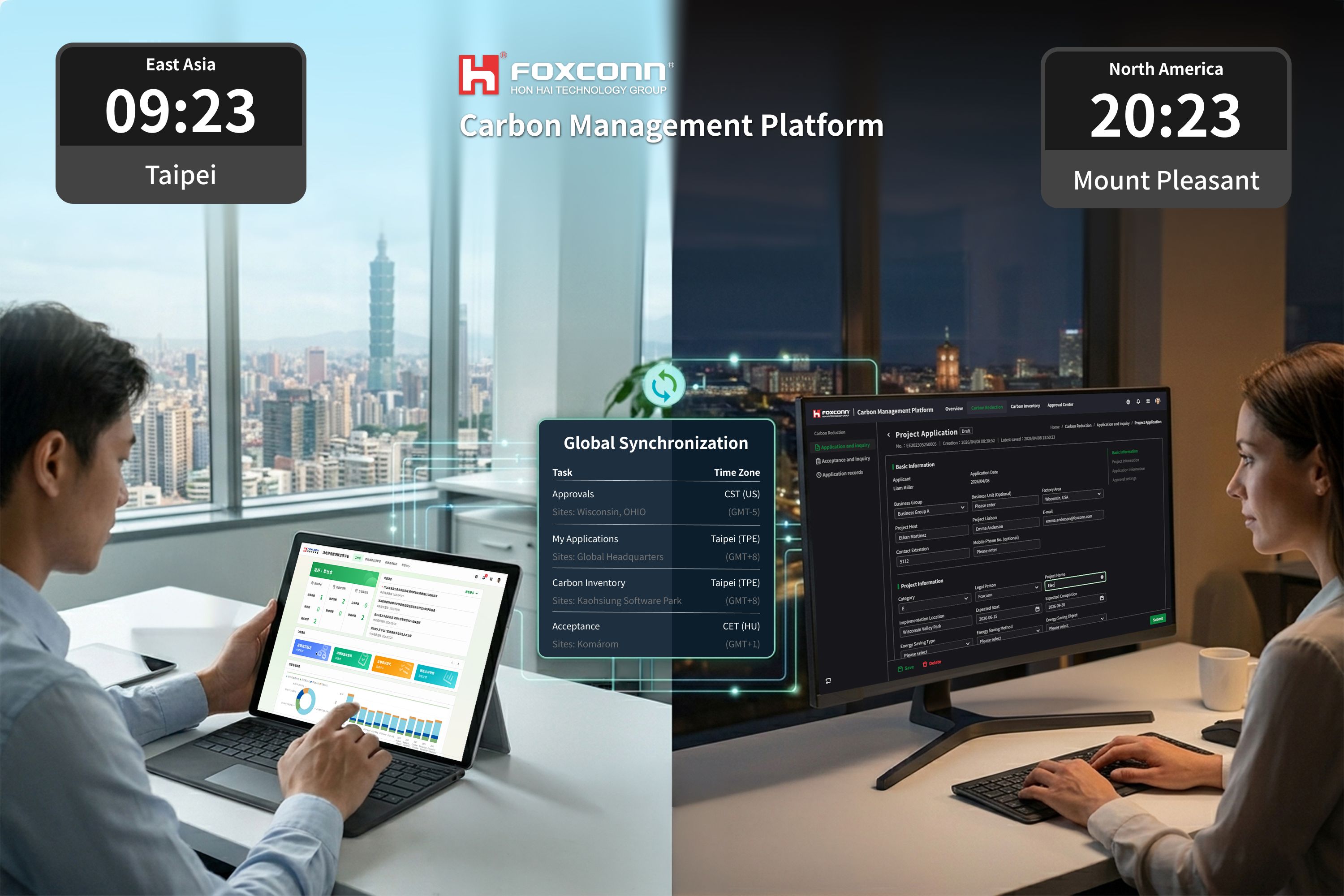
The primary UX challenge was translating a highly complex, fragmented enterprise compliance process into a frictionless, unified workflow across global regions for more than 28,000 users. From a UX standpoint, carbon accounting causes extreme cognitive load and data silos.
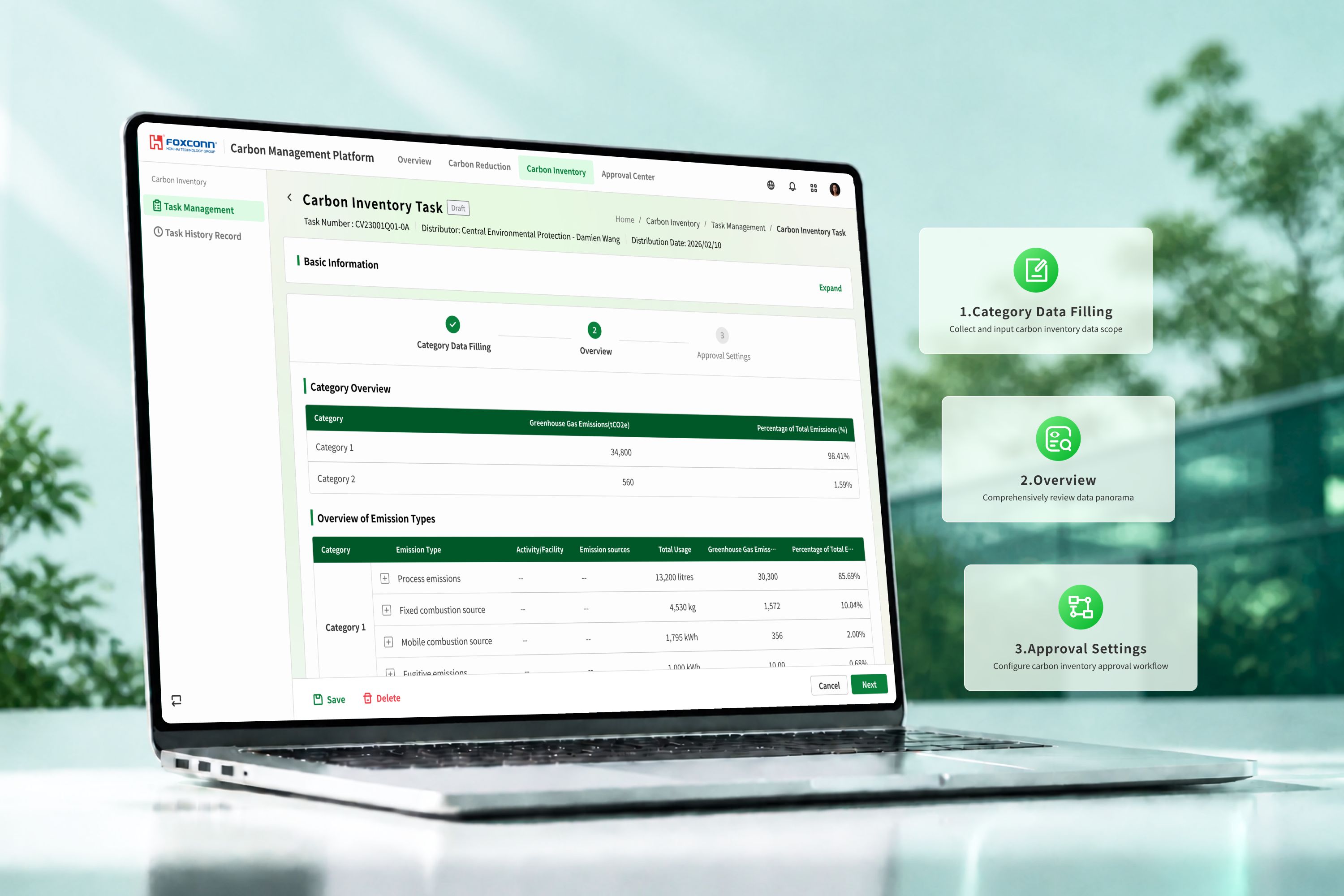
We had to design an intuitive multi-level hierarchy supporting three distinct roles—Initiator, Assigner, and Recipient. Balancing strict regulatory demands with a clean interface required us to distill overwhelming data into an actionable, 'Audit-Ready' layout that feels coherent whether accessed on a fast-paced factory floor or at corporate headquarters.
What was your personal highlight in the development process? Was there an aha!-moment, was there a low point?
The definitive personal highlight and 'aha!-moment' occurred when we successfully validated the 'Fill-and-See' UX concept. By integrating RPA to auto-populate 76% of complex environmental data, we watched overwhelming manual data entry transform into instant, real-time visualization. It proved that enterprise software could be both highly precise and exceptionally fast.
Conversely, the low point was fighting cognitive overload during early wireframing. The interface was paralyzed by complex metrics and rigid regulatory data. We broke through this slump by restructuring the entire platform around an 'Audit-Ready' layout, turning a tedious data-entry chore into a highly intuitive, rewarding workflow.
Where do you see yourself and the project in the next five years?
In the next five years, we see this project evolving from a data management platform into an autonomous, AI-driven sustainability ecosystem. We plan to integrate Generative AI to automate predictive carbon forecasting and synthesize localized reduction strategies, advancing our commitment to inclusive, intelligent design. As a design team, we aim to establish this design framework as the global benchmark for enterprise ESG software, continuing to work with cross-functional teams for Generative AI, scalable design systems, and corporate climate action, proving that complex enterprise toolsets can be intuitive and human-centered.